
Drunk Driving in Es Rafal: An Early Morning, a Lucky Ending — and Many Uncomfortable Questions
Drunk Driving in Es Rafal: An Early Morning, a Lucky Ending — and Many Uncomfortable Questions
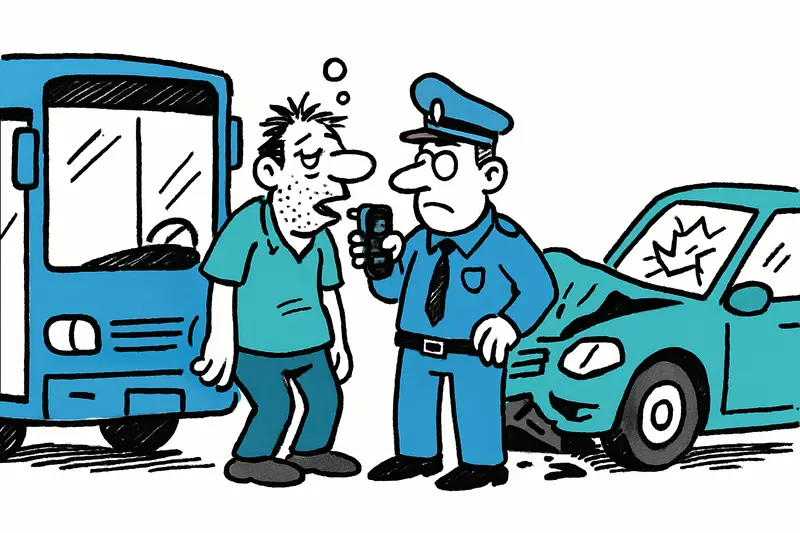
Around 6:20 a.m., a heavily intoxicated driver in Es Rafal collided with a bus and then with a parked car. No one was injured. But why isn't that enough to finally solve the problem?
Drunk Driving in Es Rafal: An Early Morning, a Lucky Ending — and Many Uncomfortable Questions
On Saturday morning, around 6:20 a.m., the usually quiet corner of Es Rafal briefly became hectic: a Skoda in the left lane struck a bus in the middle lane at an intersection and then pushed a parked car about four meters until it came to rest in the bike lane. Police and ambulances arrived quickly, the bus was empty, and the occupants were unharmed. Emaya workers later cleaned the street — and according to the police the Skoda driver had a blood alcohol concentration roughly three times the legal limit.
Leading question
Why does a clear, visible harm like this still not prevent intoxicated people from getting behind the wheel? Are fines and occasional checks enough, or is there a lack of a deeper strategy?
Critical analysis
The sequence of events is simple in the facts: the left lane ended, the driver steered to the right, there was contact with the bus, and control was lost. But conclusions must go further than the usual routine: breath test, towing, street cleaning. A driver behind the wheel with three times the legal limit shows that prevention failed — somewhere along the chain of services, incentives and controls.
Checks alone are reactive. They catch misconduct once it has already occurred. Fines, license suspension and criminal charges are important, but they only take effect if someone is caught. In this case, fortunately neither the bus driver nor passersby were harmed. A coincidence, not a system failure that can be solved by punishment alone.
What is often missing in public discourse
There is a lot of talk about punishments, less about causes. In conversations at the bus stop on Avinguda Gabriel Alomar you often hear that late returns home, shift work and limited night services push people into cars. A pattern reflected in Seven People, One Trunk: Why Palma's Nights Are More Often Going Wrong. Rarely discussed is what alcohol prevention could look like in everyday life: mandatory alcohol interlocks for repeat offenders, expanded visible checks during peak times, better support services for people with addictions, or clear campaigns that not only warn but present alternatives.
Everyday scene from Palma
Picture the street: cool 11-degree morning air, the streetlights still glowing, a few garbage collectors in orange vests clearing cardboard boxes, a corner café opening its doors — the smell of freshly brewed coffee mixing with diesel. A bicycle courier who normally rides here now has to carefully pass a damaged car standing in the bike lane. These small things are the immediate consequences; they disrupt the rhythm of a city where many rely on functioning infrastructure. Similar consequences were reported in Nighttime accident on the Paseo Marítimo: alcohol, a tripping hazard and many questions.
Concrete approaches
Some measures Palma could consider immediately: targeted alcohol checks during night and early morning hours at hotspots; coordinated campaigns with bars, clubs and taxi services to make safe rides home more attractive; low-threshold information offers at workplaces with night shifts; mandatory alcohol interlock systems for people with particularly high readings or repeat offenders, as seen in Nighttime Accident in Sóller: Alcohol, No Driver's License — How the Situation Escalated; more protected bike lanes and physical bollards at vulnerable parking spots so parked cars do not become hazards for cyclists.
Importantly: measures must be combinable. Checks without offers for safe rides home are not enough. Education without sanctions remains ineffective. Technology without social accompaniment only affects those who would already avoid driving drunk.
What needs to be done now
The police will investigate the matter and initiate the usual procedures. For the city, however, this incident should be a reason to rethink alcohol consumption and mobility in Palma: where are services missing? Where are control gaps? Which local actors can participate reliably — from transit operators to night-time hospitality and employers with shift work?
Pointed conclusion
Those who went to work, to school, or rode a bike that morning were lucky. That was pure chance. If we want safer streets, decisions should go beyond camera footage and accident reports: less mere punishment, more forward thinking, more linking of prevention, control and alternative offers. Otherwise a knocked-over car remains only a warning sign that will be discarded again tomorrow.
Frequently asked questions
What should I know about drunk driving checks in Mallorca?
Is it safe to drive in Mallorca early in the morning after a night out?
What happens if someone is caught driving drunk in Palma?
Why do accidents in Es Rafal affect cyclists and street traffic so quickly?
Why is the Avinguda Gabriel Alomar area often mentioned in discussions about nightlife and driving in Palma?
What can Palma do to reduce drunk driving beyond fines and police checks?
Are alcohol interlock devices used for repeat offenders in Mallorca?
What is the best way to get home in Mallorca after drinking?
Similar News
Are the Balearic Islands the Southern Border of Europe? A Reality Check on Immigration
The Balearic Islands are again calling for EU aid after a sharp rise in arrivals by sea. Conflicting priorities between ...

"Expensive chaos" and many open questions: What clients can do when a lawyer suddenly stops responding
Several clients complain that a well-known German lawyer in Mallorca has been unreachable for months. Key question: What...

TV tip: 'The Last Problem' — Mallorca as the setting of a classic crime
A classic whodunit on Mallorca: A new miniseries set in spring 1959 brings storm, an isolated hotel and a dense web of s...

Nipping Sea Creatures: Why Bathers in Cala Major and Elsewhere Should Be Cautious
In Cala Major, bathers have reported being nipped by small fish. What is behind it, how can problems be avoided — and wh...
Forced eviction in Santa Catalina: When a 65-year-old slept in her car and showered on the beach — a question of responsibility
The story of Pilar López from Santa Catalina represents a problem affecting many Mallorcans: How can an island with a bo...
More to explore
Discover more interesting content

Can Cap de Bou

Townhouse Lleo 72
