
Drunk Driving in La Vileta: One Accident, Many Questions
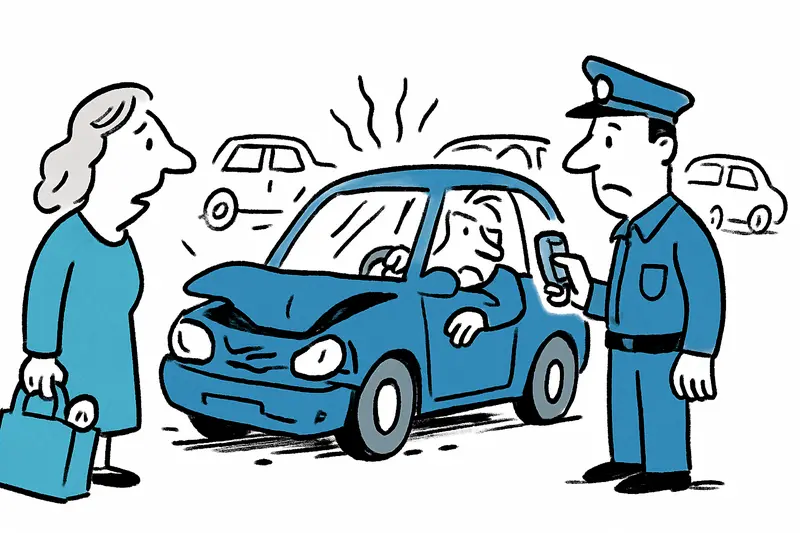
A 51-year-old woman crashed into four parked cars in La Vileta. The breathalyzer showed 1.14 mg/l of alcohol — the city is again faced with the question of how such behavior can be prevented.
Drunk Driving in La Vileta: One Accident, Many Questions
On Tuesday afternoon, a damaged car was blocking the street in the middle of La Vileta. Four parked vehicles had been struck, but luckily the incident resulted only in property damage: no one was injured. The driver, a 51-year-old woman, had to undergo an alcohol test — the device showed 1.14 mg/l breath alcohol. This corresponds to a very high level and likely explains why she lost control of her vehicle.
Main Question
How does Palma deal with the problem that people drive despite being heavily intoxicated — and what needs to change so that La Vileta and similar neighborhoods do not become the scene of recurring accident series?
Critical Analysis
The sequence of events is initially banal: at the Son Peretó/Son Llull intersection the driver apparently intended to turn left, lost control and hit several parked cars in succession. A passerby alerted the police, the car was taken out of circulation and later towed to the Sa Riera impound. The facts are clear. What is less clear is: why do such cases continue to occur despite checks and awareness campaigns?
On the one hand, the public debate often focuses on the individual case — the “drunk driver” — rather than on the surroundings. In residential streets like La Vileta, cars are parked close together, sidewalks are narrow, and a single inattentive steering move is enough to trigger a chain reaction. 30 km/h zones, improved sight lines and physical lane separators would noticeably reduce the risk at such intersections.
On the other hand, preventive measures are not equally strong everywhere. Random checks happen at varying places and times, but people with high levels of alcohol often drive at times when police presence is lower — or they leave venues where there are insufficient alternatives to using their own car. The incident shows that checks alone are not enough if the surrounding context (infrastructure, night transport, education) is ignored.
What Is Missing from the Public Discourse
First: the discussion often ends with punishment. Yes, fines and criminal proceedings are necessary. But there is rarely as much talk about aftercare — for example mandatory counseling programs or mandatory alcohol ignition interlocks for very high readings. Second: the perspective of residents is often underrepresented. Those who live in La Vileta know the bottlenecks, the children playing in courtyards, and the times when delivery traffic and school runs overlap. Third: there is a lack of honest assessment regarding repeat offenders. The public has a right to know whether certain measures deter offenders or whether there are gaps.
A Typical Scene from Palma
Imagine the corner of Son Peretó on a late autumn afternoon: an older woman returning from shopping with a bag of bread, teenagers heading to the bus, and the rustle of plane tree leaves. The street smells of freshly baked ensaimada from the nearby bakery. It is precisely in such moments that a jerk at the wheel can turn ordinary everyday scenes into danger within seconds. This proximity of normality and risk is what makes many people uneasy here.
Concrete Solutions
1) Traffic calming and structural measures: At the Son Peretó/Son Llull intersection, tighter corner radii, lane narrowing and visible crossing aids would be sensible. Such measures force slower driving and reduce impact angles.
2) Continuous, highly visible checks: Not just speed traps and random samples, but planned visible checks at different times of day, combined with local information campaigns, create presence.
3) Alcohol ignition interlocks for high values: For readings in this range, the installation of breath alcohol interlocks should be mandatorily considered after judicial proceedings.
4) Expansion of alternatives: Late bus services, ride-sharing options and taxi vouchers for revelers can reduce car trips. This is particularly relevant in neighborhoods with restaurants and bars.
5) Aftercare programs: Those significantly above the limit should be required to attend counseling. This helps prevent relapses.
6) Community dialogue: Resident representatives, traffic planners and police should meet regularly in the neighborhood instead of addressing problems only reactively.
Concise Conclusion
The accident in La Vileta is not mere bad luck: it reflects how urban planning, traffic enforcement and prevention work together — or fail to. If we continue to talk only about individual cases, the root causes remain hidden. People walking on the sidewalks of La Vileta do not want to argue about who is to blame; they want these moments to happen less often. That will only succeed with a mix of technical, legal and social measures — not with outrage alone.
Frequently asked questions
What makes driving in La Vileta risky at night?
How does Palma propose preventing repeat drunk-driving incidents in neighborhoods like La Vileta?
What are alcohol ignition interlocks and could they be used after high readings in Mallorca?
Why aren't random police checks enough to stop drunken driving in residential areas?
What role do residents play in reducing drunk driving in La Vileta?
What concrete steps can Palma take to reduce such accidents in neighborhoods like La Vileta?
What about aftercare and education for offenders beyond fines?
What transportation options exist in Palma to avoid driving after nightlife?
Similar News

When Palma's Evening Meets Charity: Ritzi, Gold Busts and a Quiet Art Studio
An evening at the Ritzi, a raffle win, and quiet art confessions in Palma's galleries: how celebrity dinners and small o...

Hug as a Distraction: When Tenderness Becomes a Theft Tactic
In Coll d'en Rabassa and Es Molinar, several older men have in recent weeks fallen victim to an unusual distraction thie...
Mallorca's hotel world bids farewell to José Luis Carrillo
José Luis Carrillo, founder and president of Hoteles Globales, has died. The industry remembers his long commitment to t...
Who will remove the derelict coaches? Four coaches block Es Cruce parking lot
Four decommissioned coaches stood for months on Via Palma in Manacor and have now appeared without permission on the par...

Goldcar Reality Check: When Small Fees at the Counter Cause Big Frustration
An Austrian holidaymaker received only partial reimbursements from Goldcar after a dispute over a pre-booked full insura...
More to explore
Discover more interesting content

Can Cap de Bou

Townhouse Lleo 72
