
Who will remove the derelict coaches? Four coaches block Es Cruce parking lot
Who will remove the derelict coaches? Four coaches block Es Cruce parking lot
Four decommissioned coaches stood for months on Via Palma in Manacor and have now appeared without permission on the parking lot of the Es Cruce restaurant in Vilafranca. Who is liable, and how can the problem be resolved legally?
Who will remove the derelict coaches? Four coaches block Es Cruce parking lot
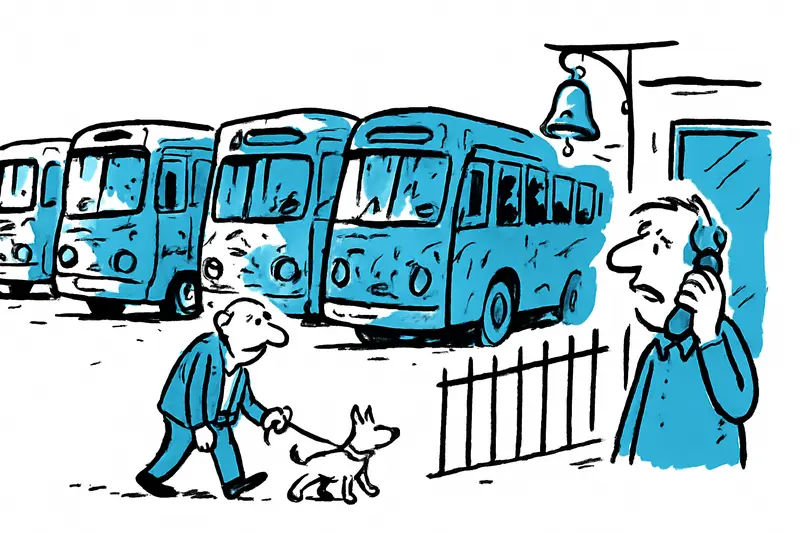
In Vilafranca, around half past eight in the morning, oil is already sizzling in the small kitchen of Es Cruce, an old man walks his dog past the fence and the bell of the corner bar rings. But suddenly four old coaches are parked on the restaurant’s private lot – rusty, with peeling paint and no driver in sight. The owner, Guillem Garí, signed nothing and granted no permission, yet the vehicles appeared overnight.
Key question
Who is responsible when decommissioned coaches end up on private property and the registered keepers cannot be reached?
Critical analysis
The facts can be summarized briefly: Several coaches from the company Autocares Raya had stood for months on Via Palma in Manacor; the city authorities demanded their removal after the vehicles remained unchanged for a long time. Shortly after that demand, the coaches disappeared from the public roadside – but apparently not to a workshop or recycling center, instead they turned up on the private property of a host in Vilafranca. They have now been there for weeks; another coach has since appeared. The landowner has involved the Guardia Civil; an official removal is not yet automatically underway.
This web of facts is not just a formal problem; similar cases have persisted elsewhere, such as How an Abandoned Motorhome Became a Persistent Problem for El Arenal. It reveals gaps in practice: Who monitors that a removal order is actually carried out? Is there a binding transport proof when vehicles vanish from one location? And what role does the registered keeper – the bus company – play when the trail goes cold locally after the disappearance? The traffic authority DGT can apparently intervene on private property, but this is subject to conditions: proof of abandonment, a summons to the keeper, and compliance with deadlines. These hurdles deter smaller landowners who do not want to endure weeks of bureaucracy while their parking space remains blocked, despite recent enforcement efforts such as Police clear parking chaos in Palma industrial areas — checks, towing, open questions.
What is missing from the public discourse
The discussion often focuses on the visible nuisance – trash, vandalism, ugly appearance, as seen in Cala Major: Parking lot turns into a litter and problem zone – who will clean up?. Rarely does it address the consequences for the landowner and the control gaps along the administrative chain: reporting channels between the municipality, the Guardia Civil and the DGT are not optimized for such cases. Also underdiscussed is the question of documentation: Are there mandatory transport documents for moving decommissioned commercial vehicles within the island? And how transparent are the sourcing and disposal routes when vehicles are reportedly removed? This mirrors other disputes over unclear placement and liability, for example Who installed the log benches in the Tramuntana — and who is liable?.
Everyday scene from Mallorca
Small groups of villagers sit on the square in front of Es Cruce, talk about the weather and keep glancing resignedly at the coaches. Children push bicycles past the fence, a cat jumps onto the bonnet of one of the coaches – it looks like a new, unintended piece of village furniture. Meanwhile the innkeeper does what many here do: he calls authorities, collects signatures from neighbours and tries to find a pragmatic solution, while the main work should lie with administrations and the registered keeper.
Concrete solutions
1. Short term: Create a clear procedural instruction between the municipality, the Guardia Civil and the DGT that regulates the quick establishment of ownership and the process for towing. Official checklist: check license plates, identify owner in the vehicle register, clear photographic documentation, written order to collect with a deadline.
2. Medium term: Mandatory transport documents for the movement of decommissioned commercial vehicles within the island. Whoever moves a coach from A to B must prove they are authorized to do so (commission, invoice, disposal certificate). This creates traceability.
3. Preventive: Strengthen sanctions and liability rules so that keepers pay for improper abandonment – not the landowner. Municipalities should also establish a fund or a rapid relief clause so private operators are not burdened for weeks while administrations review the case.
4. Public information: Citizens should know exactly whom to contact. An easily accessible online reporting platform for "ownerless commercial vehicles" with clear forms and automatisms could help classify cases faster and forward them to the responsible authority.
Concise conclusion
The four coaches are not just a fairground prop in a restaurant parking lot. They are a symptom: blurred responsibility, patchy monitoring and too many individual decisions instead of binding procedures. As long as this remains the case, Es Cruce will not be asking for the last time who will move the derelict coaches – and who will pay the bill.
Frequently asked questions
Who is responsible when decommissioned coaches end up on private property in Mallorca?
Which authorities handle abandoned commercial vehicles on Mallorca, and what role do they play?
How can a landowner get a decommissioned coach removed quickly in Mallorca?
Are transport documents required to move decommissioned coaches on Mallorca?
How can residents report ownerless commercial vehicles in Mallorca, and what happens next?
The Vilafranca Es Cruce case showed four coaches on private property. What happened?
Have derelict coaches appeared along Via Palma in Manacor, and what happened afterward?
What practical steps can Mallorca landowners take to manage or prevent abandoned buses blocking space?
Similar News

Goldcar Reality Check: When Small Fees at the Counter Cause Big Frustration
An Austrian holidaymaker received only partial reimbursements from Goldcar after a dispute over a pre-booked full insura...

Promenade in Can Picafort obstructed: 24 businesses face hefty fines
The island council is demanding around €430,000 from 24 businesses in Can Picafort because they set up tables and chairs...
Cala Rajada Gets a New Centre: Plaça dels Pins Is Being Redesigned
The Plaça dels Pins in Cala Rajada is being rebuilt for more than two million euros. New paving, LED lighting, improved ...
Does Palma still need the 100‑milliliter rule? Two decades of liquid bans and waiting for a real easing
Son Sant Joan has modern scanners, yet the 100‑milliliter limit remains. A critical stocktake: why technical modernizati...
Smoke over Avenida Argentina: High-rise fire raises unanswered safety questions
On Saturday afternoon an apartment on Avenida Argentina in Palma caught fire. A building was evacuated and a neighbor su...
More to explore
Discover more interesting content

Can Cap de Bou

Townhouse Lleo 72
