
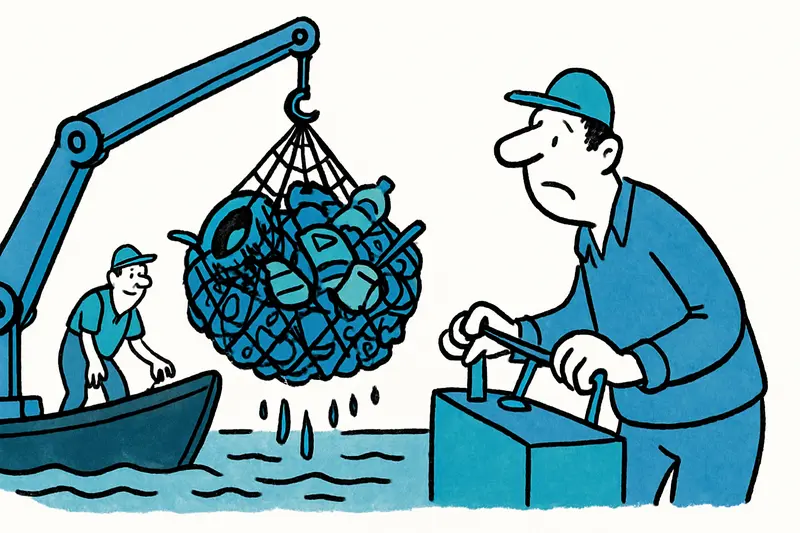
Who cleans up the sea? Almost eight tons of waste off the Balearic Islands — and the uncomfortable answers
In September volunteers and authorities pulled almost eight tons of waste from the water — 266 kg per day. Mallorca is in the middle of a problem that volunteering alone cannot solve. Who pays, who organizes, and what practical solutions are there?
Who cleans up the sea? Almost eight tons of waste off the Balearic Islands — and the uncomfortable answers
From Moll Vell you often see the same picture in the mornings: seagulls screech, the harbor crane rattles, and things drift in the bay that do not belong there. In September teams pulled almost eight tons of debris from the water — that is about 266 kilograms per day. A dinghy fights the waves, an old hull flashes rustily in the sun. Not a postcard, but everyday life. More than 6.7 tonnes of waste from the sea: Why the cleanup on Mallorca is only the beginning
Why Mallorca is particularly affected
Of the almost eight tons, about 4.3 tons came from the islands around Mallorca. The reason is obvious: dense shipping traffic, many marinas, recreational boats, ferries, and intensive coastal use. Currents pick up the debris and distribute it along the coves — from Cala Millor to Palma. Divers from smaller towns say they go out after work: “We collect because otherwise no one comes.” That may be commendable, but it is not a solution to a structural problem.
What was found — and what is often overlooked
The lists read familiarly: plastic bottles, nets, bags. In addition, bulky finds such as old boats, driftwood, and rusty metal parts. These items endanger marine animals: nets strangle, sharp edges injure. What does not appear in many figures, however, is microplastic — the tiny particles that result from degradation and accumulate in the food chain. This affects fisheries, gastronomy and ultimately all of us.
Who coordinates — and where the gaps lie
The port authority directs many operations, authorities coordinate, volunteers plug the gaps. Yet several problems often remain invisible: Who covers the costs of recovering large objects? Where should contaminated material go? Recycling? Many ports simply do not have the infrastructure to treat large or hazardous waste efficiently. Result: collecting is only the first step — and often the most expensive.
The key question remains: Who pays and who organizes the constant cleaning of the coasts?
Current practice relies on volunteers as a buffer. That is socially valuable but risky: volunteers take on dangerous work and are often personally liable. A permanent, reliable strategy must find other shoulders to bear the burden — municipalities, the state, port companies, commercial shipping and the tourism industry alike.
Concrete approaches instead of helplessness
There are practical options that should be discussed more often: firstly better prevention on land — less litter in towns, on promenades and in marinas means less in the water. This requires mandatory disposal stations in ports, clear acceptance guidelines and controls. Marina operators should be obliged to provide free disposal options for boat waste.
Secondly, financial and organisational solutions: a port fund, financed by fees from commercial shipping or a small levy on leisure boats, could cover recoveries and proper disposal. Recovering large objects quickly costs several thousand euros — from recovery to disposal in certified facilities. Without transparent financing the problem merely shifts elsewhere.
Technically, Almost 37 Tons of Waste: What Mallorca's Cleanup Fleet Really Tells Us — mobile collection boats that regularly run routes, similar to garbage trucks on land, are conceivable. Or specialised recovery crews contracted to work for ports and municipalities. For fishing nets, deposit systems could be considered: whoever buys nets pays a share into a repair and take-back fund.
What is missing in the public debate
We talk a lot about 6.5 Tons of Waste in July: Why Mallorca's Coasts Keep Struggling and volunteer actions — and too little about structural costs, legal issues and recycling chains. Many municipalities do not know how to treat contaminated material. Often problematic materials collected end up at the municipal recycling center without special treatment. That merely shifts the problem onshore instead of closing it properly.
Short-term action, long-term structures
Volunteer efforts remain important — they are visible, motivating and often effective. Next week there will be another beach action: gloves, thermos, meeting point 10 a.m. — that is important and right. But we must not rely on people's good spirits. Mallorca needs clear rules, reliable funding and infrastructure in all ports.
The images remain: a crane slowly lifting an old boat hull, seagulls circling a plastic bag, and the quiet slap of water against the quay. These scenes should not only be alarm signals but a reason for concrete policy: better waste reception in marinas, a port fund, regular collection routes and binding obligations for shipping. Otherwise the sea will remain a mirror of what we have not sorted out on land.
Frequently asked questions
Why is Mallorca’s sea getting so much waste?
What kind of rubbish is usually found in the sea around Mallorca?
Is it safe to swim in the sea in Mallorca if there is floating waste?
Who is responsible for cleaning up sea waste in Mallorca?
What is the best time of year to notice sea pollution in Mallorca?
What can boat owners in Mallorca do to reduce sea waste?
Are volunteer beach cleanups in Mallorca enough to solve the problem?
What would a better sea cleanup system in Mallorca look like?
Similar News

First Day, First Consequences: What Palma's Rent Freeze Really Means
A new decree stops a planned eviction in Palma — but what really changes for tenants and landlords? A reality check with...

When Housing Becomes a Matter of Survival: Mallorca Between Rental Frenzy and Everyday Life
The case of 87-year-old Maricarmen showed that on Mallorca many people's lives are poised between affordable and uninhab...

Autumn in Mallorca: When Melancholy Gets a Window
Why autumn quietly tightens here — and how to make use of the mood: walks, culture, candles and the light from Palma to ...
Near-miss on Lanzarote: Landing Ryanair Jet and Iberia Takeoff — what really went wrong
On Lanzarote there was a dangerous incident: A Ryanair flight (FR5910) from Dublin landed on runway 03 while an Iberia E...

Eurowings introduces new Premium Business seats on Mallorca routes
From December 1, selected Eurowings flights to Palma and other destinations will feature eight particularly generous sea...
More to explore
Discover more interesting content

Can Cap de Bou

Townhouse Lleo 72
