
El Arenal and the Graffiti: What Happens After It Is Reported?
Residents of El Arenal have drawn attention to graffiti on building facades, public spaces and an old water reservoir. The municipality says it is working on the problem. The key question is whether this will lead to a visible, transparent plan.
El Arenal and the Graffiti: What Happens After It Is Reported?
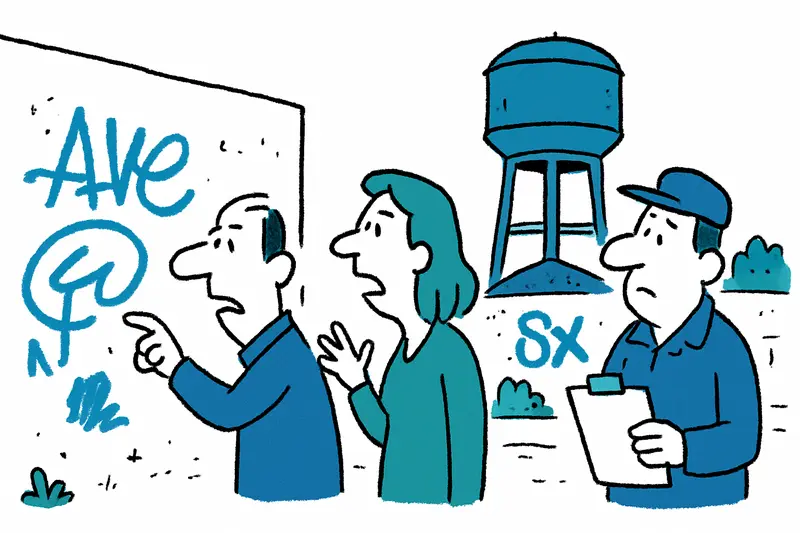
When you walk past a wall covered in graffiti, at first all you see is paint. But for the people who live there every day, there is another question: Who will deal with it, and when? In El Arenal, in the municipality of Llucmajor, that question is back on the table. Residents have drawn attention to graffiti on building facades and public spaces—including the old water reservoir on Carrer de Sant Cristòfol, a structure of historic value.
In June, the Amics de s’Arenal association contacted the municipal administration and also asked about a joint effort to remove the graffiti. According to the group, they were told at the time that the matter would be addressed in the following days. Five months later, the graffiti was still visible. The municipality, for its part, says it is working on the issue: the Local Police are stepping up monitoring and cooperation with security forces, while municipal cleaning crews are dealing with affected public spaces.
The key question is not just who cleans
Is it enough to step up inspections and remove existing graffiti? Both may be necessary. But that still does not answer the question of how El Arenal plans to address the problem over the long term. A cleaner can remove graffiti from an accessible wall. Private facades require their owners’ involvement. And an older structure must be cleaned in a way that does not damage its surface. These are different tasks that do not automatically fall under a single municipal work order.
“Graffiti” is not one uniform case, either. A hastily scrawled mark on a modern wall calls for a different approach than paint on a structure of historic value. Taking the same approach everywhere risks either leaving the problem untouched or causing further damage during removal. In the end, residents are not concerned with a map of responsibilities; they care about the wall they pass every day.
What is missing from the public discussion
It remains unclear which sites the municipality plans to address first, what criteria it will use to set priorities, and how residents can report a specific location. There is also no clear explanation of how private owners will be involved. This is no small matter: if public spaces are cleaned but private facades are left untouched, an initiative can quickly seem incomplete. Conversely, if everyone waits for someone else to act, the paint will remain where it is.
A transparent schedule would be more helpful than a general “We’re dealing with it.” There need not be a fixed date for every wall—weather, materials and responsibilities can vary too much for that. But a list of reported public sites, a proposed order of work and a brief update on what has already been completed would show that the issue has not disappeared into the corridors of the administration. For private facades, the municipality could inform owners and coordinate a joint effort, without pretending that it can make decisions about their buildings on its own.
Things like this are especially noticeable in everyday life when the area grows quieter: less activity along the promenade, shutters half closed, a scooter rattling down the street. On the way to the shop or the bus stop, you pass the same walls again. One mark may seem insignificant. But many of them change the look of a neighbourhood—especially when they appear on a place whose history is not interchangeable. This is not to say that every painted wall is equally dangerous or that every graffiti artist should be treated the same way. It is simply a question of what shared spaces look like and who takes responsibility for them.
A plan that does more than wipe away paint
Llucmajor could take several practical steps. First, identify public spaces and sensitive buildings, then rank them by urgency. Second, check which cleaning method is suitable for each surface before starting work. Third, provide a simple way to report graffiti and receive a response, so residents do not have to wonder whether their report was received. Fourth, contact the owners of affected facades and, where appropriate, arrange coordinated cleaning.
Inspections can be part of the solution, but they cannot replace maintenance. Nor will cleaning alone prevent new graffiti from appearing. As a complementary measure, the municipality could explore legal spaces for murals, provided residents, the municipality and property owners support the idea. This is not a one-size-fits-all solution, nor a free pass for painting anywhere. It would be an attempt to distinguish space for art from damage to someone else’s or protected property.
A public initiative would also serve a practical purpose: it could clarify which spaces belong to the municipality, who is responsible for other sites and which jobs have actually been completed. There is no need for a big, high-profile campaign. Clear information and a few sites dealt with consistently would probably be more convincing than a promise that no one in the neighbourhood can see reflected in reality.
The street is the measure
The municipality says it is working on the issue; residents say the graffiti is still visible. Both can be true at the same time. The real measure, then, is not who finds the better wording, but whether anything changes on the ground. El Arenal needs neither a symbolic zero-tolerance slogan nor a shrug of the shoulders. It needs clear responsibilities, careful cleaning and updates that make progress visible. Until then, the same simple, uncomfortable question remains for the town hall and the neighbourhood: Who will deal with this wall—and when?
Frequently asked questions
How can I report graffiti in El Arenal?
Who is responsible for removing graffiti from public and private property in Mallorca?
How is graffiti being dealt with in El Arenal?
How should graffiti be removed from a historic building in Mallorca?
How long does it take for reported graffiti to be removed in El Arenal?
Why can’t all graffiti in Mallorca be cleaned in the same way?
Can residents help get graffiti removed from a private facade in El Arenal?
Could legal mural spaces help address graffiti in Mallorca?
Similar News

What a Set Lunch Menu Really Costs in Mallorca—and What the Price Doesn’t Tell You
A set lunch menu is part of everyday life for many island residents, while for others it means doing a little mental ari...

When an Evening in Mallorca Turns into a Love Story
A public appearance, a photo, a few posts: on Mallorca, encounters between celebrities quickly get spun into romances. B...

Traffic Violations in Mallorca: What EU-Wide Enforcement Really Means
A new EU rule is intended to make it easier to share information about certain traffic violations. For drivers in Mallor...

When a Takeoff Is Suddenly Aborted: What Mallorca Travelers Should Know
An aborted takeoff is a frightening moment for passengers—and often the start of a long wait. Find out what causes it, w...

Balearic Islands: Almost One in Two Babies Is Born to a Mother Without Spanish Citizenship
In 2025, 3,919 children were born in the Balearic Islands to mothers without Spanish citizenship. However, this figure s...
More to explore
Discover more interesting content

Can Cap de Bou

Townhouse Lleo 72
