
What a Set Lunch Menu Really Costs in Mallorca—and What the Price Doesn’t Tell You
A set lunch menu is part of everyday life for many island residents, while for others it means doing a little mental arithmetic. The price is only part of the story: what ends up on the table matters too—and whether the comparison is fair in the first place.
The price is on the board outside. Its value only becomes clear at the table.
Lunchtime in Palma is often a quick affair. A few steps away from the traffic and into a bar, where cutlery clatters and someone at the counter orders a coffee. The set lunch menu is written on the board. For some, it is a reliable break between appointments; for others, a way to eat a hot meal without having to plan ahead. Then comes the glance at the price. The question is not simply whether it is high or low: What do you get for your money—and who can afford to eat this lunch regularly?
A single figure cannot provide a clear answer. Set lunch menus are not the same everywhere. Sometimes a drink and dessert are included; other times, coffee costs extra. Some menus offer several courses, while others have a limited selection. Location also makes a difference: rent, staffing and purchasing costs add up differently on a busy street than in a smaller town. That explains price differences, but it does not necessarily make them any easier for customers to afford.
Comparisons need more than a price list
Anyone comparing Palma with the island’s interior should not simply put two average prices side by side. Which restaurants were included? Was the cheapest offer at each establishment counted, or a typical menu? Is a drink included? Is the same selection available every day? Without these details, a comparison can look more precise than it is for everyday purposes.
An average also says little about what an individual customer will actually find. A low-priced option may sell out early, be available only on a particular day of the week or not suit the customer’s lunchtime. And a menu that looks more expensive at first glance may include more. This is not an invitation to justify every price. It is simply the difference between a figure on a list and a meal you can actually order.
For workers with a short lunch break, something else matters too: can they eat nearby without spending a long time searching or travelling far? A cheap restaurant on the other side of the city is not necessarily an option for someone working in the old town. Anyone who has to eat out every working day will feel small price increases much sooner than someone who orders a set menu only occasionally. Price comparisons often say less about these differences than they do about which places rank where.
The lunchtime bill in real life
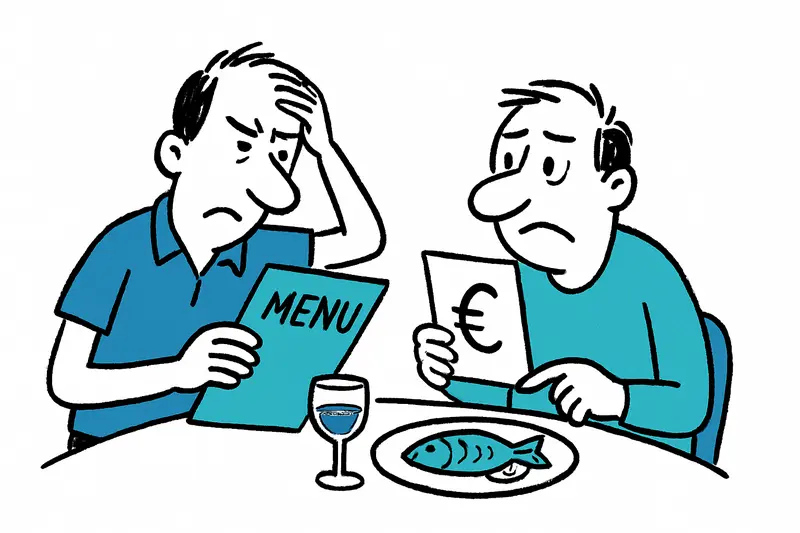
Picture the scene on a side street near Plaça d’Espanya: outside, a bus rattles through the intersection; inside, two colleagues pull their chairs closer together. They look at the menu, ask whether a drink is included and do a quick calculation in their heads. Nothing dramatic. But when an impromptu lunch becomes a regular expense, that calculation becomes part of the monthly budget. That is where the price of a set menu connects with the cost of living—not as an abstract statistic, but between the start of the working day and the next appointment.
For restaurants, the numbers are not arbitrary either. They have to pay for food, wages, energy and rent. A low price is therefore no guarantee of quality, and a higher one is not automatically a rip-off. Still, rising costs should not bring every discussion to an end. Customers need to be able to see what is included, and restaurants should explain their offers clearly so there are no surprises at the table.
Greater comparability would help: clear information about whether water or another drink is included, whether dessert or coffee is part of the price, and which days the offer is available. Those publishing prices could also indicate whether they are showing the starting price or the price of a typical menu. The most practical step for customers is simple: ask before ordering, and compare not just the price but what is included. That can prevent misunderstandings, though of course it cannot solve a tight household budget.
What’s missing from the debate
When people talk about set menus, the conversation quickly turns to which place is cheaper. Less visible are the people who can barely afford to eat out at lunchtime, and those who work in hospitality and are themselves affected by prices. Both belong to the same story. A debate focused only on finding the cheapest plate overlooks the conditions in which it is prepared and served.
Questions about alternatives also belong in the discussion. Are there convenient places nearby where workers can bring their own food or heat it up? Are the prices displayed at the entrance complete and easy to understand? Can restaurants offer a simple meal without cutting corners on quality or working conditions? These are practical questions for employers, restaurant owners and local authorities—not a call for one fixed price across the island.
A set lunch menu remains a small part of everyday culture in Mallorca: a plate on the table, a brief chat, then back to work. For it to be more than an occasional treat for as many people as possible, prices need to be transparent and the real financial burden needs to be acknowledged. The best ranking is not the one with the cheapest entry. It is the one that tells you what you will get—and whether lunch still fits into your everyday life.
Frequently asked questions
How much does a set lunch menu cost in Mallorca?
What is included in a set lunch menu in Mallorca?
Are set lunch menus cheaper in Palma or Mallorca’s interior?
How can I compare set lunch menus in Palma?
Does a higher price mean a better set lunch in Mallorca?
Why do lunch menu prices vary between restaurants in Mallorca?
What should I ask before ordering a set lunch in Mallorca?
How can workers manage the cost of lunch in Mallorca?
Similar News

When an Evening in Mallorca Turns into a Love Story
A public appearance, a photo, a few posts: on Mallorca, encounters between celebrities quickly get spun into romances. B...
El Arenal and the Graffiti: What Happens After It Is Reported?
Residents of El Arenal have drawn attention to graffiti on building facades, public spaces and an old water reservoir. T...

Traffic Violations in Mallorca: What EU-Wide Enforcement Really Means
A new EU rule is intended to make it easier to share information about certain traffic violations. For drivers in Mallor...

When a Takeoff Is Suddenly Aborted: What Mallorca Travelers Should Know
An aborted takeoff is a frightening moment for passengers—and often the start of a long wait. Find out what causes it, w...
Balearic Islands: Almost One in Two Babies Is Born to a Mother Without Spanish Citizenship
In 2025, 3,919 children were born in the Balearic Islands to mothers without Spanish citizenship. However, this figure s...
More to explore
Discover more interesting content

Can Cap de Bou

Townhouse Lleo 72
