
“Quiet Christmas Eve”? When numbers deceive — a reality check for Mallorca
“Quiet Christmas Eve”? When numbers deceive — a reality check for Mallorca
The emergency call center recorded 69 holiday incidents. Why the island image of a “quiet” Christmas Eve should be questioned — and what is still missing.
“Quiet Christmas Eve”? When numbers deceive — a reality check for Mallorca
69 incidents, 677 calls: What does that mean for the island night?
Key question: Is a night with dozens of deployments really “quiet” — or does that wording obscure problems that become visible precisely on holidays?
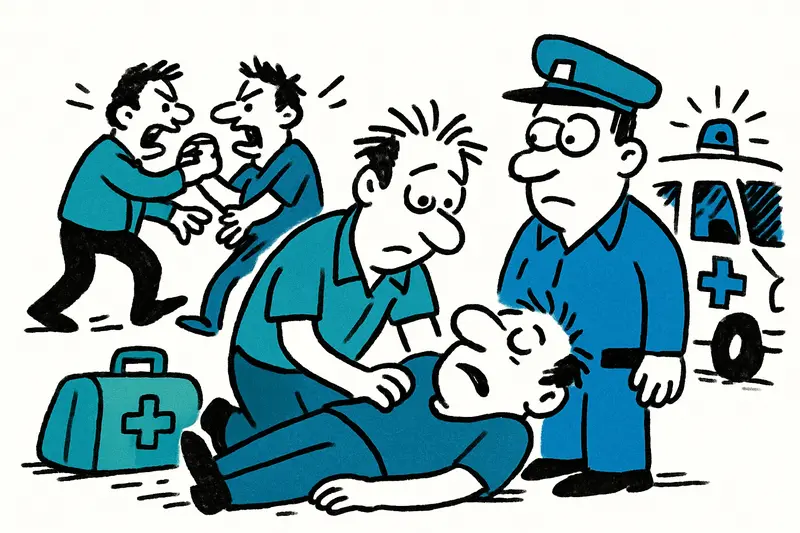
The emergency call center 112 registered 677 incoming calls on the night into the first day of Christmas; 69 of them were directly related to celebrations. For background on the 112 emergency number see EU page about the 112 emergency number. Of these recorded incidents, 57 occurred on Mallorca, seven on Ibiza and four on Menorca. The majority were medical emergencies on streets and in restaurants; in addition, 13 fights, 12 cases of bodily harm, nine traffic accidents, five threats, five trespasses and three robberies were reported.
Hearing from the authorities, one gets the impression that anything under the hundred mark is “relatively quiet.” That is one perspective — and at the same time an omission. Numbers alone say nothing about the strain on emergency personnel, the severity of individual cases or their distribution over the hours of the night.
An illustrative case shows how tight the situation can become: In a nightclub near the Carrer de Joan Miró in Palma there was already a serious confrontation in the morning. One woman is said to have wounded another with a glass bottle to the head; the wound to the right eyebrow bled heavily and required several stitches. According to witnesses, the suspected attacker passed the bottle to a man who was initially mistakenly believed to be the perpetrator. Police later arrested the suspect on suspicion of bodily harm.
Such individual cases make it clear: even if the total number is below an internal threshold, emergency services, emergency departments and the officers deployed can be heavily burdened. On Christmas Eve there are also private parties, increased alcohol consumption and changed opening hours — factors that reduce the breathing room for responders, as discussed in Christmas Parties in Mallorca: Why Lunch Replaces the Evening Gala - and What's Missing.
What is missing in the public debate is a more precise breakdown. How many deployments involved intoxicated persons, how many of those affected were tourists, how were the incidents distributed over time? How long were waiting times for ambulances, and how often did emergencies have to be transferred to other municipalities? Without such details, the assessment “quiet” remains a coarse communications choice that does not reflect the perspective of those affected and of the emergency personnel.
A scene familiar to many: It is just under ten degrees, the Christmas lights in the old town cast warm light on wet cobblestones. From Passeig des Born you can hear church bells in the distance and the rattle of a scooter, loud music drifts from a side street. Two men argue in front of a bar, security staff intervene, a few minutes later an ambulance siren wails — not a spectacular alarm, but work for paramedics and police, in the middle of the night between festive meals and gift-giving.
Concrete proposals to make such nights truly safer: The emergency call center could publish anonymized detailed data on incident type, time and location to make patterns more visible. In known nightlife districts, seasonal standby rosters of medical and police personnel should be planned, supplemented by registered first aiders in bars and venues, with examples of busy festive nights described in New Year's Eve in Mallorca 2025: Glamour, Culinary Delights and Cozy Alternatives. Door staff should be required to undergo de-escalation and first-aid training, and municipalities could consider temporary medical points of contact for busy nights. Public information campaigns on safe partying — for example about alcohol consumption and how to seek help — would also help.
And a pragmatic step: Authorities should explain the thresholds they use. Why is a night with fewer than 100 incidents considered “quiet”? Which internal capacities are being assessed by that benchmark? Transparency builds trust — and makes it easier to close concrete gaps.
Conclusion: The 112 tally is not a free pass for complacency, but it is a starting point for discussion. Those who call a night “quiet” must not forget the people who need help on such nights — and the responders who often mediate between Christmas noise and serious emergencies.
Frequently asked questions
Was Christmas Eve in Mallorca really quiet for emergency services?
How busy is 112 in Mallorca on holiday nights?
Why do Christmas and holiday parties in Mallorca lead to more emergencies?
What kinds of incidents does 112 handle in Mallorca during festive nights?
What happened in Palma near Carrer de Joan Miró on Christmas morning?
Is it normal for Mallorca to have more emergency calls on Christmas Eve?
What would make festive nights safer in Palma and Mallorca?
Why does a low incident count not always mean a quiet night in Mallorca?
Similar News
High heel slips, car accelerates: accident on Camí de Son Hugo
A woman lost a high-heeled shoe on the forecourt of the sports facility at Camí de Son Hugo. The car accelerated, mounte...
Phone Scam: How Two Hotel Employees at Playa de Palma Lost Thousands of Euros
One morning in September, two reception employees at Playa de Palma were pressured by alleged alarm-company staff — in t...
When the Wallet Becomes a Danger: Attack in Peguera and Lessons for Mallorca
In Peguera, two women are said to have stolen the wallet from a 75-year-old German couple. When the victim intervened, t...
Plata stays Plata: Young people take over, Llonguets remain
A small bar on Carrer de l'Argenteria will continue: Tolo Serra hands the place over to young Mallorcans at the end of t...
Unnoticed in the Luggage Compartment: How a Boy Traveled More Than 100 Kilometers in a Team Bus
A minor traveled in the undercarriage of a team bus for more than 100 kilometers until his cries for help were heard. A ...
More to explore
Discover more interesting content

Can Cap de Bou

Townhouse Lleo 72
