
Emergency Code 7700: After Turbulence on Ryanair Flight – a Reality Check
Emergency Code 7700: After Turbulence on Ryanair Flight – a Reality Check
A Ryanair flight turned back after severe turbulence and several passengers were injured. Why such incidents regularly cause panic — and what would need to change to make them less frequent.
Emergency Code 7700: After Turbulence on Ryanair Flight – a Reality Check
Descent, medical care on the ground, multiple injuries – what can we learn from the incident?
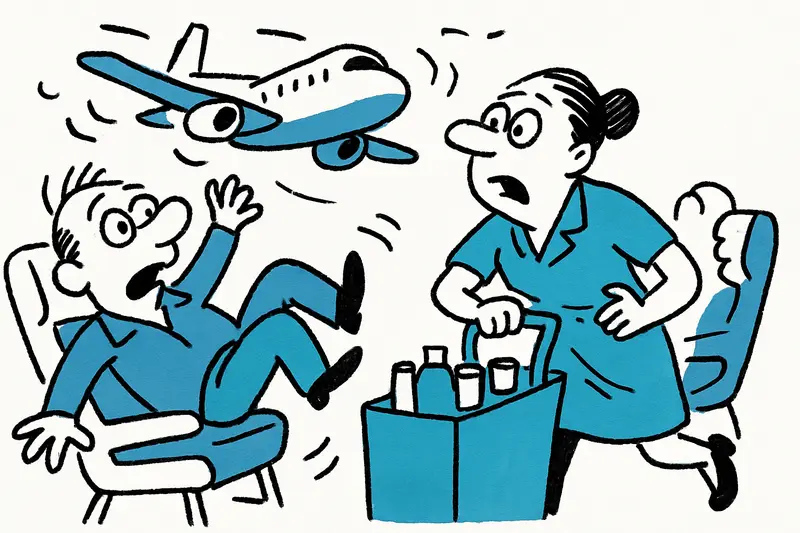
On December 28, a Ryanair flight departed from Birmingham bound for Tenerife. At cruising altitude, around 11,278 meters and roughly fifty kilometers before Brest, the Boeing 737 Max apparently encountered such severe turbulence that the crew declared the general emergency code 7700 and the aircraft turned back. The cockpit then initiated a rapid descent and reached about 3,000 meters within ten minutes. Around 50 minutes after the turn, the aircraft was back on the ground; some passengers received medical attention. The onward flight continued later that evening.
Key question: How well are flights actually protected against unexpectedly severe turbulence — and what responsibility do the airline, crew and authorities bear?
Critical analysis: Turbulence is not a new phenomenon, but its dynamics have changed. Clear‑air turbulence is often invisible to radar. That makes it particularly treacherous for the cabin, especially when service is underway and trolleys are in the aisles. In this case, according to witnesses, cabin service was being carried out when the bump occurred. When people stand up, service trolleys roll and seatbelts are unfastened, the risk of injury rises dramatically — and the medical situation on board can deteriorate within seconds.
What is missing from the public debate: numbers. There is hardly any accessible, standardized data on injuries from turbulence per year, by airline or aircraft type. There is also a lack of transparency about how quickly a crew is connected with medical care on the ground after declaring 7700. And: it is rarely discussed how standard decisions are made — for example: when is service stopped? Who decides that in the case of predicted but not visible turbulence? The answers usually remain internal to the airline; for example, incidents such as Problema sanitario obliga a aterrizaje de seguridad de un avión de Ryanair — una interrogante para la seguridad aérea highlight how details are often confined to internal reports.
An everyday scene in Mallorca shows why this matters: On Passeig Mallorca in front of the editorial office, an older gentleman sits with a stack of newspapers and argues loudly while the tram passes. He has never missed his flight, but he knows someone who was injured in a severe air pocket encounter, similar to the episode reported in Segundos de pavor sobre Palma: dos auxiliares de vuelo heridos por turbulencias – ¿se pudo haber evitado?. The conversation quickly turns to the same questions: Why did passengers not know anything before the chaos started? Why do bystanders from the terminal often have to help instead of professional rescue teams being immediately available?
Concrete solutions that could take effect immediately:
1) Stricter rules for cabin service: Airlines should be required to suspend service when meteorological data indicate an elevated turbulence risk. Decisions must not be based solely on comfort.
2) More and better data collection: National aviation authorities could establish a central registry for turbulence injuries. Uniform reporting obligations would enable rapid analyses and preventive measures.
3) Improved passenger information: Clearer pre-flight explanations about the meaning of the seatbelt signs — and enforceable checks during the flight. Not everyone realizes how quickly a situation can turn.
4) More modern weather briefings: Airlines and crews should rely more on models and real‑time measurements; exchange with meteorological services like AEMET can help here — internationally connected warning chains also make sense.
5) Medical readiness at the departure airport: Airports must have routines so that when a plane returns with injured people, the route into the terminal and the care proceed smoothly. That means not only having ambulances available, but organizing coordinated handovers on board.
Another sensitive point: communication. On the ground, affected people and relatives need clear, honest information. Flippant announcements or contradictory statements breed mistrust. Better: a fixed procedure stating who informs whom, when medical help will be provided and how the flight will continue.
Concise conclusion: Emergency code 7700 is not a loud alarm, it is a signal to the system — and a test of its resilience. That a flight can restart after such incidents without causes being thoroughly investigated or procedures made public is troubling. Not because airlines must always make mistakes, but because a lack of transparency damages trust. For those of us on the island who know every tourist train and every terminal, this means: prevention is cheaper and more humane than chaotic repair afterwards.
Anyone flying should stay alert: fasten your seatbelt when the light is on. And we on the ground should persistently ask questions when answers are missing — for greater safety above the clouds and for the people who then need care on the ground.
Frequently asked questions
What does emergency code 7700 mean on a flight to Mallorca?
How dangerous is severe turbulence on a flight to Mallorca?
Can turbulence happen without warning on flights from Mallorca or to Mallorca?
Should I keep my seatbelt on during a flight to Mallorca?
What should I do if a flight to Palma turns back because of an emergency?
Why can cabin service be a problem during turbulence on Mallorca flights?
When is the best time to fly to Mallorca if you want to reduce turbulence risk?
How are injured passengers cared for after an emergency landing in Mallorca?
Similar News
Palma, Palma de Mallorca, Palma‑Mallorca: What is it really about?
The debate over the city's name is more than grammar: it concerns identity, law and branding policy. A sober reality che...
Warning to Bathers: Nipping Fish in Cala Major and Other Coves — a Reality Check
In Cala Major and several beaches around Mallorca, bathers report painful “nips”. Who are the animals, why are they gett...

Rental Car Theft in El Arenal: What This Incident Reveals About Our Gaps
A teenager steals a running rental car in El Arenal, flees on foot, climbs over walls and is caught by the Guardia Civil...

Red Rope in Palma's Library: What Helps Against Selfie Tourism — and What's Missing
Palma's city library cordoned off an area with a red rope to keep selfie tourism away from reading and working activitie...
Fort San Carlos: Museum, Harbor Dispute — and a Conflict That Demands Answers
The military museum at Fort San Carlos sits right on Palma's harbor, with unexpectedly quiet rooms filled with cannons a...
More to explore
Discover more interesting content

Can Cap de Bou

Townhouse Lleo 72
