
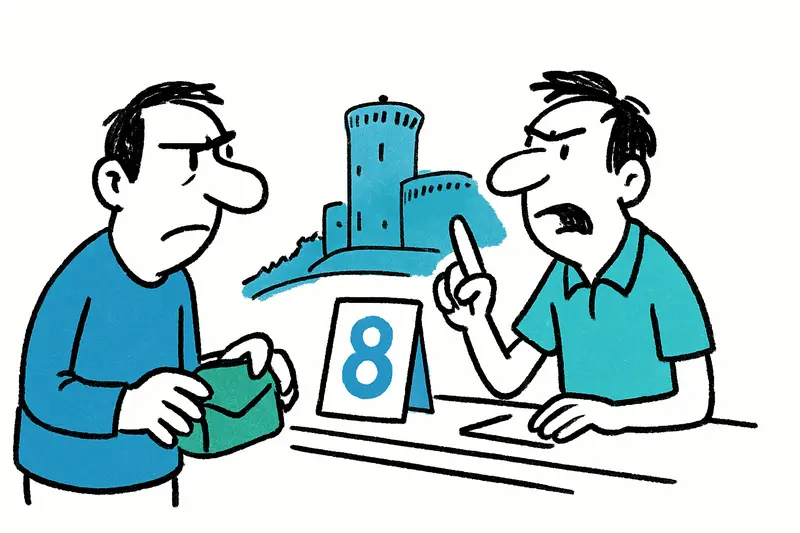
Castell de Bellver: Entrance fee to be doubled — What will we be paying for?
The city of Palma plans to raise the regular entrance fee to Castell de Bellver from €4 to €8. Residents will keep a reduced rate — but the doubling raises questions: Will paths, planting and security actually be improved? And how will the surrounding community be affected?
A doubled price — and many open questions
The wind carries the rustle of the pines from the hill today, a few joggers are breathing hard, tourist groups with headphones wind their way up the narrow path: Castell de Bellver — Wikipedia is once again a magnet. Now the city plans to double the regular entrance fee — from €4 to €8. A piece of news that is discussed at the kiosk next to the car park as much as among tour guides and groups of retirees.
The central question
What exactly is the money supposed to be used for — and does that justify a doubling? That is the guiding question behind the announcement. The administration speaks of better maintenance, increased security and more events. Concrete measures, budgets or schedules are lacking so far.
What the city proposes
The proposal foresees raising the full entrance fee for non-residents from €4 to €8. Residents would apparently retain the reduced rate of €2.50. Fees for private events held at the castle — weddings, corporate parties — are also to rise significantly, according to Mallorca-Magic coverage of access and event price hike at Castillo de Bellver. Additional revenue is expected to increase from the current roughly €800,000 to up to €1.6 million per year.
Immediate reactions on site
Early in the morning I heard two pensioners say: "Four euros is fine, eight for a short walk is too much." A tour guide waved it off: "People will come anyway, this is city history." A young father thought the residents' price was fair. Emotions range between pragmatism and displeasure — depending on whether you stroll by daily or stop once for a photo.
What is often missing from the public debate
The discussion mostly revolves around revenue versus fees. Little attention is paid to how a doubling affects the micro-economy around the castle: cafés, souvenir stalls and taxi drivers live off spontaneous visitors. If more people pass by for price reasons, the small businesses will be hit harder than the large operators. Equally little is being discussed is whether the residents' exemption is socially equitable: what about long-term tenants, migrant workers or people with low incomes?
Analytical view: opportunities and risks
Opportunities: More revenue could be necessary to properly address the weathered access paths, signage, lighting and safety measures. A stable maintenance fund would secure the long-term preservation of the historic ensemble and increase its attractiveness.
Risks: Without firm commitments, the increase risks becoming a mere consolidation measure in the city budget — meaning the money flows into the general coffers instead of concrete projects. There is also the danger that the site becomes more of an event space for well-heeled customers, while the castle's public character gradually recedes.
Concrete proposals — so the increase becomes comprehensible
1) Earmarking: The additional revenue must be bindingly reserved for projects that can be inspected (paths, tree maintenance, accessibility). 2) Phased model: A gradual increase over two years spares nobody the surprise factor. 3) Transparency portal: An annual report with a detailed breakdown of costs builds trust. 4) Combo tickets & time slots: Cheaper combo tickets for families or discounted time slots outside peak season keep spontaneous visits attractive. 5) Support for small businesses: A small fund for local vendors who can prove loss of turnover would cushion hardships.
What happens next
The proposal still has to go through the municipal committees; a possible start date is spring 2026. Until then, district meetings, online debates and likely some petitions can be expected. For visitors, the practical tip remains: plan 45 to 90 minutes — including stairs, photos and a short break. A bit of sun, the cry of seagulls and the view over the bay are free extras.
My conclusion: The doubling can make sense — if the city and citizens finally state concretely what the money will be used for. Without that, much good potential remains hanging in the air, like the smoke of barbecues on a quiet evening on the hill.
Frequently asked questions
Why is the entrance fee for Castell de Bellver in Mallorca set to double?
How much will it cost to visit Castell de Bellver in Mallorca if the new price is approved?
Do Mallorca residents still get discounted entry to Castell de Bellver?
What will the extra money from Castell de Bellver be used for in Mallorca?
When could the new Castell de Bellver entrance fee start in Mallorca?
How long do you need for a visit to Castell de Bellver in Palma?
What should you know before visiting Castell de Bellver on Mallorca?
Could a higher Castell de Bellver ticket price affect small businesses nearby in Mallorca?
Similar News
Masked Images, Real Panic: When Social Media Aesthetics Alarm Neighbors
Five German content creators filmed on a recently vacated detention site using deceptively realistic props. The result: ...
Why the Striped Breams in Cala Pí Should Be a Wake-up Call
Once again bathers in Cala Pí were surrounded while swimming by small, nippy fish — some wounds bled. Time for clear rul...

Daily from New York: How Palma's Air Traffic Is Growing — and What Must Change
United will increase the Newark–Palma service to daily flights in 2027 (Boeing, 231 seats). Strong tourist numbers clash...

When Love Ends in Shards: Destruction in Son Vida and the Questions That Remain
In Son Vida a relationship dispute escalated: a woman destroyed furniture in a luxury villa, later pressed a panic butto...
Who Bears the Burden? Mallorca Between Tenant Protection and Landlord Fears
Madrid's new housing decrees strengthen tenant rights — but on Mallorca concern is growing: will the law drive small lan...
More to explore
Discover more interesting content

Can Cap de Bou

Townhouse Lleo 72
