
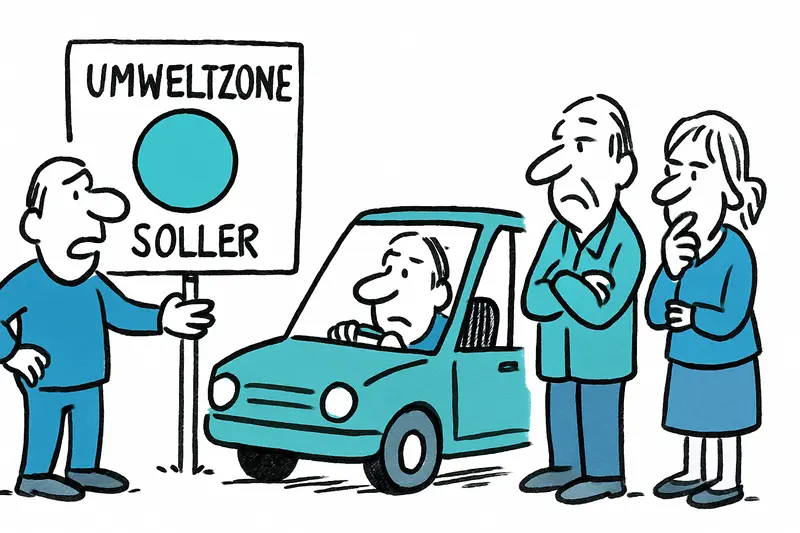
Environmental zone in Sóller: Who is allowed in, who isn't — and what's missing in the discourse?
Environmental zone in Sóller: Who is allowed in, who isn't — and what's missing in the discourse?
From Feb 27 an environmental zone comes into effect in Sóller: only locally registered cars and electric vehicles with a sticker may enter the core. Neighbouring residents need a permit; rental cars and visitors are excluded. A reality check on the ground.
Environmental zone in Sóller: A hurdle for visitors, relief for the centre?
Key question: Does the measure protect the neighbourhood — or does it merely shift problems beyond the town border?
From 27 February a new environmental zone applies in the centre of Sóller. According to the decision, only vehicles registered in Sóller and electric cars with a special sticker are allowed. Anyone arriving in a rental car or visiting can no longer drive into the core with their vehicle. Neighbours from Deià, Fornalutx and Escorca are supposed to apply for a permit if they need to pass through; parking options for them are, however, limited. The municipality says it will create additional parking spaces outside the centre.
The decision is a classic example of local air and noise protection policy: narrowly defined, quick to implement and visible. On the Plaça de sa Constitució early in the morning you can notice it: delivery vans move more cautiously, pedestrians breathe a little easier, and the smell of coffee from the little café on the corner comes through more undisturbed. But the bench at the edge of the square is full of questions that a sticker alone cannot answer. Comparable measures in Palma have shown similar side effects, see Palma locks out holidaymakers: Low-emission zone with side effects.
Critical analysis: The measure is targeted but narrowly conceived. An environmental zone that covers only the town centre does reduce traffic and emissions there — but it often displaces traffic to the edges. If parking is scarce, service vehicles or guests park on residential streets outside the zone. The pressure shifts to places like the road down to the harbour or to the access roads to Deià, where the tight bends already cause congestion.
Another point: the regulation for residents of surrounding municipalities is complicated. An approval procedure requires time and bureaucracy; moreover, a permit is of little use if there are hardly any legal parking spaces. People who work in Fornalutx or care for relatives in Sóller face the question: how often may I pass through? Where do I park? Such practical questions must be answered locally, otherwise the environmental zone remains a set of rules that does not really facilitate everyday life and mobility.
What is often missing from the public debate is the perspective of businesses and tourism operators. Bakers, small grocers, craftsmen and guesthouses rely on delivery vehicles and changing guests. A completely sealed-off core can disrupt supply chains in the short term if, for example, goods deliveries have to use parking zones farther away. Equally overlooked is the role of walking and cycling: will secure and covered bicycle parking be provided? Will more charging points for electric cars be installed in sensible locations, or will the sticker remain the only measure?
Everyday observation from Sóller: On a February morning an elderly woman with a shopping basket stands in front of the town hall building, the wind carries the tolling of a church bell through the lanes. A delivery driver is discussing future stopping places with an employee of a small hotel. Decisions play out like this: not in meetings, but on street corners where people test how politics affects their daily lives.
Concrete solutions that go beyond bans and stickers: First, clear and practical transit rules for medical emergencies, care services and craftsmen; these must be managed digitally and without bureaucracy. Second, a tiered parking concept: short-term delivery zones near the centre, affordable long-term parking at the outer edges and a free or low-cost shuttle at peak times. Third, expansion of charging infrastructure along the access routes to Sóller and at the new parking areas so that electric cars become a real alternative rather than an exception. Fourth, monitoring: air quality measuring points and traffic counts made transparent so that effects and side effects can be measured.
The municipality should also cooperate more closely with neighbouring communities. If Deià, Fornalutx and Escorca are affected, coordinated solutions are needed — for example joint parking zones or a combined shuttle bus that brings commuters and visitors from the mountains to the centre. Without cooperation there is a risk of an island of tranquillity in the centre and full roads outside the gates. The issue ties into wider regional choices about housing and land use, discussed in Building law relaxed: How Mallorca decides between housing and farmland.
Conclusion: Sóller is taking a clear step toward less traffic in the historic core. This is understandable and partly welcome. But without accompanying infrastructure, pragmatic exemptions and regional coordination, the measure risks shifting problems instead of solving them. The sticker is not the whole story; it is the beginning of a debate best held on the Plaça, in the local shop and with the people who are affected by the new regulation every day.
Practical tip for visitors: If you arrive without local registration, head for parking outside the centre and expect a walk or a shuttle. For residents from the mountains: apply for a permit in good time and ask early where the limited parking spaces are located.
Frequently asked questions
Can visitors still drive into the centre of Sóller?
Who is allowed to drive in the environmental zone in Sóller?
What should tourists do if they arrive in Sóller by rental car?
Does the environmental zone in Sóller also affect people from nearby villages?
Will the new rules in Sóller make it easier to park?
What are the main concerns about Sóller’s environmental zone?
Is it still possible to deliver goods to businesses in central Sóller?
What is the best way to visit Sóller now if you are not driving locally?
Similar News
Why the End of "Los Últimos Mohicanos" Is More Than the Closing of a Bar
With squealing tires and one last glass, an icon on the Palma–Manacor expressway closes. Why the demise of this German b...

Protest camp on Plaza España: Who asks for solutions to the right to housing?
Around 30 activists set up a tent camp on Palma's Plaza España to push for stronger tenant rights. Our analysis asks: Ar...

In the Name of a Gang: Alleged Extortion in El Molinar and What It Reveals About the Protection of Sex Workers
A man is accused of posing as a member of the Hells Angels and extorting two women at accommodation in El Molinar. The s...

When Chile Meets the Mediterranean: A New Flavor at Can Bordoy
At Can Bordoy in Palma's old town, Chilean chef Jhonatan Maldonado combines Patagonian seafood with Mediterranean island...
End of an Era on the Ma-15: Why the Biker Hangout at Son Gual Is More Than Just a Restaurant
"Los Últimos Mohicanos" closes unexpectedly. A meeting place for motorcyclists on the Palma–Algaida border is disappeari...
More to explore
Discover more interesting content

Can Cap de Bou

Townhouse Lleo 72
