
More Green, More Calm: Es Carnatge Is Being Redesigned
The coastal area Es Carnatge near Palma will receive new seating areas, improved paths and measures to restore native vegetation as part of a €4.4 million package — good for cyclists, residents and nature.
More green, more calm: Es Carnatge is being redesigned
New seaside seating, upgraded cycle routes and a focus on native plants
On the edge of Playa de Palma, where cyclists puff by from the city centre in the morning and seagulls shriek over the runway, a major construction and nature-conservation package is planned. The municipality has announced a programme to make Es Carnatge more visible and closer to nature within a year. For background on the launch, see Palma launches Es Carnatge: €2.2M for first phase.
Financially, the project amounts to around €4.4 million. For a closer look at the funding and early measures, read Es Carnatge: Millions for paths and lighting — is that enough for real nature conservation?. About €2,224,537 are allocated to the core budget: €1,256,030 comes from the overnight-stay tax and the remaining €968,000 from the municipality's own funds. Additionally, works such as the renovation of the former barracks and the cleaning of the seabed are planned with a total value of almost €2.2 million.
The project is divided into two sections: The first block, overseen by the Parks and Gardens office, is dedicated to habitat restoration over an area of more than 200,000 square metres. A budget item of around €739,183 is earmarked for the removal of invasive species, reforestation with native plants and the adaptation of street furniture. This should restore the vegetation-rich structure the area once had.
The second block focuses on paths, access points and drainage. With a budget of about €1,485,347, existing trails will be renewed, in some places widened, and the four main entrances made more attractive. The measures aim to allow pedestrians, joggers and cyclists to move more safely without unnecessarily disturbing the natural habitat.
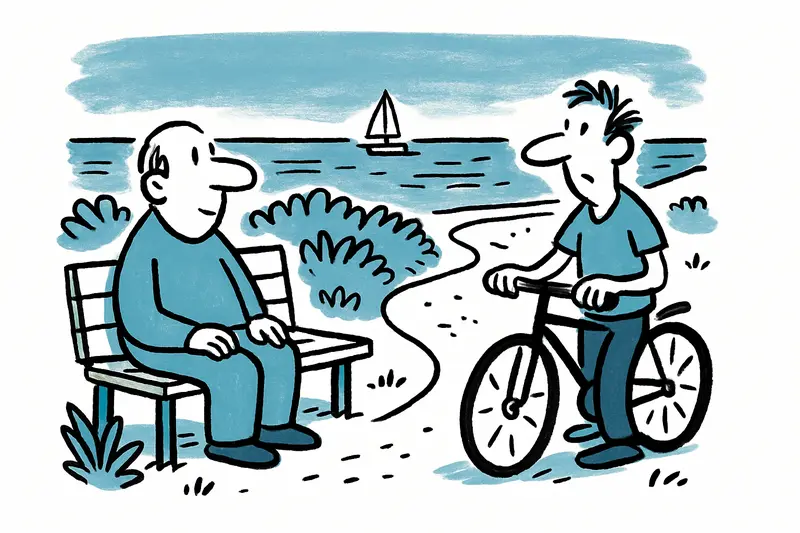
In the short term, a visible result will be the creation of new seating directly by the sea. On a mild morning you can already see people with thermal flasks on a bench, parents with prams and dog owners sharing a sunny spot. Such rest points make the coastal area usable for residents and visitors alike — even outside the season.
The planned interventions bring practical benefits: better cycling connections from the centre to the coast can make everyday routes safer and therefore more attractive. This reduces short car trips and encourages bicycle use, especially on days when the Tramuntana wind is not blowing and the air smells of the sea.
What residents and nature lovers can do now: small local initiatives like neighbourhood planting actions, organised beach-cleaning days or cooperation with local schools could complement the official programme. There are also organised educational walks; see Es Carnatge in Autumn: Guided Excursions between Dunes and Herons for an example. Such activities bring people together and raise awareness of native plant life without waiting for formal decisions.
Es Carnatge is not purely a tourist spot; it is a transition between city and sea, a space used daily by many long-time residents and commuters. More benches, clearer paths and nature-oriented planting can make it a place where people are happy to linger for fifteen minutes before continuing their journey — with the sound of waves in the background and the occasional plane coming in to land.
The timetable foresees different durations for the phases: while the first visible measures are due to start in the coming months, some components are planned for the long term. Anyone who sees the mood of change along the waterfront can already look forward to more shade, more seating and a greener Es Carnatge today.
OutlookThe upgrade offers the chance to strengthen a small but important coastal section both ecologically and socially. If residents, cyclists and environmental groups pull together, Es Carnatge could become a lively yet relaxed stopover between city and beach.
Frequently asked questions
What is happening at Es Carnatge in Mallorca?
Is Es Carnatge still easy to walk or cycle through during the works?
Why is Es Carnatge in Mallorca being redesigned?
What kind of nature improvements are planned for Es Carnatge?
Will there be places to sit by the sea at Es Carnatge?
How much is Palma spending on the Es Carnatge project?
What is Es Carnatge like for residents in Palma today?
Can locals help with the Es Carnatge restoration in Mallorca?
Similar News
Bendinat as a meeting place: Padel Cup brings together nearly 120 players
Three days of padel at the Bendinat Urban Country Club: organized by El Económico and Borbalán, with around 120 particip...
Large-scale Anti-Tourism Graffiti at Cala Mendia: Protest or Vandalism?
On the morning walkers discovered an approximately 50-meter-long slogan against tourism on the wall above Cala Mendia. W...
Bomb threat before Jet2 flight in Tenerife: A reality check for security protocols
A passenger reported a bomb in luggage shortly before departure in Tenerife. Evacuation, baggage checks, delays — and ma...
Who is stripping Mallorca's coast bare? Why entire slopes are being removed for villas
On Mallorca steep slopes are again being removed to make way for luxury construction sites. Who bears the responsibility...
Robber Falls While Fleeing in Sant Agustí: Who Takes Responsibility?
During a purse-snatching in Sant Agustí, a non-commissioned officer chased the suspect; the man jumped from a bridge and...
More to explore
Discover more interesting content

Can Cap de Bou

Townhouse Lleo 72
