
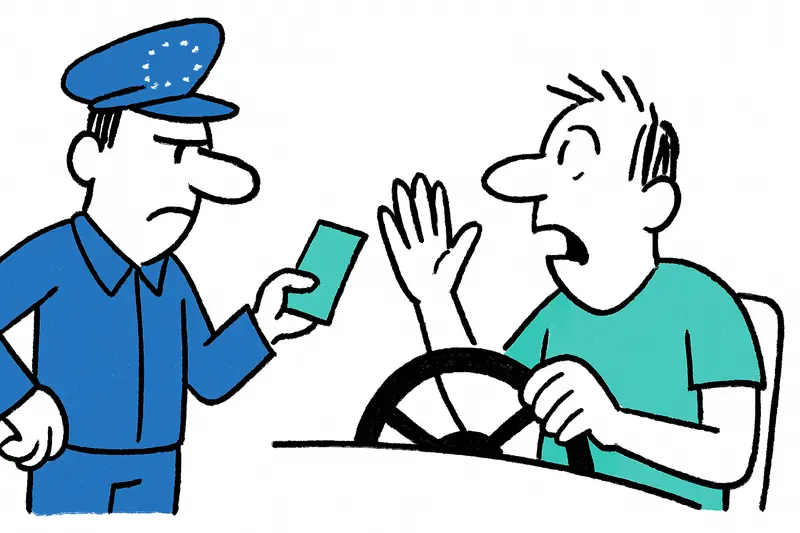
EU Traffic Rules: What Really Changes for Drivers in Mallorca
From 2027, cross-border information sharing is set to cover additional traffic offences. But that does not mean every ticket will automatically land in your home mailbox.
EU traffic offences: more information sharing, but no automatic ticket machine
If you drive in Mallorca with a foreign number plate, you may know that nagging uncertainty: what happens to an offence once the car is back in Germany or Austria? An EU directive is intended to make it easier for authorities to share information about additional traffic offences. The key point can get lost in the big promise: this is not the same as automatic, Europe-wide enforcement of every fine.
Which additional offences are set to be covered
Directive 2024/3237 expands the framework for cross-border exchanges of vehicle and owner data. It adds further offences to those already covered, including dangerous overtaking, failing to create an emergency corridor, leaving the scene of an accident, and dangerous stopping or parking. Driving in certain restricted zones and following too closely are also included.
When it comes to parking, it is worth reading the details carefully: this does not mean every case of a missing parking ticket displayed behind the windscreen. The expansion targets dangerous stopping or parking. Where the line falls in an individual case, and how an offence is penalised, depends on the applicable national rules.
The deadline for implementing the new requirements in national law is 20 July 2027. The main aim is to make it easier to identify a vehicle or its owner across borders and improve notification. However, the directive does not simply harmonise fines across Europe, nor does it automatically turn every foreign claim into an enforceable payment.
What “cross-border enforcement” means in practice
The phrase may sound as if an authority will chase a driver across the border. In reality, it concerns administrative procedures: authorities can exchange information, identify an owner and initiate proceedings. The specific rules, responsibilities and remedies of the country concerned then apply. And receiving a notice is not proof that the allegation is correct.
Anyone who receives a notice should check the sender, number plate, location, time and description of the alleged offence. With a rental car, a notice from the rental company about an administrative fee may also be separate from the actual fine. Do not let deadlines pass, keep your documents and ask a qualified source if anything is unclear. It is less exciting than the headline, but more useful.
Everyday traffic in Palma is more complicated than a list
In the evening rush hour, traffic builds up on the Via de Cintura. One driver brakes, another follows too closely, and a delivery van behind them looks for a gap. In moments like these, the issue is not abstract EU regulations, but visibility, reaction time and space for emergency vehicles. Leaving a few extra metres is not bureaucracy. It gives everyone room to breathe.
And on the narrow streets in central Palma, “parking” is not always a harmless formality either: a car can block a driver’s line of sight or narrow a passage so much that emergency and delivery vehicles get stuck. That helps explain why dangerous stopping can be treated differently from an ordinary parking mistake. But it does not replace clear information about the specific offence being alleged.
What gets overlooked in public debate
Debate often stops at the question of whether a fine will cross the border. Just as important are clear notices, accurate data and an accessible way to challenge an error. Cross-border information sharing can make investigations easier; it does not guarantee that every authority will work without mistakes. The language of a notice and clear information about deadlines and legal remedies are also part of a fair process.
For Mallorca, the rules do not initially mean a new traffic light or a special penalty for holidaymakers. They are intended to close gaps in information sharing between EU countries. Anyone driving here should therefore not count on a notice getting lost somewhere along the way. Equally, no one needs to accept an unclear claim without checking it.
The sober conclusion: From 2027, it is likely to become easier to reach vehicle owners across borders for certain traffic offences. But “every ticket will be collected automatically” is a far too broad interpretation. Keeping a safe distance, avoiding dangerous parking and carefully checking official notices remain the more practical lessons—on the island and beyond.
Frequently asked questions
Will a traffic fine from Mallorca automatically follow me home to another EU country?
Which traffic offences in Mallorca can be shared with other EU countries?
When do the new EU cross-border traffic rules apply to drivers in Mallorca?
Does a Mallorca parking fine get sent abroad if I forget to display a ticket?
What should I check if I receive a traffic notice from Mallorca after my trip?
Can a rental car company charge an admin fee for a Mallorca traffic notice?
Can I challenge a traffic fine from Mallorca if the details are wrong?
Will EU rules make traffic fines the same in Mallorca and other countries?
Similar News

Beyond Manacor: Mallorca’s Balloon Pilot and His Craft
For decades, Ricardo Aracil has taken people over Mallorca in a hot-air balloon. The view from above is the highlight—bu...
Passport Checks in Menorca: Suspicion Is Not a Verdict
An unusual travel document can prompt an inspection. What happens next is often hard for travellers to see—and calls for...
When a Baby Suddenly Stops Breathing: Palma’s Emergency Response Put to the Test
Every minute counts in a medical emergency involving an infant. What matters is not only who arrives first, but also whe...
Bus Strike Before Christmas in Mallorca: What Is Confirmed—and What Isn’t
A strike in passenger and freight transport has been announced for December 23 and 24. How severely Mallorca would be af...
Car Transporter Fire Temporarily Disrupts Access to Palma
A car on a transporter caught fire on Monday morning on the Ma-1 near Portopí. The closure affected rush-hour traffic; t...
More to explore
Discover more interesting content

Can Cap de Bou

Townhouse Lleo 72
