
A City Breathes Differently: Palma and Marratxí Test Car-Free Hours
For European Mobility Week, Palma and Marratxí turn parking spaces into green islands and try a car-free day. Small experiments, big impact — an invitation to experience the city anew.
A City Breathes Differently: Palma and Marratxí Test Car-Free Hours
When the sun sits lower over the Passeig del Born in September and the delivery van sirens grow a little quieter, you notice: Palma is taking a break from the usual. European Mobility Week runs until Monday, and this year the island capital has come up with small, charming experiments. Alongside Palma, Marratxí is joining in — with bike tours, walks and ideas that come from the neighbourhood.
19 September: Parking Day – parking bays become green islands
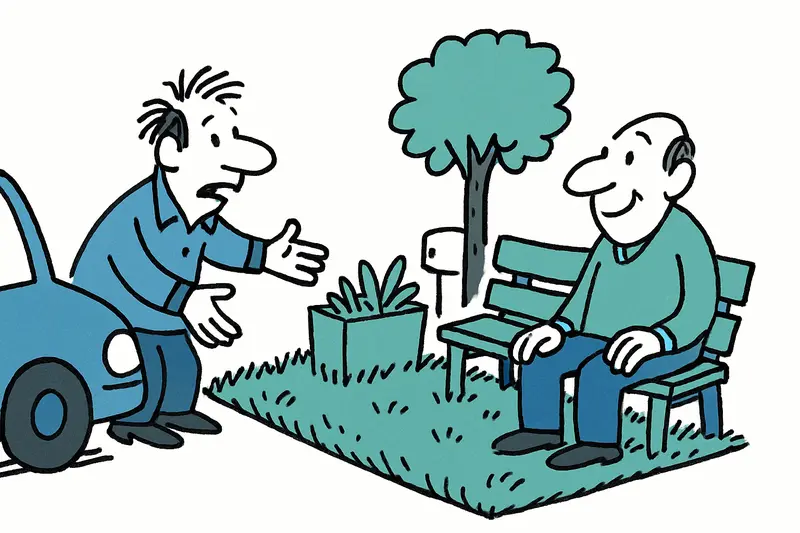
Tomorrow, on 19 September, some parking bays in Palma's centre will be transformed into “mini-parks” for 24 hours. If you stroll along the Carrer de Sant Merní or the Passeig del Born in the morning, you might find a bench, a few planters and the scent of herbs lovingly shared by a neighbour instead of a fender. It is not a big spectacle, more of a wink: showing how much space belongs to people when a car is missing.
You hear children's laughter instead of engines, the clack of bicycle pedals, the distant chime of a tram. Such parklets are small pause spaces — for a conversation, a coffee to go or a short sunbath on an improvised wooden bench. The action is friendly, a little ironic and very Mallorcan: practical, neighbourly, with a touch of improvisational talent.
22 September: A day without private cars in the city centre
The bigger test follows on 22 September: on that day there will be a driving ban for private cars in Palma's old town, as explained in Car-free Saturday in Palma's Old Town: plan, park, enjoy. All paid ORA spaces will be closed; details on closures and detours are available in Palma at the Weekend: Closures, Detours and What Residents Should Know. Those who love their car should better leave it on the outskirts — in return EMT buses, the metro and trains for non-residents are free on that day. A small relief that is also an incentive to try the public transport offer.
Yesterday I sat for a while in the Plaça Major and chatted with a bus driver. She was surprised by the many curious questions from passengers — but also pleased by how many people were willing to switch. The bus smelled of freshly cleaned plastic, cicadas buzzed outside, and in the conversations you could feel approval: fewer cars does not mean an empty city, but a different kind of liveliness.
Why this matters — and how you can take part
For some it may be just a day with fewer parking spaces. For others these are small everyday wonders: a quieter pavement, older people reaching a bench without haste, children finding a free space to play again. Marratxí is using the week for bike tours and guided walks — ideal opportunities to discover corners you otherwise miss in the car rush; for other cycle events and related road impacts see Palma on Sunday: Triathlon and Cycling Tour Bring Atmosphere — and Road Closures.
My tip: leave the car, get on a bike or take the bus. Arrive early at the activities on Paseo Mallorca, where schools and neighbourhood groups are often active. If you're adventurous, try a route that you normally drive. And if you like the idea, join the conversation: talk to neighbours, demand safe cycle lanes and more parklets — small ideas, big impact.
Whether the measures become permanent is uncertain. European Mobility Week is a showcase: a test, an invitation. If we take away the feeling that a city without cars is not quieter but differently alive, Palma's short experiment has already won. And who knows — maybe that bench in the parking bay will stay longer than planned.
Frequently asked questions
What happens during car-free days in Palma during European Mobility Week?
Will Palma old town be closed to private cars on 22 September?
How do Parking Day parklets work in Palma?
Is public transport free in Palma on the car-free day?
What is European Mobility Week in Mallorca?
What is happening in Marratxí during European Mobility Week?
Is it worth visiting Palma centre on a car-free day?
What should I do with my car if I go to Palma on 22 September?
Similar News

Release after bloody attack in Palma: Why the court's decision raises questions
An 18-year-old who allegedly inflicted a serious neck injury on a man at Plaza Gomila using a wristwatch wrapped around ...
Kidnappings in Inca: Three young men forced into car trunks and abused in the forest – a reality check
In Inca, three 18-year-old men were forced into car trunks by masked assailants at the Plaça des Bestiar, taken to a for...
Spreading Massification: The Brake That Still Has Much Work to Do
Marga Prohens announces limits on volume tourism. The measures sound harsh — but are they enough to save everyday life, ...
Through the Keyhole onto the Party Yacht: How Daniela Katzenberger Is Planning Her 40th on Mallorca
Daniela Katzenberger turns 40 and wants to celebrate it on the island — likely with a boat, cake and her mother. A relax...
By Boat Instead of the Road: Palma's Water Bus — a Reality Check
The 'Bus Nàutic' launches in two stages — but questions remain over interim operations, fares and environmental requirem...
More to explore
Discover more interesting content

Can Cap de Bou

Townhouse Lleo 72
