
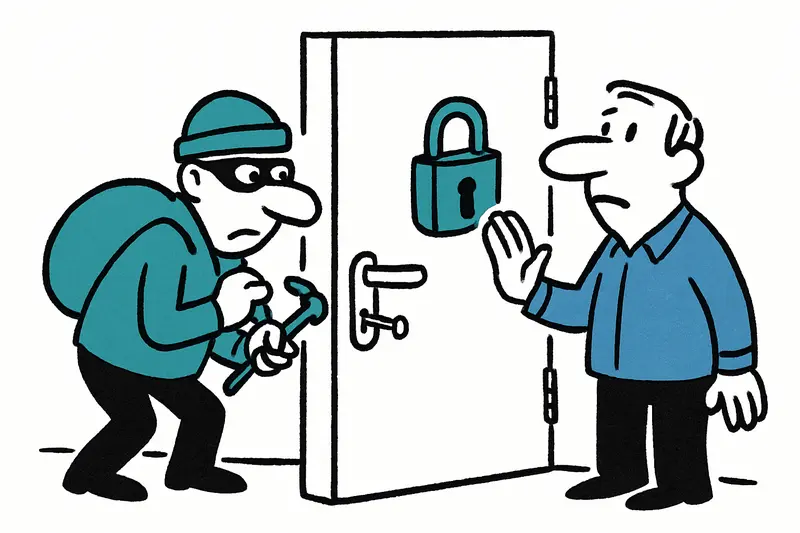
Protecting the Finca: How to Make Life Difficult for Burglars in Mallorca
Protecting the Finca: How to Make Life Difficult for Burglars in Mallorca
A short video from the National Police serves as a reminder: well-maintained door locks protect fincas and holiday homes. Practical tips for Mallorca property owners.
Protecting the Finca: How to Make Life Difficult for Burglars in Mallorca
Simple, effective and local – what you should check now
In Palma, on a morning when the bakery on Passeig Mallorca already fills the street with the smell of bread and a delivery van beeps at the Santa Catalina market, one thing becomes obvious: many holiday homes stand empty, but windows and doors are often only half-heartedly secured. The Spanish National Police recently reminded people on TikTok that it is often exactly this carelessness that invites incidents. The message is simple and useful: security components need maintenance – especially the lock cylinder.
What does this mean in concrete terms for homeowners from Germany who own a finca, an apartment or a holiday home in Mallorca? First: a door is the first barrier. A well-maintained, certified lock cylinder together with a robust door protector forms a basic framework that deters intruders more effectively than an expensive alarm system that has been carelessly installed. For a recent example involving German residents, see Robbery in Front of Their Own Driveway: How Safe Do We Feel in Southwest Mallorca?.
The most important points, briefly explained
1) Check instead of trust: Watch whether the key inserts and turns easily. Jerking or resistance are signs of wear. Experts recommend a thorough check every 8 to 10 years – earlier in case of heavy use, humidity or after losing a key.
2) Lock fully: Many residents only turn the key halfway and thus do not lock completely. Correct locking with all turns significantly increases the time required for burglars. That is often enough for them to give up.
3) Look for certifications: High-security cylinders are tested to standards such as EN 1303 and EN 12209; certifications from bodies like AENOR are an additional proof of quality. Such cylinders resist techniques like bumping, drilling or pulling out better – and buy you time.
4) Double-coupling system for everyday convenience: These cylinders allow the door to be opened even if a key is inserted on the inside. This is practical for households with people in need of care or an emergency call service and prevents doors from being blocked from the outside.
5) Combine instead of hope: A multi-layered system with a reinforced protective rosette, multi-point locking and a certified cylinder plus simple alarm technology or a camera is more effective than any single component on its own.
On Mallorca there is an additional point: many properties are seasonally empty, residents hear the rustle of the wind in the pines or rarely see footprints in the sand. That makes preventive measures even more important, as described in Organized watch robbers in the Balearics: Why Mallorca must also stay vigilant. A short check before departure, asking a neighbor to look in now and then, or simple timers for lights give a sense of presence – and act as a deterrent.
A small everyday observation: on the way to Mercat de l'Olivar you often see craftsmen with full toolboxes. A reputable locksmith is not a luxury expense, but a local service that pays off, as shown by Raid in Palma: Specialized keys, disguises — and many unanswered questions. Ask to see documented certificates when having work done and note the replacement date of the cylinder; that way you keep track.
Why is this good for Mallorca? Because fewer successful burglaries calm the neighborhood, insurance claims decrease and the image of quiet residential areas is preserved. It is the small practical steps that reliably protect fincas and old buildings and make communal life more relaxed.
My tip: create a short checklist for your property – cylinder age, condition of the rosette, full locking when leaving, phone number of a local locksmith, and a neighbor who can call if something unusual happens. Small investments and regular checks keep problems away.
Conclusion: Those who live in Mallorca or own a second property there do not have to invent much: check, certify, combine and use a bit of neighborhood networking. That is often enough. The National Police video was just an occasion – the rest is routine maintenance with common sense.
Frequently asked questions
How can I make my Mallorca holiday home harder to break into?
How often should I check the lock cylinder on my finca in Mallorca?
Should I fully lock my door when leaving my Mallorca apartment?
What lock certification should I look for in Mallorca?
What is a double-coupling lock cylinder and is it useful in Mallorca?
What is the best way to secure an empty finca in Mallorca during the off-season?
Can simple lights and a neighbour really help protect a home in Mallorca?
Where can I find a locksmith in Mallorca for a secure door check?
Similar News

More water than last year: Mallorca's reservoirs breathe easier
September rain refilled the Tramuntana's reserves: overall fill around 35 percent, Cúber at 40.42 percent, Gorg Blau at ...
Three Luxury Hotels in Banyalbufar: Lots of Money, Many Questions
A Danish investor plans three exclusive accommodations in Banyalbufar — including the historic Son Valentí. The announce...
2.1 tonnes of cocaine on sailing yacht off Spain's coast – a reality check for the coastguard
A 14-metre yacht was seized with 2.1 tonnes of cocaine. Who monitors the ports, how does the international hunt succeed ...

Heat Bonus in Mallorca: 100 Euros Extra for Outdoor Staff at MarSenses
MarSenses pays employees who worked outdoors in August an extra €100 as recognition. Lighter uniforms, reduced hours for...
Renovating in Mallorca: What You Really Can Do Without Neighbour Consent
Many think they can do whatever they want in their apartment. That's partly true — but only as long as structural elemen...
More to explore
Discover more interesting content

Can Cap de Bou

Townhouse Lleo 72
