
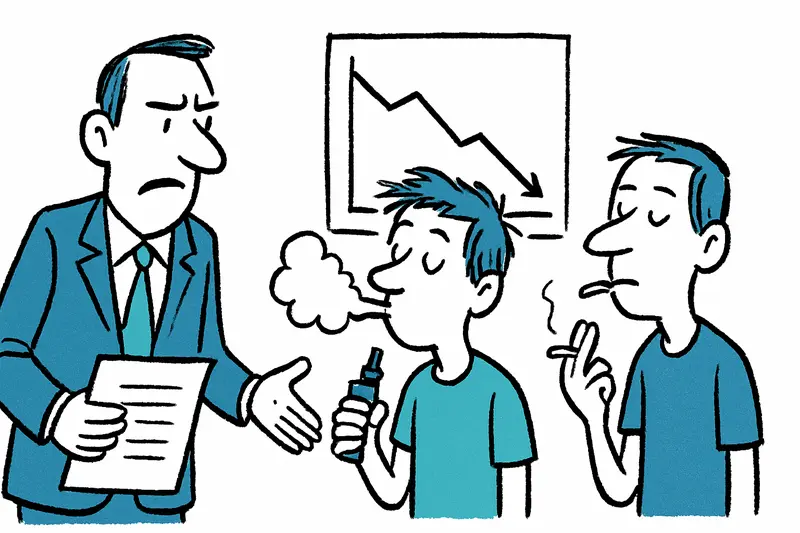
Fewer young people smoke — but the vape wave remains a problem
Fewer young people smoke — but the vape wave remains a problem
On the Balearic Islands, tobacco consumption among 14- to 18-year-olds has fallen significantly (from ~30% to just under 18%), yet almost half have already tried vaping. What does this mean for policy and prevention in Mallorca?
Fewer young people smoke — but the vape wave remains a problem
Key question: Does a decline in traditional smoking automatically mean a health success for Mallorca's youth?
The numbers sound good at first: in the most recent survey, just under 18 percent of 14- to 18-year-olds reported using tobacco in the past year. In an earlier study the share was around 30 percent. But caution: the picture has a second, much louder color. Almost every second adolescent has already used an e-cigarette or vape. The central question therefore remains: are we celebrating a public health comeback or are we overlooking a new addiction?
A critical look at the statistics shows that "smoking less" and "living healthier" are not the same. The decline in combustible cigarette smoking can be due to a number of factors: stricter age checks, awareness campaigns, societal change, or simply a shift to other nicotine products. The fact that vapes are so widespread suggests that a considerable portion of young people have swapped classic tobacco for technical alternatives.
Public debate often lacks two things: first, detailed information on frequency and consumption patterns (one-time experimentation vs. daily use). Second, information about which substances are in the cartridges or liquids. A "one-off experiment" is a different problem than regular vaping with nicotine-containing liquids.
Methodologically, it should also be considered that many studies rely on self-reports. Young people may hide or exaggerate use, depending on how they interpret the question. It is also unclear how representative the sample is for all Balearic youth. Such uncertainties should not be smiled away when policy is made on the basis of numbers.
A look at everyday life in Mallorca makes the issue tangible: on a warm evening in Palma, on the Plaça de Cort, a group of teenagers sits on the steps; amid conversations someone giggles, and now and then a small cloud of vapor rises. On the Paseo Marítimo you see young people with vapes in hand, among joggers and tourists. It is an image you see more often than a classic cigarette break. These scenes say: consumption is socially accepted, less visible, but not automatically harmless.
Critical analysis — what the numbers really tell us
1) Shift rather than solution: The decline in cigarette consumption does not necessarily mean less nicotine is being consumed. E-cigarettes are often easier to obtain, more discreet to use and are seen as "cooler" by young people.
2) Regulatory problems: There are rules at national and EU level (e.g., on maximum nicotine concentration), and recent proposals are discussed in Smoking Ban in Mallorca: What the New Law Means for Terraces, Playgrounds and E‑Cigarettes, but the variety of products and flavors makes control difficult; notably, flavors particularly appeal to young consumers, and incidents such as E-cigarette on board: How a small puff causes major disruptions on Mallorca routes show the wider consequences.
3) Prevention gaps: Schools and health services often focus on "smoking" in the traditional sense. If prevention does not include the new devices, blind spots emerge.
What is missing in the public discourse
We rarely talk about concrete availability: where do young people buy their liquids? Online shops, kiosks, private sharing? Clear figures on nicotine dependence among young people who vape are also missing. And practically: how do vapes affect athletic performance, sleep, or mental health during an age when young people already face heavy strains, as local tragedies have painfully illustrated Palma mourns: 15-year-old dead – WhatsApp groups, pills and the unanswered question of responsibility?
Concrete solutions for Mallorca
• Update prevention programs: Schools need curricula that treat vaping and classic tobacco products equally. Workshops should show real products, explain flavors and risks, and encourage critical discussion.
• Make access harder: Enforce age checks more effectively in shops and online. Spot checks at tourist hotspots and kiosks could be increased — especially in places with many young people like Cala Major or Playa de Palma.
• Regulate flavors: Banning flavors that particularly attract youth would reduce appeal. The aim is not to prevent adults from switching, but to clearly separate goals.
• Offer help to quit: Free or subsidized counseling centers, low-threshold cessation programs in youth centers and sports clubs, and digital apps for young people — these are pragmatic steps.
• Research and transparency: Authorities should promote regular, representative surveys on frequency, quantities and ingredients. Only with data can targeted action be taken.
Practical examples
A simple model: mobile prevention teams in the summer months that are present on promenades and in urban parks — with frisbee, loud music and a small stand where people can ask questions. No lecturing, but exchange. Or cooperation with sports clubs: a young person who quits vaping could be offered a free trial training session.
Conclusion
The decline in traditional smoking in the Balearic Islands is a step in the right direction. But the high prevalence of vapes among young people is not a minor cosmetic issue — it is the next construction site. Those who only see one problem overlook the other. Mallorca now needs policies and prevention that not only celebrate declines but also understand actual consumption patterns and address the new normal of vaping in a targeted way, especially in light of recent political choices such as Balearic Islands Choose Voluntariness Over Blanket Ban: A Critical Look.
Frequently asked questions
What is the best time to visit Mallorca for warm weather and swimming?
Can you still swim in Mallorca outside the main summer season?
What should I pack for a trip to Mallorca?
Is Mallorca a good destination for a beach holiday and sightseeing?
What is Palma de Mallorca like for a short city break?
Is Sóller worth visiting in Mallorca?
What is Pollença like for travellers who want a quieter Mallorca holiday?
When is Mallorca too hot for walking and outdoor activities?
Similar News
Found dead in Son Gotleu: Dog walk ends fatally — what is missing in the investigation?
A 68-year-old man was found dead on Sunday morning on Tomás Rullàn street in Son Gotleu. According to his partner, he ha...
Theft at Playa de Palma: How safe are tourists at night?
At Playa de Palma street vendors snatched a gold chain worth around €5,000 from a tourist. The National Police intervene...
Smoking Weed at the Ballermann: Why a Ten-Euro Joint at Playa de Palma Ends in Handcuffs
A street purchase for 10 euros at Playa de Palma led to an arrest. Why a simple joint on holiday can have serious conseq...
Push-ups on the Sea: Why Prone Paddlesurf is Taking Off in Mallorca
Those who crawl belly-down across the water aren't signaling for an ambulance but curiosity: prone paddlesurf — long, na...
When Bouncers Run Amok: Emmy Russ and the Question of Safety at the Ballermann
An incident at the Megapark involving reality TV figure Emmy Russ raises broader questions about the oversight of securi...
More to explore
Discover more interesting content

Boat Tour with BBQ along Es Trenc Beach

Private transfer from Mallorca Airport (PMI) to Pollensa
