
Smoking Ban in Mallorca: What the New Law Means for Terraces, Playgrounds and E‑Cigarettes
Madrid is planning a stricter anti-tobacco law: terraces, open-air concerts, playgrounds and 15-meter zones in front of public buildings are to be smoke-free. What this concretely means for bars, families and everyday life in Mallorca — and how the island can respond.
Smoking ban advances: more bans, more questions
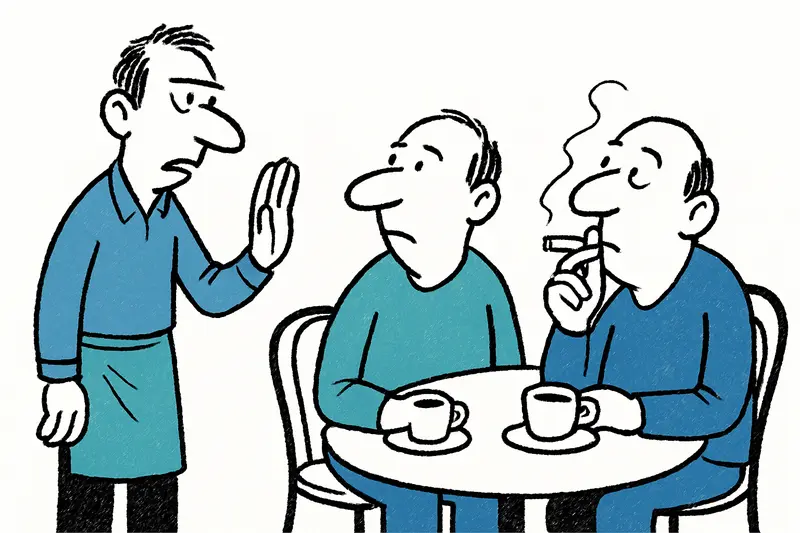
Yesterday an espresso on Passeig Mallorca, today discussions at the market: the draft from Madrid for a new anti-tobacco law is causing a stir, Balearic Islands Reject Central Smoking Ban on Beaches and Terraces. In short, it mainly means one thing for us on the island: less smoke in places where many used to be able to smoke — and thus a whole new level of planning from the innkeeper to the parent at the schoolyard.
The main rules at a glance
The draft significantly expands existing prohibitions. Newly proposed are, among other things, a general smoking ban on terraces of bars and restaurants, a ban on smoking at open-air concerts and in outdoor cultural and sports venues, and smoke-free playgrounds. In addition, entrances to public buildings such as hospitals, schools and sports halls should be smoke-free within a 15-meter protection zone. E-cigarettes are to be regulated similarly to traditional tobacco products; disposable vapes are to be banned and sales to minors are also prohibited.
Penalties and enforcement
Those who violate the rules must expect hefty fines. The draft speaks of significantly higher sanctions than before — amounts that can easily put small businesses in trouble. At the same time, the plan foresees the establishment of a central body for prevention and monitoring to coordinate nationwide European Commission tobacco control page. How strict and how quickly controls will be carried out remains one of the key questions.
Reactions from Palma and the neighborhoods
At the market across the way I heard voices from both sides this morning: a hostess from Santa Catalina fears guests will retreat indoors or simply stay away. "For small places this is a hard cut," she said between cappuccino clinks and the whir of the espresso machine. A young man at the newsstand shrugged: "Good for the children," he said as seagulls circled over the harbor. Health organizations praise the move: WHO tobacco fact sheet on tobacco: less passive smoke, cleaner access to clinics and schools. Industry representatives warn of economic consequences and changed social habits — especially on an island where outdoor dining is almost a way of life. For the regional political response, see Balearic Islands reject smoking ban on beaches and terraces — what now?.
What will become more difficult in practice — and what is often overlooked
Politically the law sounds clear: protection of health. Practically, however, it raises a lot of questions that have so far been neglected. What exactly counts as a terrace when a venue has a covered but open outdoor area? How will tourists react, who often decide at short notice where to eat? And: who will enforce the rules in high season when hundreds of restaurants and bars are full at the same time?
Particularly delicate is the expected burden on small operators: fines in the five-figure range can threaten livelihoods. There is also the risk of imbalance if large hotel chains can more easily create separate, spacious smoking areas while small bars suffer in limited spaces. The language barrier among tourist groups is another factor — a sign in Spanish helps little for British and Scandinavian guests.
Concrete opportunities and solutions
If the government now takes the goal seriously, it can mitigate side effects. Practical proposals could include: a clear, nationally uniform definition of "terrace" and "smoke-free area", transition periods with staggered enforcement, financial support programs for small businesses that need to redesign their outdoor areas, and multilingual information campaigns for guests. Mobile, marked smoking islands outside the 15-meter zones could be an interim solution — provided they do not simply become replacement hangouts along popular promenades.
Also important is a staged enforcement plan: first an information and warning phase, then targeted checks at hotspots like Passeig Mallorca, Portixol and Playa de Palma, and finally tougher sanctions. Training for staff and uniform signs in several languages would avoid conflicts at tables. And pragmatically: subsidies for partitions and air filtration systems could help small hosts maintain the balance.
What you can do now
For restaurateurs: check your outdoor areas now, plan smoking zones outside legally protected areas and inform your staff about the possible course of enforcement. For parents: look forward to less smoke on schoolyards and playgrounds. For guests: respect the signs and notices — fines are unpleasant, and disputes even more so. And for municipalities: decide early on how and at what pace enforcement will take place so that individual street corners do not become chaotic. For local context and reactions in Spanish, see Las Baleares rechazan la prohibición de fumar en playas y terrazas – ¿y ahora qué?.
Outlook
Parliament still has to approve; a transition period of about twelve months is envisaged, so many rules could come into force in 2026. Until then there is time for discussion and adjustment. In Mallorca, where outdoor gastronomy is part of everyday life, it should be sensibly designed rather than reflexively banned. The next time you stand up from your espresso on Passeig Mallorca to get some air, consider whether you'll be moving your cigarette 15 meters down the street — and whether that really changes the world. The intention to protect children and the sick is right. The art will be to achieve this without unnecessary collateral damage to small businesses and the island's social life.
I will speak in the coming days with more local operators in Santa Catalina, Portixol and at the beach — and report on how the transition is being planned in practice. Until then: pack the mint, enjoy the espresso — maybe just without the cloud beside it.
Frequently asked questions
Will smoking be banned on restaurant terraces in Mallorca?
Are playgrounds in Mallorca going to be smoke-free?
What does the new smoking law mean for e-cigarettes and vapes in Mallorca?
Could people still smoke near hospitals, schools and sports halls in Mallorca?
When could the new smoking rules start in Mallorca?
What could the smoking ban mean for bars and restaurants in Santa Catalina?
Why is Passeig Mallorca being mentioned in the smoking ban debate?
How could the smoking ban affect beaches and outdoor life in Mallorca?
Similar News

Maribel: Five Decades of Service – Housekeeper from Peguera Celebrated with a Special Honor
Over 50 years in the hotel business: María Isabel “Maribel” Molinos was honored in Palma at the Nit del Turisme by Unive...
Orange Alert over Parts of Mallorca: Are We Prepared?
Dark clouds and an announced wet spell have triggered an Orange alert in parts of Mallorca. A reality check: what's miss...
Sundair & Co.: Sale speculation and what it could mean for Mallorca
Rumors about a possible sale of the airlines Sundair and Fly Air 41, which belong to Schauinsland-Reisen — and whether b...
Anne Wünsche in Mallorca: A job offer with a catch — who fits the role of personal assistant?
Influencer Anne Wünsche has left Berlin and is urgently looking for a full-time personal assistant in Mallorca. Why the ...
Daily from New York: Palma Between Boom and Strain
United will increase the Newark–Palma route to daily flights in 2027 using Boeing aircraft (231 seats). What does the in...
More to explore
Discover more interesting content

Can Cap de Bou

Townhouse Lleo 72
