
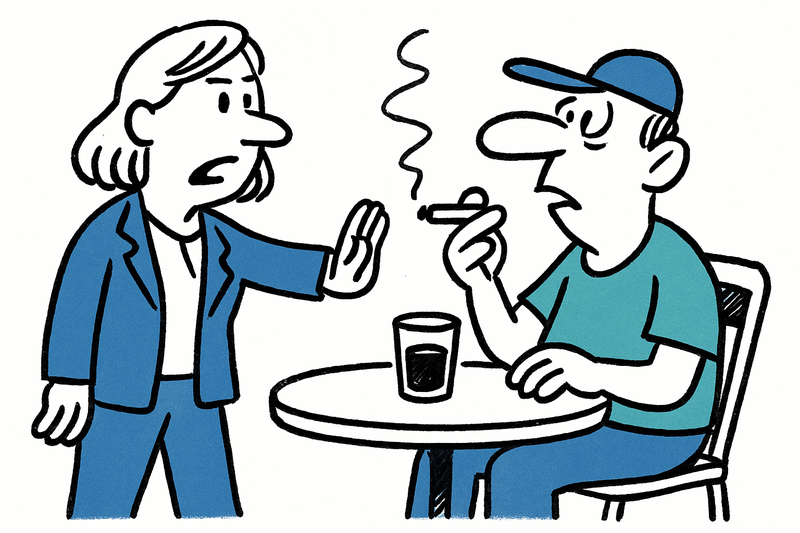
Balearic Islands Reject Central Smoking Ban on Beaches and Terraces
The Balearic government will not support a nationwide smoking ban on beaches and terraces — it favors education, voluntary smoke-free zones and prevention. What this means for locals, visitors and restaurateurs is analyzed by Mallorca Magic.
Balearic Islands say No to a central smoking ban – Education instead of prohibition
The Balearic Islands' Health Minister, Manuela García, made clear this morning what many at the beach bar had been waiting for: the regional government will not agree to the proposed nationwide smoking ban for beaches, terraces and other open areas, as reported in Balearic Islands reject smoking ban on beaches and terraces — what now? Instead of strict bans, it relies on prevention, voluntary smoke-free zones and information campaigns — an approach debated as heatedly in Palma's Plaça del Mercat as at the counter of the small bar on the Paseo Marítimo.
The key question: health protection or enforceability?
The decision is based on a simple but fundamental consideration: how far can centralized health protection go when it is barely enforceable locally? García emphasizes that the goal of a smoke-free generation by 2030 is shared — but the tools are assessed differently. At Playa de Palma I heard a beach warden say: "Signs and respect often work better than fines in the middle of high season." The sea murmurs, parasols clatter, and reality shows a shortage of staff among municipalities and police.
The Balearic government argues that a strictly enforced ban would require significant enforcement effort, needing personnel and money that could be used more effectively elsewhere — in cessation programs, school projects or counseling, for example. There is also concern about the tourist perception: suddenly strict rules in the middle of the season could surprise both hotel guests and bars alike.
Aspects that are rarely voiced loudly
Often overlooked is the ecological component: cigarette butts are not only ugly in the sand, they break down into microplastics and burden beach ecosystems. The rights of hospitality workers — who can be exposed to secondhand smoke daily — also play a role. Unions and employees call for workplace health protection, while small businesses ask for pragmatic solutions.
Another often overlooked problem is seasonal mobility. In summer the number of short-term visitors explodes, and they may not even know the rules from the mainland. A central ban would therefore require a lot of information — or strict controls that no one really wants.
Economy and hospitality: alarmed but cautious
From S'Escorxador to El Terreno, restaurateurs are speaking up. The message is twofold: yes to non-smoking protection, but please with transition periods and dialogue. One restaurateur wrote to me: "Rules yes, but not overnight." Many call for exceptions for outdoor areas, financial support for renovations (covered smoking cabins, better ventilation) and clear notices so guests do not find doors unexpectedly closed.
The fear of revenue loss is tangible: on busy terraces you can hear the clinking of glasses, laughter and occasionally the hiss of a cigarette. Small businesses fear losing their charm, larger hotels warn of image problems. At the same time there are more guests deliberately seeking smoke-free places — a market that is easily overlooked.
Concrete, practical proposals instead of escalating bans
If the Balearic Islands do not block the idea fundamentally but propose other instruments, those should be concrete. Here is a bundle of measures that seem more realistic than a national ban without resources:
1. Pilot zones: Specifically designated smoke-free beach sections (test in heavily frequented coves) with clearly visible signage and short evaluation periods.
2. Visible information: Multilingual signs, beach wardens and information campaigns on access roads to popular beaches — fewer fines, more guidance.
3. Support for businesses: Small grants for restaurants to create smoke-free outdoor areas or to equip smoking rooms, accompanied by a phased transition period.
4. Training and rights for staff: Cessation offers, guaranteed rest areas for employees and contact points for reporting violations.
5. Uniform regional labeling: An easily recognizable pictogram for "voluntary smoke-free zone" communicated uniformly at island level.
What happens now?
The bill is in Madrid, outlined in Smoking Ban in Mallorca: What the New Law Means for Terraces, Playgrounds and E‑Cigarettes; the Balearic Islands have signaled their veto and want to negotiate specifics in the coming weeks. In the short term little changes — on beaches like Can Pastilla I still see information signs, voluntariness and mutual respect. The debate is not over; it has been postponed and become more complex.
Whether this is enough to achieve the health goals remains open. One thing is clear: a simple top-down order would do little here if participation, funding and staff are lacking. In Palma's twilight, when the lights by the sea come on and waitresses shout orders across the air, it's less about ideology and more about practical everyday solutions.
Our advice: If you come to Mallorca in the coming weeks or live here: pay attention to local signs, respect voluntary smoke-free zones and when in doubt ask the staff briefly. And if you want to have a say: reach out to local politicians and municipal representatives — this is where it will be decided whether the next step becomes a workable compromise or just a half-hearted postponement, a position discussed in Balearic Islands Choose Voluntariness Over Blanket Ban: A Critical Look.
Frequently asked questions
Can you still smoke on beaches in Mallorca?
Are beach terraces in Mallorca going smoke-free?
What is the smoking policy in Mallorca changing to?
Why did the Balearic Islands reject a smoking ban on beaches?
What should tourists in Mallorca do if they see a smoke-free sign on the beach?
Is smoking on Mallorca beaches bad for the environment?
Will restaurants in Palma have to change their outdoor smoking rules?
What are the most realistic smoking alternatives for Mallorca’s beaches?
Similar News

Release after bloody attack in Palma: Why the court's decision raises questions
An 18-year-old who allegedly inflicted a serious neck injury on a man at Plaza Gomila using a wristwatch wrapped around ...
Kidnappings in Inca: Three young men forced into car trunks and abused in the forest – a reality check
In Inca, three 18-year-old men were forced into car trunks by masked assailants at the Plaça des Bestiar, taken to a for...
Spreading Massification: The Brake That Still Has Much Work to Do
Marga Prohens announces limits on volume tourism. The measures sound harsh — but are they enough to save everyday life, ...

Through the Keyhole onto the Party Yacht: How Daniela Katzenberger Is Planning Her 40th on Mallorca
Daniela Katzenberger turns 40 and wants to celebrate it on the island — likely with a boat, cake and her mother. A relax...
By Boat Instead of the Road: Palma's Water Bus — a Reality Check
The 'Bus Nàutic' launches in two stages — but questions remain over interim operations, fares and environmental requirem...
More to explore
Discover more interesting content

Can Cap de Bou

Townhouse Lleo 72
