
Fire in Sa Coma: Smoke, Evacuation and the Open Questions for Fire Safety
Fire in Sa Coma: Smoke, Evacuation and the Open Questions for Fire Safety
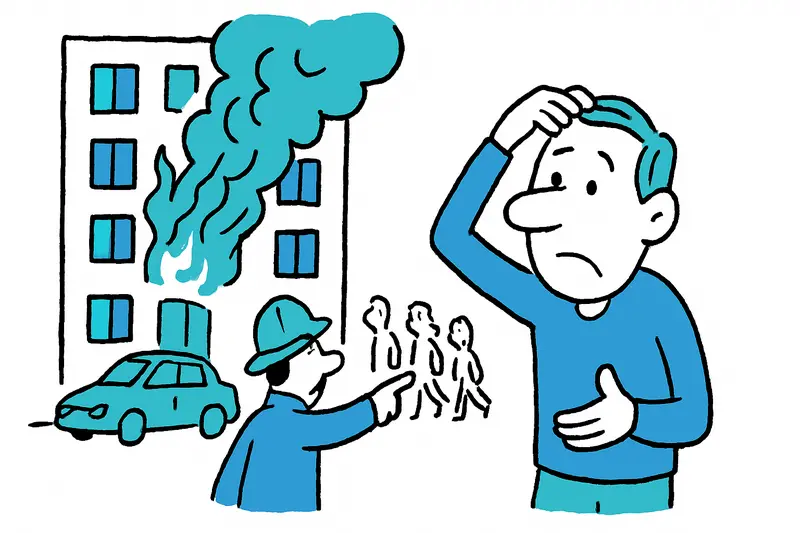
This morning in Sa Coma a car burned in the underground garage of a six-storey building. 22 people were treated for smoke inhalation; around 60 residents had to be temporarily evacuated. An assessment with a critical question: How safe are our residential buildings really?
Fire in Sa Coma: Smoke, Evacuation and the Open Questions for Fire Safety
Why wasn't routine on Calle Ficus enough?
Early in the morning, around 7:30 a.m., the smell of burning plastic woke many residents on Calle Ficus. A car had caught fire in the underground garage; the flames are now under control, but the smoke affected at least 22 people so severely that they needed medical treatment – including five police officers. Around 60 residents of a six-storey building were temporarily evacuated, while others were told to stay in their apartments. Firefighters from Sa Coma and neighbouring municipalities were on the scene.
The bare numbers – 22 treated, 60 evacuated, 7:30 a.m. outbreak – explain the scale, but not the lingering feeling: this could happen here any morning. In a holiday town street where delivery vans beep, the refuse collection disturbs the quiet and the first café cortado is already steaming, a burning car suddenly becomes a problem for the whole building, not just for the owner of the parking space.
Key question: Are our underground garages, stairwells and alert chains on Mallorca sufficiently protected against fire and smoke hazards — or is the risk merely being shifted from the street into interior spaces?
Critical analysis: A vehicle fire in an underground garage is no longer an exotic case: older cars, short circuits, heating or charging faults in e-vehicles, parked motorcycles. In Sa Coma it is known that the fire brigade was quickly on site, but the episode reveals several weaknesses that are not unique to this location, as reported in Fire in hotel at Playa de Palmanova: Evacuation, no injuries — and unanswered questions. First: smoke spread. In multi-storey residential complexes dense smoke can fill stairwells and corridors even if the flames are locally contained. Second: communication channels. Some residents were evacuated while others were told to stay inside — this may have been the right situational decision, but it leads to uncertainty. Third: equipment and preparedness. Five injured police officers show that emergency personnel are also exposed to health risks; the need for preparedness is echoed in Fire in Port d'Alcúdia: Why the big scare is also a wake-up call for fire safety. Fourth: inter-municipal coordination. When additional forces come from neighbouring towns, logistics must work — from breathing apparatus to provisioning of the response teams.
What is missing from the public debate: There is a lot of reporting about the numbers, but too little about prevention in residential buildings. Procedures for regular garage inspections, mandatory smoke detectors in stairwells, clear rules for parked vehicles (including charging behaviour of e-bikes and e-cars), reliable evacuation plans and their communication to tenants — these are often invisible topics. There is also a lack of an honest debate about priorities: does the municipality invest more in tourist infrastructure or in systematic fire safety inspections for residential buildings?
An everyday scene: Anyone walking along Calle Ficus knows the mix of sea air and the smell of fried fish from the small corner restaurant. Today people lay on their phones there, some with hot coffee cups in hand, watching firefighters pull hoses through the stairwell. Children wrapped in blankets, older neighbours with ambulance blankets; the neighbour's dog that usually barks at morning joggers lay quietly and observed. Such scenes make the abstract danger personal.
Concrete solutions: 1) Mandatory risk assessments for underground garages in multi-storey residential buildings: ventilation, separation between parking areas and residential access, certified exhaust routes. 2) Clear rules for e-charging stations and the storage of batteries in garages; raise awareness within residential communities. 3) Check and promote smoke detectors and automatic fire alarm systems in central corridors and stairwells — not only in new buildings. 4) Standardised evacuation plans for residential complexes that are visibly posted and practised at least once a year. 5) Training for police and firefighters on treating smoke inhalation and short evacuations, including basic psychological first aid for those affected. 6) Municipal coordination plans: which response units come from which neighbouring town, how breathing apparatus capacities are allocated, where assembly points are located. 7) Obligation to inform tenants: anyone renting or using a garage must be informed about fire safety requirements.
Many of these proposals require money and organisation — but they cost less than a smoke-filled stairwell, injured people or a long-term ban on living for families. And they cost far less than the reputational damage to a municipality that is seen as "unsafe".
Who bears responsibility? In the short term the firefighters and police who acted this morning. In the medium term property managers and owners' associations, who must organise structural measures. In the long term municipal politics: it decides on priorities for inspections, funding programmes and information campaigns.
In the afternoon the doors of the affected building will be accessible again, the echo of sirens will fade. What must remain is less a marathon of blame and more a public agreement: how do we protect people in their own homes? If we address this question honestly and concretely, it will help not only Sa Coma but all corners of the island where early-morning routines and technical risks meet; similar large-scale evacuations and the lessons they raise were reported in Fire at Alcúdia Hotel: Evacuation Succeeds — What Lessons Will the Island Learn?.
Conclusion: The fire on Calle Ficus was locally controllable. The alarm should nonetheless serve as a wake-up call: fire safety in parking garages and communication with residents are a construction site on Mallorca that we should work through before the next car catches fire and the smoke is not so harmless.
Frequently asked questions
What happened in Sa Coma during the underground garage fire?
Is smoke from a garage fire dangerous in a Mallorca apartment building?
Should you stay inside or evacuate during a fire in a shared building?
What fire safety risks do underground garages in Mallorca buildings create?
What should residents in Mallorca check in their building after a garage fire scare?
Why were police officers treated after the Sa Coma fire?
What lessons does the Sa Coma fire raise for fire safety in Mallorca?
When should Mallorca apartment communities review their evacuation plan?
Similar News
Who Bears the Burden? Mallorca Between Tenant Protection and Landlord Fears
Madrid's new housing decrees strengthen tenant rights — but on Mallorca concern is growing: will the law drive small lan...
On the Edge: What Mallorca's Airport Loses If a Major Low-Cost Carrier Falters
The company that operates numerous connections from Palma to France and domestically is negotiating with creditors to re...
Ballermann star Frenzy wins 'Villa of Temptation' and donates prize money to Mallorca animal rescue
Ballermann singer Frenzy won the German reality show and donated the remaining prize money — around €14,080 — to an anim...
70 Trees Removed on Avenida Jaume I: What's Happening in Santa Ponça?
On October 1 the final redevelopment phase on Avenida Jaume I in Santa Ponça begins: 70 trees and old streetlights are t...
When a Boundary Is Crossed: The Case of Isi Glück and the Responsibility of Venue Operators
The singer from Mallorca reports an assault backstage in Halle. A clear guiding question, analysis of missing protective...
More to explore
Discover more interesting content

Can Cap de Bou

Townhouse Lleo 72
