
Four Days Without Water: Collapse in Palma Raises Questions About Heat Relief
Four Days Without Water: Collapse in Palma Raises Questions About Heat Relief
A 54-year-old collapsed in Palma after apparently not having eaten or drunk for four days. First helpers, including several motorcyclists, tended to him until SAMU 061 arrived. A reality check on heat, homelessness and emergency response.
Four days without water: Collapse in Palma raises questions about heat relief
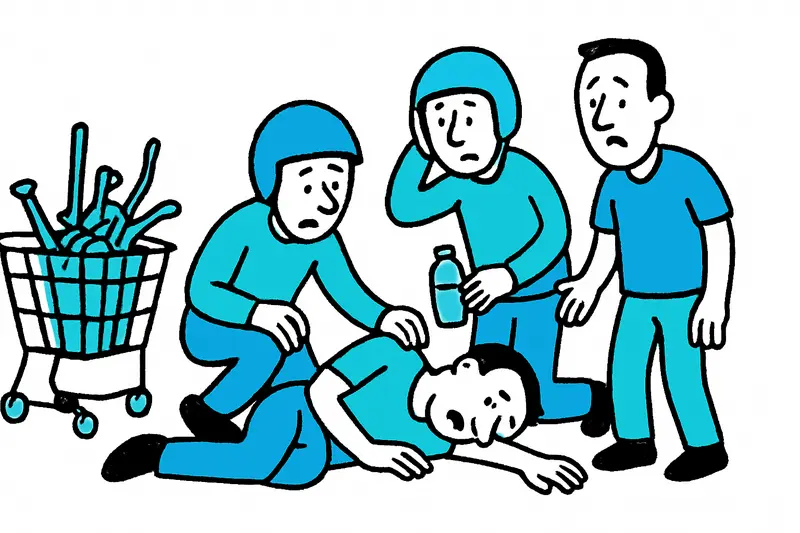
Late in the evening, shortly after 7 p.m., a man collapsed on a connecting road in Palma that links the Son Castelló industrial area with the Son Hugo stadium. Beside him stood a shopping cart filled with scrap metal. Several motorcyclists who happened to pass by immediately provided first aid, gave him drinks and something to eat, and called emergency services. Rescue teams from the emergency service SAMU 061 later took over medical care and diagnosed significant dehydration with a suspected heat stroke.
Key question
Why can a person in the outskirts of Palma go several days without water without coming to the attention of social services or municipal prevention programs?
Critical analysis
The situation reveals several failures at different levels. First: heat does not only affect tourist centers; it affects workers, scavengers and people without fixed homes who move through industrial areas where there is little drinking water, little shade and no social services after working hours. Second: the rescue chain worked at the moment — willingness of passers-by to help, placing the emergency call, initial medical care — but the response time between the emergency call and the ambulance arrival was, according to available information, about 40 minutes. That is long in a potential heat stroke case. Third: there is a lack of systematic documentation of who is regularly checked in such neighborhoods, which outreach teams are active at night and how communication between social services, the fire department and health services is structured.
What is missing in public discourse
The debate often focuses on beaches and downtown areas. Little is said about the evening and nighttime hours in industrial zones, where people collecting scrap metal or taking occasional jobs are active. Also rarely discussed: the equipment of dispatch centers with local resources during heat waves, the frequency of mobile water stations and the availability of cool resting places outside tourist centers. Data on response times and mission volumes by neighborhood are not publicly available or are rarely discussed.
Everyday scene from Palma
Imagine the scene: a hot July evening, truck engines rumbling on the Carretera de Son Castelló, metal clinking in a shopping cart somewhere, air conditioners humming over the warehouses, a few lost pedestrians and motorcyclists in bright helmets. The people who search for scrap there know each other; they exchange brief greetings and otherwise the roads are lonely. In this setting, a fall can easily leave someone unnoticed — unless a passing helper stops.
Concrete solutions
1. Mobile water and shade stations: Especially during the summer months, temporary, visible taps with cooled water and simple sun protection should be placed in industrial areas and along connecting roads.
2. Strengthened night outreach teams: Municipal or non-profit teams could conduct regular patrols in industrial and warehousing areas, especially during heat waves. Cooperation with waste collectors and recycling centers can ease access to the people who work or collect there.
3. Improved data and transparency: Dispatch centers should, where possible, analyze mission data by area and identify weak points. Public dashboards or regular situation reports could help set priorities.
4. Faster on-site first response: Training for road users, warehouse employees and simple first-aid kits in industrial areas can bridge the time until professional rescue services arrive. Dispatch centers should have clear protocols on how to shorten the time to arrival in suspected heat stroke cases, for example by alerting the nearest available units.
5. Preventive information: Targeted information in multiple languages about heat risks, signs of dehydration and where to seek help, distributed via collection points, recycling centers and social facilities.
Why these proposals are realistic
Many measures do not require large investments: mobile water stations, coordinated night shifts by helpers and targeted training are organizationally feasible. However, they require that city administration, health services and social providers take local hotspots seriously and direct resources there.
Concise conclusion
The incident in Palma is a wake-up call: heat does not only kill on the beach. If a man in the middle of the city can go four days without water, it is the failure of a chain of prevention, social visibility and rapid emergency care. The willingness of passers-by to help was exemplary — but it must not be the only safety line. The city, health services and aid organizations must ensure that the next heat wave does not once again leave people on the margins.
Frequently asked questions
What are the main signs of dehydration and heat stroke to watch for in Mallorca's summer?
How can people working outdoors in Palma's outskirts stay hydrated and safe during hot days?
How long can it take for emergency services to arrive during a heat-related incident in Palma, and what can bystanders do in the meantime?
What public measures are proposed to prevent heat-related incidents in Mallorca’s industrial zones?
Why is nighttime outreach important for preventing heat-related harm in Palma's outskirts?
Are there public resources in Mallorca to track heat-related incidents by neighborhood?
What should visitors pack for a Mallorca trip to stay safe in high heat?
How can public spaces in Palma be more heat-friendly for residents and visitors?
Similar News
Cafetería San Siro: A Meeting Place on Schinken Street Since 1966
In the middle of Schinken Street, Cafetería San Siro has been offering Mallorcan hospitality for more than six decades —...
From Ballermann to Prison: What the Verdict Against the Femina Operator Means for Palma
The Munich Regional Court convicted a German operator for subsidy fraud. What does the verdict mean for the Femina Club,...
Underpass Verge de Lluc: 19-year-old fights her way out of flooded car – a warning sign for Palma
A 19-year-old recently escaped swimming from her car after the Verge de Lluc underpass held up to one and a half meters ...
When the Floodgates Open Again: Why Palma's Floods Aren't a Coincidence
A sudden heavy downpour around 5 p.m. brought Palma to a standstill: flooded streets, full basements, panicked commuters...
Playa de Palma: Life-saving at Balneario 11 – Lifeguards Act Quickly
A German holidaymaker suffered cardiac arrest at Playa de Palma. Lifeguards resuscitated her on the beach; emergency ser...
More to explore
Discover more interesting content

Can Cap de Bou

Townhouse Lleo 72
