
Impressioning on Mallorca: How Safe Are Holiday Homes Really?
Impressioning on Mallorca: How Safe Are Holiday Homes Really?
A new burglary technique called "Impressioning" is making second‑home owners uneasy. A critical assessment: what do authorities know, what is missing in public debate — and how can you practically protect yourself?
Impressioning on Mallorca: How Safe Are Holiday Homes Really?
Key question: Can an unoccupied holiday property still be reliably protected from silent break‑ins today?
Late on a Saturday morning in Portixol: bicycle bells, seagulls, a delivery van rolling along the Passeig‑Marítim. At the same time, the phone of a second‑home owner in Germany rings — the alarm system of her finca is showing unusual activity. Such small scenes are common on the island; they raise a question that many owners now find pressing, as local reporting like Robbery in Front of Their Own Driveway: How Safe Do We Feel in Southwest Mallorca? shows.
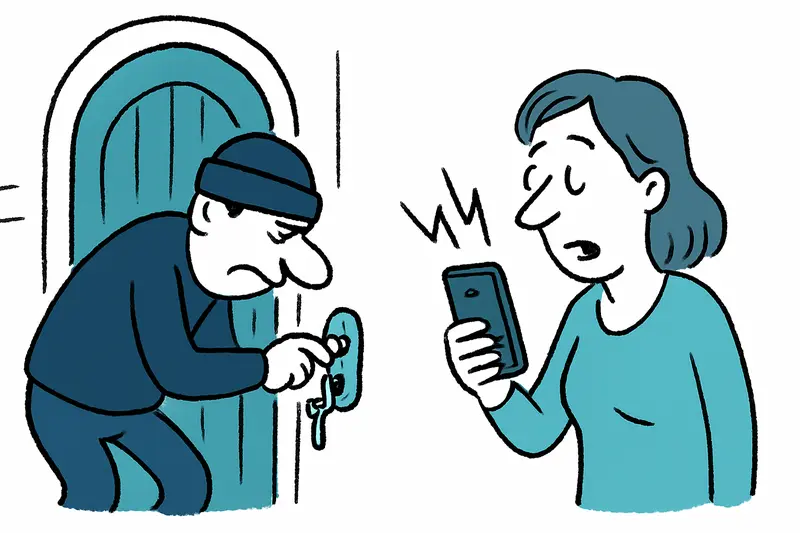
Under the name "Impressioning" a method is circulating in which burglars press keys into the lock and take impressions to later produce accurately fitting copies. The worrying aspect: the lock is not forced, visible traces are missing, and break‑ins can be quiet and quick. Security providers point out that this works without loud noises or lever marks and therefore classic alarm systems may only trigger too late.
The situation is getting worse statistically: according to official crime statistics, 84,895 offenses were recorded in the Balearic Islands last year, an increase of 5.6 percent. Mallorca accounted for 66,712 cases (up 6.6 percent), 38,001 of them in Palma (up 6.9 percent). These figures show: it is not just a feeling of insecurity — crimes are measurably increasing, a trend echoed in coverage such as Organized watch robbers in the Balearics: Why Mallorca must also stay vigilant.
Critical analysis: Many debates revolve around cameras and alarm providers, but a central point often remains unaddressed: how burglars actually operate and which gaps exist in the system. A focus on interior sensors is insufficient when access is gained via an inconspicuous, copied key profile. The result: owners invest in expensive alarm packages without significantly reducing the attack surface at the front door.
What is missing from public discourse: first, more transparency about concrete attack methods and their frequency on the island; second, clear guidance for landlords and homeowners on which mechanical protective measures actually work; third, stronger networking between neighborhoods, property managers and the police, especially in sparsely populated residential areas with many holiday properties.
Concrete everyday scene: On the Camí de Sa Gruta in a quiet urbanization you can hear wind‑swept grasses in the evening. A gardener comes twice a week, a neighbor empties the mailbox. In such settings opportunities for impressioning attacks arise: properties that stand empty for long periods are easier to target. The sound of a delivery van can cover an unnoticed break‑in — and you only notice when the door is already open.
Practical solutions (concrete and feasible):
Strengthen mechanics: Replace cylinders with certified, anti‑impressioning and anti‑bump tested locking cylinders; protective rosettes and hardened lock cases make direct access to the key profile more difficult.
Perimeter detection: External motion detectors with short response times, active exterior lighting and simple obstacles such as barred exterior doors or lockable balcony doors. Sensors should cover entrance areas, not just interiors.
Processes and control: Only a few documented key copies. Key documentation: who has which copy, when it was handed over. Mailbox and water‑consumption checks by neighbors or property managers reduce vacancy risks.
Technology thoughtfully applied: Video with live notifications can provide clues, but cameras alone are for show; pay attention to motion detectors at the front door and encrypted connections to alarm receiving centers. Smart locks offer logs, but they need backup safeguards and regular updates.
Networking: Local neighborhood groups, property managers and tradespeople should coordinate: do not pass on keys without registration, report suspicious work. Police and Guardia Civil are contact partners for prevention checks and crime‑scene behavior, as in incidents covered by Mirador d'es Colomer: Three Arrests — How Safe Are Mallorca's Viewpoints Really?.
What authorities and insurers should do: send more preventive guidance to owners, publish standardized recommendations and clearly define in insurance conditions which protective elements are prerequisites for full coverage, an area also highlighted by reporting on Illegal Holiday Listings in Mallorca: Why Enforcement Fails and How It Could Work Better. In the short term, a noticeable increase in visible presence in affected residential areas would also be a deterrent.
Conclusion: The trick of impressioning is not a technological mystery but a problem of perception and the gap between mechanical protection and electronics. Those who use their finca as a seasonal residence can gain a lot by strengthening doors, processes and neighborhood control at the same time. Those who rely only on interior alarms risk that the first access already occurs silently.
In the end it sounds simple, almost old‑fashioned: secure cylinders, clear key management, neighbours who watch the house. Mallorca remains lively, but anyone who wants to enjoy peace and the sea should pay attention to who has the keys in their pocket.
Frequently asked questions
What is impressioning and can it threaten Mallorca holiday homes?
What practical mechanical protections should Mallorca homeowners install to prevent impressioning?
Are perimeter sensors and exterior lighting enough to deter break-ins in Mallorca vacation homes?
How should owners manage keys for Mallorca rental properties to reduce theft risk?
How can neighbors and property managers in Mallorca improve security for holiday homes?
What role do cameras play in security for Mallorca holiday homes?
What should insurers and authorities do to improve protection for Mallorca vacation homes?
When is impressioning most likely to succeed and what general steps can reduce risk on Mallorca?
Similar News

More water than last year: Mallorca's reservoirs breathe easier
September rain refilled the Tramuntana's reserves: overall fill around 35 percent, Cúber at 40.42 percent, Gorg Blau at ...

Three Luxury Hotels in Banyalbufar: Lots of Money, Many Questions
A Danish investor plans three exclusive accommodations in Banyalbufar — including the historic Son Valentí. The announce...
2.1 tonnes of cocaine on sailing yacht off Spain's coast – a reality check for the coastguard
A 14-metre yacht was seized with 2.1 tonnes of cocaine. Who monitors the ports, how does the international hunt succeed ...

Heat Bonus in Mallorca: 100 Euros Extra for Outdoor Staff at MarSenses
MarSenses pays employees who worked outdoors in August an extra €100 as recognition. Lighter uniforms, reduced hours for...
Renovating in Mallorca: What You Really Can Do Without Neighbour Consent
Many think they can do whatever they want in their apartment. That's partly true — but only as long as structural elemen...
More to explore
Discover more interesting content

Can Cap de Bou

Townhouse Lleo 72
