
Arrests after paint attacks: escalation in the dispute over an anti-tourism handbook
Arrests after paint attacks: escalation in the dispute over an anti-tourism handbook
Two activists were arrested in Mallorca. The case links nighttime paint attacks, an online action handbook and a heated debate about methods of protest.
Arrests after paint attacks: escalation in the dispute over an anti-tourism handbook
Two detained, demonstrations announced - and many questions remain
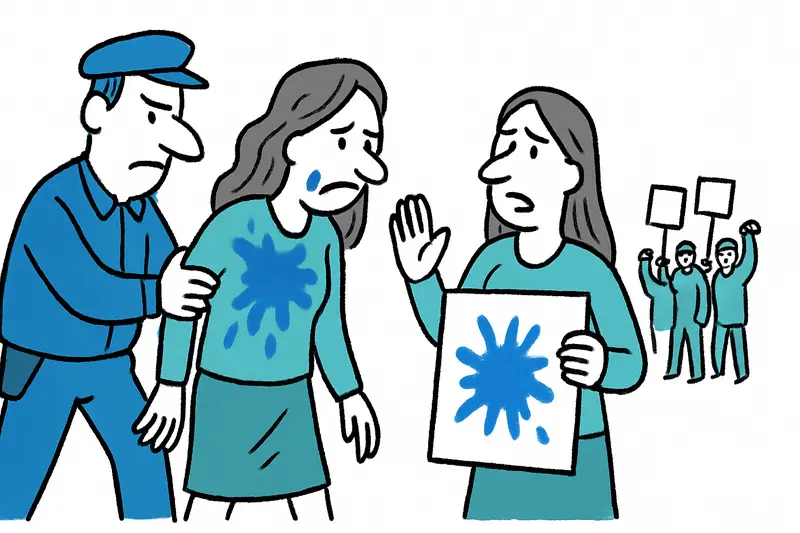
In the early hours of Wednesday, the Guardia Civil went to Santa Maria del Camí, encountered two women there and later took them to the station in Palma. They are suspected of having participated at the end of May in paint attacks on several real estate agencies in the municipality. Investigators speak of property damage and offenses against property and cultural heritage; the accused are also said to have been involved in distributing leaflets that called for attacks on tourist facilities.
During the operation, clothing items that investigators attribute to the women were handed over voluntarily; the two later refused to testify and were brought before the investigating judge. The incidents are linked to a briefly available online handbook against touristification that reportedly contained instructions on how to evade surveillance technology and remain unrecognized during actions. The document was removed from social media after a few days. Similar protest actions have included a blood-red protest at a hotel pool in Palmanova.
Immediately after the arrests, people gathered outside the courthouse in Palma to support the women. The movement behind the handbook described the measures as politically motivated criminalization; a spokesperson criticized the authorities' intervention as disproportionate and warned that it could deter organized protests. Member of Parliament Vicenç Vidal called the arrests a "shame" and spoke of an attack on civil liberties. Other tensions on the islands have manifested as new xenophobic graffiti at Playa de Palma.
On the other hand, lawyers from the business and tourism sectors had already filed a criminal complaint: they see the guide as an incitement to criminal activity and are examining legal steps against the initiatives that are said to have distributed the document. Authorities have previously acted on online calls and threats, for example in the case reported in Palma: Arrest After Threat Post — How Dangerous Is Online Rage in Mallorca?.
The Balearic government distanced itself from the calls in the handbook but has so far not filed its own criminal complaint.
The mood in island society is rougher than on many summer evenings before. In the lanes of Santa Maria, where the air smells of freshly cut grass and the church bell rings in the afternoon, shopkeepers now openly speak of fear of harassment and damage to their image. In Palma, business people sit on the benches along the Passeig and discuss security and how to deal with protests in heated, sometimes resigned tones.
Key question: How can society, politics and the police on the island respond to conflicts over the tourism model in a way that enforces the law without stifling democratic forms of protest?
The arrests are a sign that the escalation of formats - from street protests to concrete action guides - has changed the situation. Those who distribute manuals that contain concrete instructions for criminal acts give investigators leads; at the same time, the state must not reflexively answer every critical mobilization with repression. Here legal protection meets civic courage, diffuse anger over rising rents and displacement, and economic interests.
What has so far been missing in the public debate: first, a clear distinction between non-violent, legitimate forms of protest and punishable actions; second, information for potential supporters about how to behave legally if they become the target of investigations; third, a transparent presentation of police decision-making - which unit acted, on what legal basis, and whether there were alternative means of contact on site.
Everyday observation: In the late afternoon in front of the parish church of Santa Maria, cups clink on the table of a small café, tourists with cameras and locals with newspapers under their arms. No one wants direct confrontation, but many feel the polarization: the bakery on the plaza now has fewer German flyers in the window and more deposit notices from property managers. Such daily shifts say more about the impact of the actions than any press release.
Concrete proposals cannot be conjured out of thin air, but there are practical ways to calm the situation and align it with the rule of law: first, an independent, transparent review of the allegations and police measures with clear communication of the results; second, an easy-access advisory service for activists and initiatives on legally permissible forms of protest; third, a dialogue format between municipal representatives, landlord associations and protest groups, mediated by a neutral body - this cannot erase tensions but can reduce excesses.
For the police it would be important to improve communication: timely, verifiable information about operations without revealing tactical details; for politicians, to explain constructively why certain steps were taken and which alternatives were considered. And for civil society: legitimate protest loses its impact if it leads to criminal acts - that weakens democratic debate.
Conclusion: The recent arrests are a catalyst. They bring to the fore the question of how criticism of tourism on an island like Mallorca may be expressed. Those who share an island must negotiate rules - openly, transparently and in a way that preserves both the protection of property and the right to criticize. Without this balance, the debate risks hardening into camps that ultimately benefit no one.
Frequently asked questions
What sparked the arrests in Mallorca connected to the anti-tourism handbook?
How should Mallorca balance enforcing the law with protecting peaceful protest?
What practical steps could help calm tensions between protesters and property owners in Mallorca?
What has been the official response to the handbook case in Mallorca?
Where did the incidents unfold and what did they involve?
Why is police communication during protests important in Mallorca?
Is there guidance available for activists on legally permissible protest in Mallorca?
How is everyday life in Mallorca affected by the tourism dispute and protests?
Similar News
Cafetería San Siro: A Meeting Place on Schinken Street Since 1966
In the middle of Schinken Street, Cafetería San Siro has been offering Mallorcan hospitality for more than six decades —...
From Ballermann to Prison: What the Verdict Against the Femina Operator Means for Palma
The Munich Regional Court convicted a German operator for subsidy fraud. What does the verdict mean for the Femina Club,...
Underpass Verge de Lluc: 19-year-old fights her way out of flooded car – a warning sign for Palma
A 19-year-old recently escaped swimming from her car after the Verge de Lluc underpass held up to one and a half meters ...

When the Floodgates Open Again: Why Palma's Floods Aren't a Coincidence
A sudden heavy downpour around 5 p.m. brought Palma to a standstill: flooded streets, full basements, panicked commuters...
Playa de Palma: Life-saving at Balneario 11 – Lifeguards Act Quickly
A German holidaymaker suffered cardiac arrest at Playa de Palma. Lifeguards resuscitated her on the beach; emergency ser...
More to explore
Discover more interesting content

Can Cap de Bou

Townhouse Lleo 72
