
When a Nose Wheel Brought the Night to a Standstill: A Wake-up Call for Aviation and Travelers
When a Nose Wheel Brought the Night to a Standstill: A Wake-up Call for Aviation and Travelers
An Airbus A320 from Palma to Gatwick was immobilized on the runway due to a failed nose-wheel steering system, crippling the airport. What does this reveal about safety and contingency planning in air traffic?
When a Nose Wheel Brought the Night to a Standstill: A Wake-up Call for Aviation and Travelers
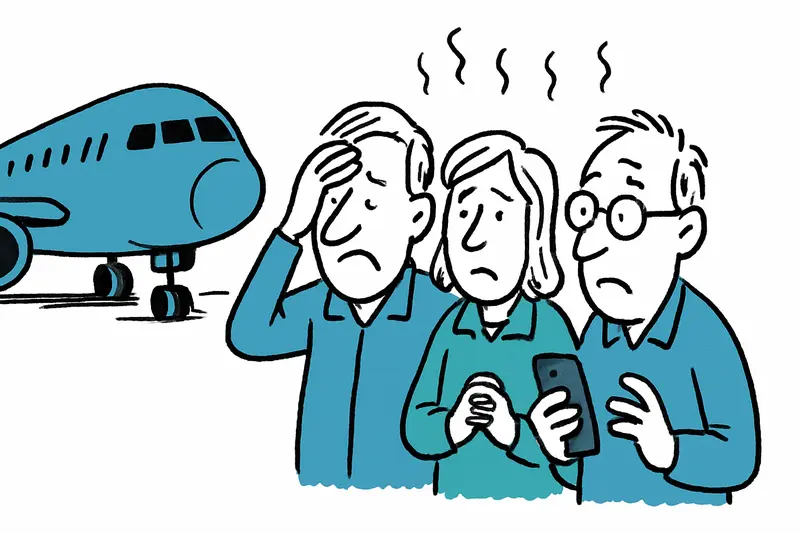
An Airbus A320 departing from Palma was stranded overnight at Gatwick after its nose-wheel steering failed. The aircraft could not taxi away from the runway after landing and blocked the only available runway – triggering numerous diversions, cancellations and frantic announcements in the terminal areas. There were no injuries, but many passengers were left stranded and bewildered at the airport for hours, as happened in Power Outage and Storm: What the Incident at Palma Airport Really Reveals.
Key Question
How safe is an air transport system that can be so sensitively disrupted by the failure of a single ground-control component that an entire airport effectively freezes?
Critical Analysis
A nose-wheel steering failure may sound like a minor technical detail. In reality it is a critical node: the system enables controlled taxiing on the ground. If it fails, the aircraft becomes unusable for departures and arrivals even if engines and aerodynamics are working perfectly. In this case the problem coincided with an unfortunate constellation: the other main runway was closed for scheduled works, so there was almost no reserve capacity. The result was not an isolated incident but a cascade: aircraft with dwindling fuel reserves had to divert, connections were cancelled, and entire rotations were scrubbed. For airports and airlines this demonstrates that redundancy in procedures and infrastructure is not just costly, it is essential.
What Is Missing from the Public Debate
Public discussion usually focuses on delays and compensation. Rarely is it asked how airports manage single-runway situations, what rules govern night works on runways, or what contractual measures kick in when a runway is blocked. Questions such as how quickly towing and recovery resources are available on site, or whether external providers train regularly, often remain unanswered, as discussed in Storms in Palma: Why Takeoffs and Landings Are Stalling — and What Helps Now. And not least: how transparently do airlines and airports inform their customers during such disruptions?
An Everyday Scene from Palma
Early in the morning at Plaça de Cort in Palma: taxi drivers who usually collect passengers from Terminal A speak of restless nights and repeated calls from guests whose return flights suddenly disappear, echoing incidents such as Turmoil on Palma's Runway: What to Know About the Air‑Arabia Incident. In a café on the Portixol promenade a group of British retirees debate over strong coffee and the heat whether they should extend their hotel stay. On Avinguda Gabriel Roca buses rumble toward the airport – passengers read the unsettling news on their smartphones. These small-town moments reveal the chain reaction: a fault in London means extra nights, phone calls and uncertain returns for people here.
Concrete Solutions
- Available tow units: Airports must contractually guarantee that operational recovery vehicles and trained staff are on site within defined minutes. Regular exercise trainings should be mandatory.
- Infrastructure redundancy: When one runway is closed at night, departure and arrival windows must not be so tightly scheduled that a single blocking event can paralyze the network. Slot management must include risk buffers.
- Early communication and coordination: Airlines, airports and air traffic control should automate information chains so that diversions, alternative accommodations and assistance offers can be activated immediately.
- Technical prevention: Regular, verifiable inspections of critical ground systems like nose-wheel steering, simple checklists on final approach and specialized maintenance teams reduce the probability of failure.
- Making passenger rights practical: Beyond compensation, affected travelers need swift alternative transport and clear information about onward connections – not just forms to fill out after they return.
Why Mallorca Is Affected
Our island depends on air traffic. Every cancelled return flight hits tourism, landlords, taxis and small hotels, as shown by incidents like Aborted Takeoff in Basel: Panic on Board – and What It Means for Mallorca Travelers. When a plane from Palma is stranded in London, it arrives here as either an extended holiday or a logistical burden. The local economy feels such disruptions immediately.
A Pointed Conclusion
A jammed nose wheel is not an abstract technical topic for specialists. It is an operational failure with real consequences for people, businesses and the reliability of entire schedules. Travelers to and from Mallorca are entitled to expect that airports and airlines do more than publish safety papers: they must implement measures that prevent such chain reactions. This incident is a wake-up call: not only engines must be reliable, but also the small components that hold the whole system together.
Frequently asked questions
How safe is air travel when a single ground-control component fails?
What happens when a nose-wheel steering fault occurs on a Palma de Mallorca flight?
How do airports manage when one runway is closed at night?
What practical steps can travellers take to cope with disruptions affecting Mallorca flights?
What measures improve reliability of ground systems at airports like Palma?
How can airlines and airports communicate during disruptions to help passengers headed to Mallorca?
Why is Mallorca particularly sensitive to aviation disruptions?
What should airports and airlines do to protect passenger rights during disruptions affecting Mallorca?
Similar News

More water than last year: Mallorca's reservoirs breathe easier
September rain refilled the Tramuntana's reserves: overall fill around 35 percent, Cúber at 40.42 percent, Gorg Blau at ...
Three Luxury Hotels in Banyalbufar: Lots of Money, Many Questions
A Danish investor plans three exclusive accommodations in Banyalbufar — including the historic Son Valentí. The announce...
2.1 tonnes of cocaine on sailing yacht off Spain's coast – a reality check for the coastguard
A 14-metre yacht was seized with 2.1 tonnes of cocaine. Who monitors the ports, how does the international hunt succeed ...

Heat Bonus in Mallorca: 100 Euros Extra for Outdoor Staff at MarSenses
MarSenses pays employees who worked outdoors in August an extra €100 as recognition. Lighter uniforms, reduced hours for...

Renovating in Mallorca: What You Really Can Do Without Neighbour Consent
Many think they can do whatever they want in their apartment. That's partly true — but only as long as structural elemen...
More to explore
Discover more interesting content

Can Cap de Bou

Townhouse Lleo 72
