
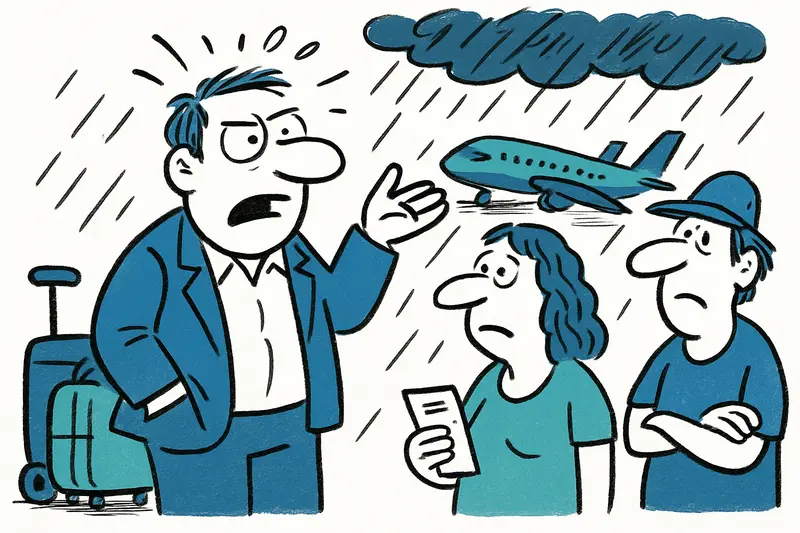
Storms in Palma: Why Takeoffs and Landings Are Stalling — and What Helps Now
Heavy rain, wind and an interconnected flight network are tripping up Palma Airport. Why small delays trigger large chains and which short-term and long-term solutions truly help Mallorca.
Palma Airport trapped by rain: more than mere delays
Anyone walking through Son Sant Joan these days knows the sonorous patter of rain against the terminal windows, the muffled rattle of rolling suitcases on wet tiles and the recurring announcements: “Boarding delayed…” It’s not just a minor inconvenience — it’s a chain reaction that shows how fragile modern airport operations can be in a storm, as recent reports documented hundreds of delays and cancellations during a severe thunderstorm.
The central question: Why do delays last so long?
In short: weather meets system limits. Strong winds and storms force air traffic control and airlines to increase safety separations and to slow down procedures, as explained in how storms alter Palma Airport operations. But that would be only half the story: a flight that lands 15 minutes late throws ground staff, refueling slots, bus shuttles and baggage chains out of rhythm. If a jet arrives 70 minutes late, those disruptions often cascade through the entire national network. What looks like a local incident quickly becomes a nationwide timeline change.
On top of that: in heavy rain fewer people work outside; baggage is loaded more slowly, buses pick their way through puddles, and the apron can be temporarily closed during lightning. Meteorologists issue warnings (AEMET weather warnings), but weather alerts alone do not explain why chains break so abruptly.
What rarely gets the spotlight
Little attention is paid to the wider regional domino effect. Palma is more than a holiday destination — it is a hub. Delays here shift connecting flights, trains and even ferries, so travelers do not just experience a pause in the terminal but may face multi-day changes to their plans. A friend recently missed his train connection in Barcelona after a 70-minute delay; that is annoying, but the bigger problem is the hidden economic cost: extra hotel nights, special transfers, increased staff effort.
And then there are the quiet victims: business travelers, event organizers and local car rental desks that are not sufficiently coordinated during peak times and bad weather. The result: long queues at the car rental counters in Terminal C, stressed taxi drivers in the rain and frustrated locals who just want to get home.
Concrete opportunities instead of mere complaints
It is not enough to sigh about delays. In the short term, more structured information chains could help a lot: airlines should send precise push notifications with expected time windows, not just the lazy “delayed.” On the airport side, temporary covered waiting areas with more seats and power outlets in Terminal C would not be a luxury but pragmatic damage control — many travelers seek shelter there in the rain.
In the medium term, formal emergency cooperation between the airport, hotels and bus companies is needed: on-demand transfer packages, guaranteed room allocations and special rates could relieve pressure on the terminal. Technically, more flexible turnaround schedules and improved slot management are conceivable so that a single disruption does not immediately trigger a cascade across Spain, an approach discussed in pieces about how thunderstorm disruptions should be planned for.
In the long term, investments in apron drainage, additional handling islands and robust lightning protection systems should be considered. It costs money, but it reduces economic damage and spares nerves — an argument that carries weight for Mallorca’s tourism economy.
What travelers can do now
Practically, simple rules apply: check your airline status messages regularly, save confirmations and call the hotline if in doubt. A charger and power bank are currently better than a third sweater in the suitcase; a small umbrella pays off at the exit. If you have connections, build in buffers or plan an overnight stay in Palma — it saves stress and often money.
Important: keep receipts. Document extra expenses for taxis or hotels and keep invoices — many insurers and airlines reimburse at least part of additional costs in documented weather-related cases. On site: avoid closed apron areas, seek indoor spaces with power outlets and use cafés early — seats are scarce, but a quiet coffee is sometimes the best crisis aid.
Conclusion: No reason to panic — but to plan better
The rain keeps tapping on the terminal glass, buses weave across shiny aprons, and the loudspeakers read their familiar announcements. It is unpleasant, but not a system collapse. What is missing is more foresight: more precise information, faster cooperation between the airport and local service providers, and targeted infrastructure measures. Those who plan now, document and bring a little patience may end up with only a wet stopover — and not the cascade that often springs from a single rainy minute.
Frequently asked questions
Why do flights at Palma Airport get delayed so much during storms?
What should I do if my flight from Mallorca is delayed because of bad weather?
Can I get reimbursed for hotel or taxi costs after a storm delay in Mallorca?
Is it worth staying overnight in Palma if my connection is at risk?
What airport facilities are most useful during rain delays at Palma Airport?
Does bad weather in Mallorca also affect ferries and trains?
What should I pack for a stormy trip to Mallorca?
Why does a small delay at Palma Airport turn into a bigger problem?
Similar News

Who Bears the Burden? Mallorca Between Tenant Protection and Landlord Fears
Madrid's new housing decrees strengthen tenant rights — but on Mallorca concern is growing: will the law drive small lan...
On the Edge: What Mallorca's Airport Loses If a Major Low-Cost Carrier Falters
The company that operates numerous connections from Palma to France and domestically is negotiating with creditors to re...
Ballermann star Frenzy wins 'Villa of Temptation' and donates prize money to Mallorca animal rescue
Ballermann singer Frenzy won the German reality show and donated the remaining prize money — around €14,080 — to an anim...
70 Trees Removed on Avenida Jaume I: What's Happening in Santa Ponça?
On October 1 the final redevelopment phase on Avenida Jaume I in Santa Ponça begins: 70 trees and old streetlights are t...

When a Boundary Is Crossed: The Case of Isi Glück and the Responsibility of Venue Operators
The singer from Mallorca reports an assault backstage in Halle. A clear guiding question, analysis of missing protective...
More to explore
Discover more interesting content

Can Cap de Bou

Townhouse Lleo 72
