
Storm chaos in Palma: Why a thunderstorm disrupts the airport — and how we should plan smarter
Thunderstorms paralysed parts of airport operations in Palma. Why small weather events trigger chain reactions — and which short-term and long-term solutions could help.
Storms bring parts of air traffic in Palma to a standstill – why a thunderstorm means more than just wet runways
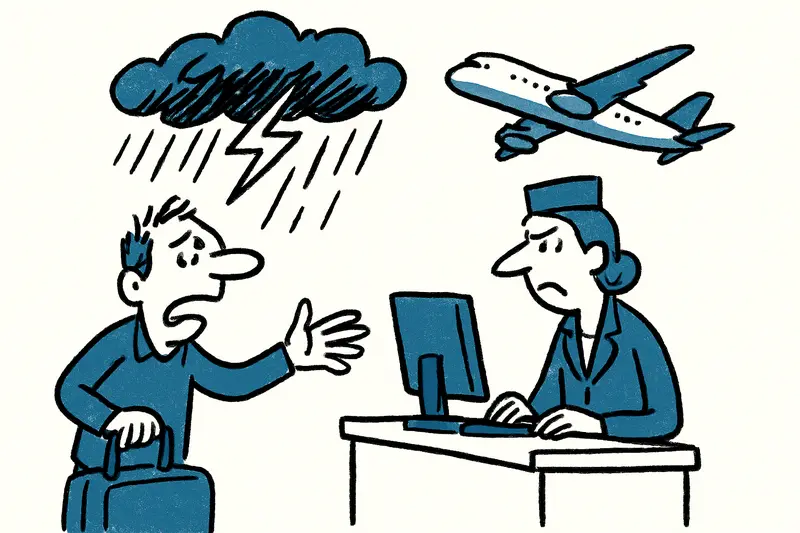
The morning began with the familiar sound: rain relentlessly drumming on the roof, accompanied by the occasional dull rumble from the Tramuntana. In Palma this usually looks like a brief, intense disturbance. Today, however, airport operations slowed to a crawl for hours, Severe storm halts Palma Airport: Why delays hit inter-island services and travelers especially hard. Aircraft circled, landings were delayed, travel plans were ruined. The central question that remains: How resilient is our airport really against such suddenly forming storms?
What exactly disrupted operations?
Aemet had raised warning levels, particularly in the southwest and the foothills of the Tramuntana. Heavy rain, localized thunderstorm cells and gusty winds led to wet, sometimes reflective runways, reduced visibility and isolated storm damage — toppled trees in Portixol, flooded road drains on the MA-20. You can see it quickly on the roads: taxi ranks filling up fast, vehicles moving more slowly. Announcements at the terminal were repeated every fifteen minutes. A scene many of us know — and still underestimate.
Why is a thunderstorm often enough to trigger chain reactions?
Rain alone is rarely the reason for complete shutdowns. The problem is the accompanying circumstances: Mallorca is an island with limited diversion options. Ground staff arrive later at the aprons, baggage trolleys are delayed, and access roads to the airport narrow due to congestion. Added to that is an invisible yet crucial logic: crew and aircraft rotations. If an inbound flight is late, crew members are often legally unable to operate the return flight. That creates a cascade: one delayed jet in the morning can block departures well into the evening. This process dependency is rarely fully discussed in public debate.
What does this mean concretely for travelers — and what can they do immediately?
Immediate measures: Check your status regularly with your airline or via the official airport app. Allow more time for your trip to the airport — the MA-20 and the coastal road can clog quickly during storms. Charge your phone, bring something to drink, and keep luggage rules in mind. If you are flexible, consider alternatives such as ferry or bus: sometimes the crossing to the mainland reconnects you with airlines faster than a heavily delayed connecting flight.
What is mostly overlooked in the discussion?
Less visible are organizational weaknesses, as reported in Rain Chaos at Palma Airport: A Rainy Day as a Stress Test: missing, uniform information chains between the airport operator, airlines, ground handling and local authorities; limited weatherproof apron areas; and inadequate drainage at critical locations. Road safety on access routes — loose branches, insufficient tree anchoring along the access roads — also plays a role. Another point: the legal complexity around compensation and rebooking rights (EU regulations, insurance conditions) remains a mystery for many travelers.
Concrete proposals: short-term and long-term
Short-term pragmatic measures help: mobile charging stations and additional seating areas in the terminal reduce stress for waiting passengers. Extra shuttle buses between parking areas and the terminal as well as temporary information booths during major disruptions improve communication. More personalized SMS and app messages, coordinated between the airport and airlines, could prevent confusion.
Long-term structural decisions are necessary: better drainage systems along critical runway sections, weatherproof logistics areas on the apron, and securing trees along access roads. Even more important: regular simulations of heavy rain and storm scenarios together with Aemet, airlines, the airport operator and emergency services. Strategic reserve crews and buffer aircraft during peak times are conceivable — they cost money, but would significantly increase resilience.
What should authorities and airport operators tackle now?
It is not enough to merely react. We need transparent communication guidelines that give passengers clear information about compensation and rebooking rights. Cooperation with Aemet for more precise, localized warnings could ease decision-making. Politically and in planning, questions of infrastructure prioritization must be put on the table: which investments will prevent a repeat of this chaos? In a time when extreme weather is becoming more frequent, this is no small matter.
At the end of the day the weather often calms as quickly as it built up. Yet every storm exposes the same gaps: too much improvisation, too little preparation. For everyone traveling today: patience is your best currency, and a little preparation will save you later stress. We will keep watching — and hope decision-makers take the quiet lessons from every stormy morning seriously.
Frequently asked questions
Why can a thunderstorm delay flights at Palma Airport so badly?
What should I do if my flight from Mallorca is delayed because of bad weather?
Is it worth giving myself extra time to get to Palma Airport during a storm?
Can storms in Mallorca affect ferry or bus travel too?
Which areas around Palma are most affected by stormy weather?
Does bad weather in Mallorca affect airport operations even after the rain stops?
What kind of weather warning matters most for Palma Airport?
What can Mallorca do to handle future airport storm disruptions better?
Similar News
By Boat Instead of the Road: Palma's Water Bus — a Reality Check
The 'Bus Nàutic' launches in two stages — but questions remain over interim operations, fares and environmental requirem...
Several Days of Rain Approaching: How Well Is Mallorca Prepared?
Aemet says: rain from Thursday until at least Tuesday, especially heavy on Monday. Temperatures remain mild. A reality c...
Nervous Reaction at a Traffic Stop: Why Campos Is Not Just a Sniffer-Dog Problem
At a traffic stop in Campos a 37-year-old German was arrested with a bag full of drugs. Our reality check explains why s...
Cameras Against Illegal Dumping: Porto Cristo Monitors Problem Areas – a Reality Check
Manacor has installed four surveillance cameras at particularly problematic waste spots in Porto Cristo. A local check a...
Reality check: Palma's "white" torrent — harmless salt or neglected warning sign?
White crusts on the Torrent de Sa Riera are causing a stir. Emaya describes them as salt deposits. Our reality check: wh...
More to explore
Discover more interesting content

Can Cap de Bou

Townhouse Lleo 72
