
Severe storm halts Palma Airport: Why delays hit inter-island services and travelers especially hard
Thunderstorms and heavy rain caused numerous delays at Palma Airport. Besides long queues, a structural problem is intensifying: the tight scheduling of inter-island connections turns small disruptions into major delays.
Rain, thunder and long queues: this is how Palma Airport felt
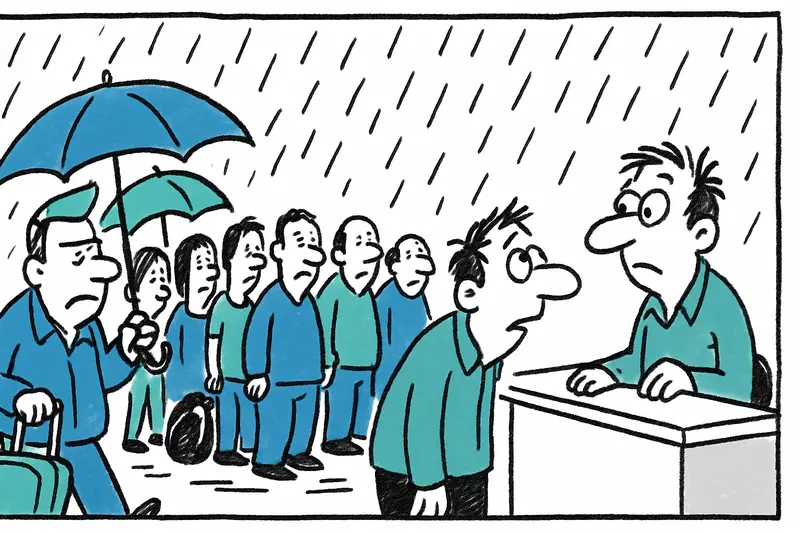
The rain was still drumming against the glass roof of Terminal A in the morning when the first announcements with the familiar tone explained the crowding: "Unfortunately your flight is delayed." Passengers with wet jackets, umbrellas, the smell of espresso and fresh pastries – but also the resigned looks of commuters who urgently needed their connection to Barcelona. The stormy night early Tuesday morning clearly showed how vulnerable flight operations in Mallorca are, as reported in Storm Chaos in Palma: Why a Storm Slows the Airport So Much.
What happened today – and why it's not just a weather story
Several aircraft from the mainland arrived late. Elsewhere: wet runways, visual inspections and cleaning delayed departures and arrivals. Particularly noticeable were the effects on domestic connections and flights to Germany: reports of around two hours' delay for a flight from Dortmund, and several routes to Düsseldorf were delayed, corroborated by Severe weather disrupts Palma Airport — what this means for travelers. Pure weather events, yes – but the consequences quickly interact.
Inter-island connections were hit particularly hard. Flights to neighboring islands like Menorca are scheduled tightly anyway; a postponed departure often triggers a cascade of changes. Travelers at the gate asked about connection buses and ferry links; longer queues formed at some gates, announcements echoed through the halls while ground staff in reflective vests hurried between aircraft and terminal.
A look behind the scenes: why delays escalate so quickly
What most travelers don't see: airport operations are a clockwork of buffer times, ground staff, cleaning cycles and connection chains. In heavy showers visibility worsens. Runways have to be checked and de-icing or cleaning measures carried out. That not only delays a single flight but shifts slot times and staffing plans. Tight turnaround times on short-haul routes are particularly precarious: if a flight is delayed by 30 minutes, it can affect the next ten flights.
Another issue that often gets lost in the hectic pace: communication and visible help for connecting passengers. Many today looked not only for information in apps but asked their questions at the counter. Practical solutions can often be found on site – yet at some gates a dedicated team to coordinate connection issues was missing.
Who is hit hardest?
The range stretches from holidaymakers with flexible plans to commuters and business travelers with rigid connections. For the latter, two hours' delay can mean missing a train, an important meeting or onward travel. Cargo and baggage also suffer: slower handling at the baggage belt leads to on average longer waiting times on arrival.
Concrete proposals: what the airport and authorities could improve in the short term
More transparent real-time information: Announcements plus clearly visible screens at central points for connection information would ease many problems. Apps are good – but not all travelers have stable reception or immediately understand real-time updates.
Dedicated transfer team: A small, mobile team deployed at peak times could actively reroute passengers with tight connections and rebook tickets more flexibly.
Buffers in tight hubs: Slightly longer minimum turnaround times in planning for inter-island chains would make sense to reduce cascade effects during weather problems.
Better coordination with ground transport: Cooperation with bus and ferry operators to quickly expand capacity helps prevent connecting passengers from being left out in the rain.
What travelers can do today
A few pragmatic tips from the terminal: Check the flight status in the airline app or on the airport website. Allow much more time for check-in and security. Charge your phone, have alternative connections ready and speak to staff at the counter early instead of relying only on social media. If possible: flexible tickets, early rebooking or consider other means of transport.
And yes: the cafés in the terminal are busy today. The coffee machine is running at full speed, the queue at the kiosk in Terminal 1 is longer than usual, and the conveyor belt releases luggage more slowly. A minor nuisance for holidaymakers, a major issue for commuters.
Looking ahead
The orange weather warning is in effect at least until Wednesday morning. Meteorologists expect further showers. The situation can change at any time in the short term. In the long term, the incident shows that not only nature but also operational processes and communication at airports need to become more robust.
We will continue to monitor developments at Palma Airport and will provide updates as soon as the situation changes significantly, including follow-ups like Summer thunderstorm brings Palma Airport to a halt — Nearly 100 delays and what it means for travelers.
Frequently asked questions
Why do storms cause so many flight delays at Palma Airport?
What should I do if my flight from Mallorca is delayed during bad weather?
Are inter-island flights from Mallorca more affected by delays than other routes?
How much extra time should I allow at Palma Airport in bad weather?
Can bad weather in Mallorca affect flights to Germany and mainland Spain?
What happens to baggage when Palma Airport is delayed by a storm?
Is it better to use the airport app or ask staff at Palma Airport during delays?
Can storms at Palma Airport affect ferry or bus connections too?
Similar News
By Boat Instead of the Road: Palma's Water Bus — a Reality Check
The 'Bus Nàutic' launches in two stages — but questions remain over interim operations, fares and environmental requirem...
Several Days of Rain Approaching: How Well Is Mallorca Prepared?
Aemet says: rain from Thursday until at least Tuesday, especially heavy on Monday. Temperatures remain mild. A reality c...
Nervous Reaction at a Traffic Stop: Why Campos Is Not Just a Sniffer-Dog Problem
At a traffic stop in Campos a 37-year-old German was arrested with a bag full of drugs. Our reality check explains why s...
Cameras Against Illegal Dumping: Porto Cristo Monitors Problem Areas – a Reality Check
Manacor has installed four surveillance cameras at particularly problematic waste spots in Porto Cristo. A local check a...
Reality check: Palma's "white" torrent — harmless salt or neglected warning sign?
White crusts on the Torrent de Sa Riera are causing a stir. Emaya describes them as salt deposits. Our reality check: wh...
More to explore
Discover more interesting content

Can Cap de Bou

Townhouse Lleo 72
