
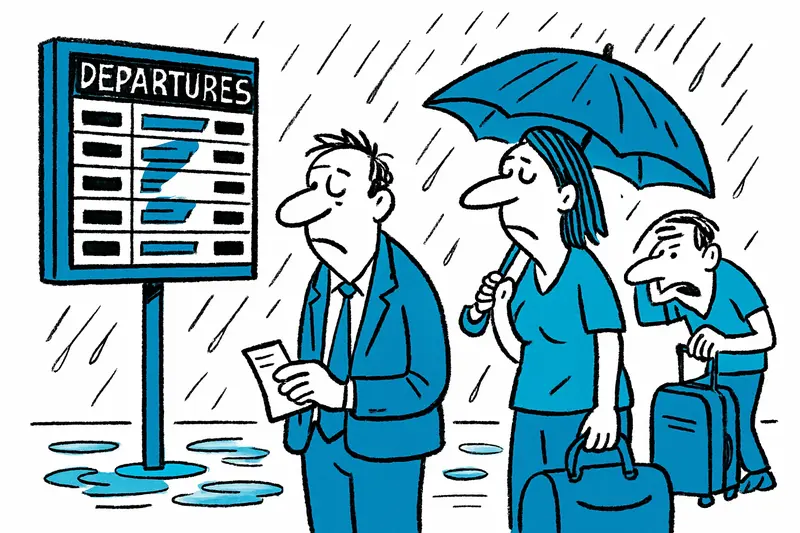
Severe weather disrupts Palma Airport — what this means for travelers
Heavy rain and strong winds caused delays of up to several hours at Palma Airport this morning. We ask: Is the airport prepared for such weather events — and how should travelers respond?
Rain, wind and jittery displays: Palma in weather chaos
During the night a strong rain front passed over Mallorca (Summer thunderstorm brings Palma Airport to a halt — Nearly 100 delays), and in the morning one heard the familiar mix of announcements, squeaking suitcase wheels and the dull patter of rainwater beating against the terminal windows and concrete. Outside the airport puddles had formed like small reflective bays; inside, the departure boards switched rapidly between "boarding" and "delayed."
The key question is: Is Palma Airport prepared for such weather whims — or are these delays a precursor to bigger problems as weather becomes more unpredictable?
What happened today
Early in the morning reports accumulated about delayed departures and arrivals. Inter-island connections to Menorca and domestic routes to the Spanish mainland (Madrid, Barcelona) were particularly affected, as reported in coverage of severe storms that halted Palma Airport. International flights, including services from Germany, also arrived later or departed with delays; in individual cases delays of up to two hours were reported. Gate staff repeatedly asked for patience: "Your connection may be tight," could be heard, accompanied by concerned announcements and the rustle of boarding passes.
Who is hit hardest — and why?
Not all flights are equally vulnerable. Short-haul and connecting services suffer most because small deviations in turnaround time create large cascade effects. In addition, ground staff, slots and aircraft rotations are tightly scheduled. When an incoming flight is late, following connections often have no buffer — the result is a chain reaction with long waits for passengers, as described in Storm Chaos in Palma: Why a Storm Slows the Airport So Much — and What Needs to Change.
Less often mentioned is the issue of ground logistics: baggage handling, refuelling and safety briefings require dry, smooth processes. Rain, wind and wet surfaces slow these steps down. Smaller airports and regional operators also have fewer reserves when the weather hits.
What authorities and airlines could do better
There are concrete approaches that would make the system more robust — and they are more realistic than you might think:
1. Realistic time buffers: Flight schedules should more often include additional minutes, especially on busy short-haul routes. That prevents many cascades.
2. Better communication: An SMS push or an app notification in real time about delays, instead of only announcements in the terminal, reduces stress. Technical integration between AENA, airlines and ground staff needs to improve.
3. Infrastructure checks: Improved drainage, covers for taxiways and weatherproof work areas for ground crews can speed up operations. Small investments here have big impact on days like today.
4. Flexible connection solutions: Cooperation with ferry operator Baleària, car rental companies and local bus services could provide quick alternatives during major disruptions — especially important for island flights.
Practical tips for travelers
For those traveling today: check your flight status regularly (AENA flight status page, your airline's app), arrive earlier for check-in and allow at least one extra hour — better two — if you have a connection in Germany or on the mainland. Pack a warm drink, a charged phone and a small time buffer. In case of long delays, patience, clear questions at the gate and the option to contact the airline early about rebooking or catering help.
Looking ahead
Mallorca is not immune to weather-related disruptions — on the contrary: as a popular holiday destination with tight flight schedules the island is particularly vulnerable to these chain reactions. Today's episode is a reminder: climate-driven short-term extreme events will become more frequent. That requires not only good airport technology but also more flexible processes and better coordination between authorities, airlines and local services.
At the end of the day, a pragmatic piece of advice remains: when the island is moody, take a deep breath, have a tea at the gate and remember that people here — from gate agents to bus drivers — are doing their best to get things moving again.
Info & links: Official flight status data via AENA; also follow your airline's notices and local traffic reports.
Frequently asked questions
Why do Palma Airport delays happen so quickly during bad weather?
What should I do if my flight from Mallorca is delayed at Palma Airport?
Are connecting flights from Mallorca more likely to be affected by storms?
Which flights from Palma Airport are usually most affected by severe weather?
Is Palma Airport prepared for heavy rain and wind in Mallorca?
What is the best way to check Palma Airport flight status during storms?
Should I arrive earlier at Palma Airport when bad weather is forecast in Mallorca?
What alternatives are there if Palma Airport disruption affects my trip in Mallorca?
Similar News
By Boat Instead of the Road: Palma's Water Bus — a Reality Check
The 'Bus Nàutic' launches in two stages — but questions remain over interim operations, fares and environmental requirem...
Several Days of Rain Approaching: How Well Is Mallorca Prepared?
Aemet says: rain from Thursday until at least Tuesday, especially heavy on Monday. Temperatures remain mild. A reality c...
Nervous Reaction at a Traffic Stop: Why Campos Is Not Just a Sniffer-Dog Problem
At a traffic stop in Campos a 37-year-old German was arrested with a bag full of drugs. Our reality check explains why s...
Cameras Against Illegal Dumping: Porto Cristo Monitors Problem Areas – a Reality Check
Manacor has installed four surveillance cameras at particularly problematic waste spots in Porto Cristo. A local check a...
Reality check: Palma's "white" torrent — harmless salt or neglected warning sign?
White crusts on the Torrent de Sa Riera are causing a stir. Emaya describes them as salt deposits. Our reality check: wh...
More to explore
Discover more interesting content

Can Cap de Bou

Townhouse Lleo 72
