
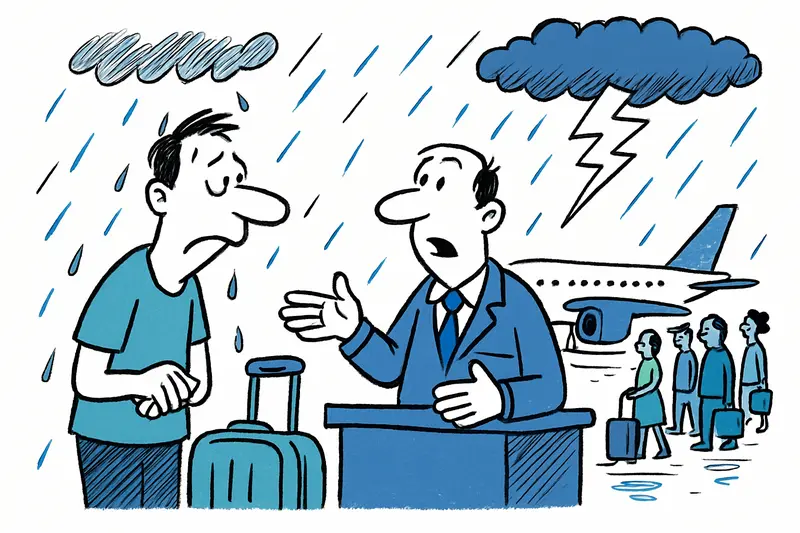
Summer thunderstorm brings Palma Airport to a halt — Nearly 100 delays and what it means for travelers
Heavy thunderstorms on Thursday caused long queues, wet suitcases and a total of 98 delayed flights at Palma Airport. A look at the causes, the consequences for Menorca and Ibiza, and how airports and travelers can be better prepared in the future.
Thunderstorms cause chaos at the terminal: queues, flashing displays and wet rolling suitcases
What began like a typical summer shower on Thursday noon turned into a substantial disruption of flight operations. Around 2 p.m. dark clouds hung over the island, the rumble of distant thunderstorms mixed with the squeak of baggage carts. AEMET had issued an Orange warning – for travellers at the airport this meant: patience, patience and even more patience. At the terminal one could hear irritated voices, lights flickered on the departure boards, and at the exit under Avenida Antonio Maura some passengers sought shelter from the downpour, a situation also covered in Severe storm halts Palma Airport: Why delays hit inter-island services and travelers especially hard.
The numbers: nearly 100 delayed flights, cancellations and growing delays
The airport operator reported 98 delayed flights by the afternoon, of which about 43 departures and 55 arrivals. On average the delays were around 44 minutes, with an upward trend. Two connections from Paris were completely cancelled; additional services to Menorca and Ibiza were also affected. Routes to Barcelona were particularly impacted: Menorca saw twelve cancellations, Ibiza around ten. Enaire also pointed out that restrictions in Barcelona could have knock-on effects on Palma – a network problem that is often overlooked in public debate, as detailed in Storm Chaos in Palma: Why a Storm Slows the Airport So Much — and What Needs to Change.
The real question: Is Palma prepared for sudden summer thunderstorms?
This is the central question we should ask. Short-term weather caprices are not uncommon here in Mallorca, as explored in Weather chaos at Palma Airport: Why a thunderstorm brings more than just delays. Still, two things stand out: first, the communication chains between air traffic control, the airport operator and airlines appear strained during peak times. Displays flickered more often, and public announcements grew louder. Second, the local infrastructure – bus stops in front of the terminal, limited dry waiting areas, the small departure hall with its narrow corridors – creates stress for passengers and staff.
Such disruptions reveal a structural problem: operations are highly interlinked with continental hubs like Barcelona. When runways or airspace are reduced there, Palma immediately loses air corridors and slots. For passengers this means waiting luggage and uncertain connections far off the island.
What is often overlooked: staff, processes and digital communication
In the hectic terminal two quiet but important factors become apparent. Ground staff work under time pressure; last-minute rebookings cost time and nerves. At the same time digital information is not always up to date or made available to all affected passengers. A traveler at a low-cost carrier counter reported hectic rebookings, others queued for a long time at the café — the coffee machine was running at full speed, but it did little to ease the waiting time.
Another less-noticed point: bus and transfer connections. When the rain made the roads slippery, traffic stalled on Avenida Antonio Maura. Waiting passengers improvised shelters; transfer buses could not stop as planned. These small bottlenecks quickly add up to a large delay chain.
Concrete opportunities and suggestions
The situation is annoying, but not an inevitable catastrophe. There are areas for action that could help in the short and medium term:
1. Improved real-time communication: More channels, better synchronization between AENA, airlines and third-party providers. Push notifications with clear options (rebook, refund, meal vouchers) reduce uncertainty.
2. Weatherproof waiting zones: Additional canopies in front of terminals, temporary tarpaulins or containers that can be set up quickly in heavy rain.
3. More flexible staffing plans: On-call teams for check-in and ground handling that can be activated during storms would speed up rebooking processes.
4. Regional coordination: Better coordination with Barcelona as a hub to minimize chain reactions. Joint emergency plans for extreme weather could cushion delays.
Tips for travelers — pragmatic and local
Anyone flying in the next few hours should check in online before leaving, allow extra travel time and keep the airline's phone number handy. An umbrella and a well-fitting backpack suddenly become invaluable; the coffee area in departures may have long queues, but dry seats are scarce and fill up quickly. If possible: build in flexibility and avoid booking the last flight of the day — in a chain disruption that connection may be cancelled.
In the end there's a bit of Mallorca reality: we love the rapid weather changes, the thunder over the bay and the smell of wet asphalt. But for airport operations this means: anticipate better, communicate faster and have practical solutions ready. Safety comes first — but a plan B for chaos and wet suitcases never hurts.
Frequently asked questions
Why do summer thunderstorms delay flights at Palma Airport?
What should I do if my flight from Mallorca is delayed during bad weather?
How much extra time should I leave for Palma Airport when storms are forecast?
Are delays at Palma Airport often caused by problems elsewhere in Spain?
Is Palma Airport ready for sudden summer thunderstorms?
What happens to inter-island flights from Mallorca when the weather turns bad?
What should I pack for a flight through Palma Airport in rainy weather?
Why does rain cause so many problems outside Palma Airport terminals?
Similar News
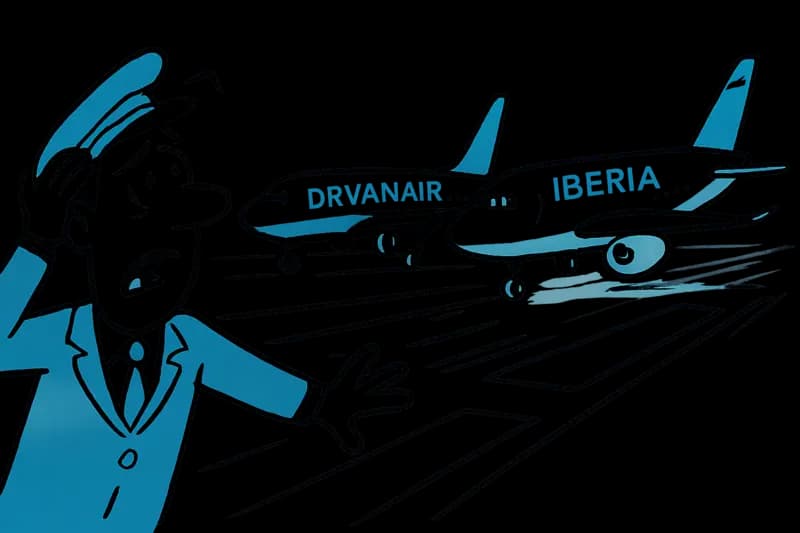
Near-miss on Lanzarote: Landing Ryanair Jet and Iberia Takeoff — what really went wrong
On Lanzarote there was a dangerous incident: A Ryanair flight (FR5910) from Dublin landed on runway 03 while an Iberia E...

Eurowings introduces new Premium Business seats on Mallorca routes
From December 1, selected Eurowings flights to Palma and other destinations will feature eight particularly generous sea...

Car on MA-13 near Inca in flames – a safety check for the island
A vehicle caught fire on the MA-13 towards Alcúdia on Tuesday afternoon. The driver was uninjured, the car was destroyed...

Real Estate in Mallorca: Fewer Buyers, Higher Prices — What's Behind It?
Sales on Mallorca are falling, yet prices continue to climb. Why fewer transactions do not equal relief — and what shoul...
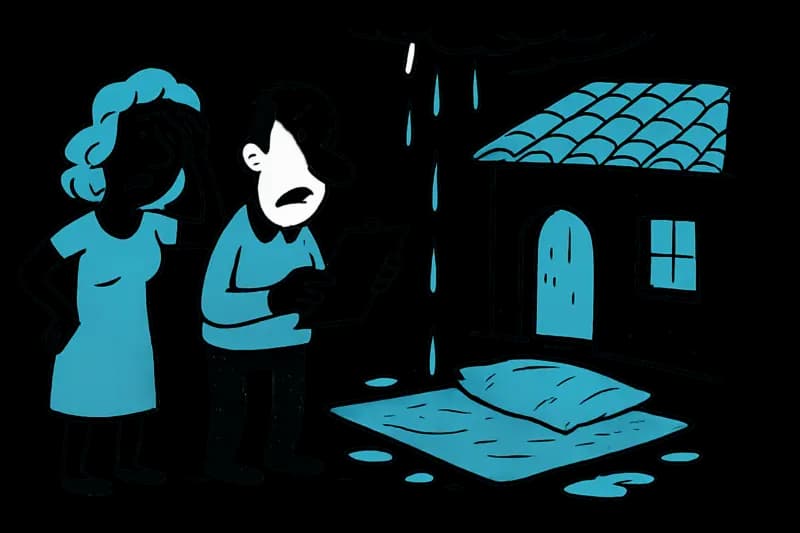
Just Bought — Already Trouble: Water Damage in the Heiters' Villa and What Owners in Mallorca Should Know Now
A newly purchased sea-view property — and within days a water damage. What risks lurk in new properties in Mallorca, and...
More to explore
Discover more interesting content

Can Cap de Bou

Townhouse Lleo 72
