
Cooling with ID: Why Can Picafort's Outdoor Pool Now Favors Residents
Cooling with ID: Why Can Picafort's Outdoor Pool Now Favors Residents
Because of overcrowding on hot weekends, the municipality of Santa Margalida in Can Picafort is checking IDs on peak days at the pool entrance so residents are given priority. A reality check: who benefits, who loses, and which solutions would be fairer?
Cooling with ID: Why Can Picafort's outdoor pool now favors residents
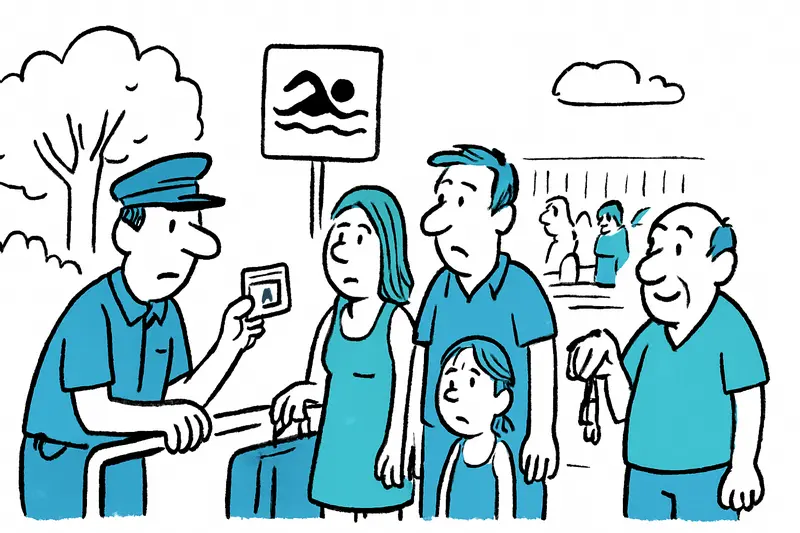
In Can Picafort the municipality has reacted: on particularly busy days the city outdoor pool checks residents' addresses at the entrance so locals are given priority. The measure targets the practical conflict on hot July days, when the heat draws crowds and the small facility is often filled to capacity.
Key question
Is it acceptable for a free public swimming pool in a tourist hotspot to be managed so that holidaymakers must stay outside on hot weekends?
Critical assessment
The municipality of Santa Margalida found that the allowed number of visitors was exceeded on many days and security staff had to be deployed, a situation discussed in Mallorca at the Limit: Will This Weekend Break the Visitor Maximum?. Instead of complicated pricing structures they now resort to a simple measure: show ID, secure a spot for residents. At first glance this seems understandable: people who live here need cooling regularly and long-term — tourists are only here temporarily.
It becomes problematic when decision-makers regulate public space primarily based on origin. The pool is free, but it is a public offering for everyone on the island. A priority rule can cushion conflicts, but it does not solve the core problem: lack of capacity and poor planning in a season when more people than before visit the same place in short peak times, a trend that echoes reporting on From Designer Pouch to Chlorine Bath: How Hourly Pool Rentals Are Changing Everyday Life in Mallorca.
What's missing from the debate
Public debate often frames a simple residents versus tourists opposition. Missing is the perspective on technical and organisational measures that would reduce competition between the groups and instead stagger usage; issues like early reservations and space-saving behaviours are examined in Morning towel circus at Mallorca's pools: why people reserve at six — and what could help. Clear numbers on maximum capacity, up-to-date occupancy displays, and transparent rules about which weekends ID checks apply are lacking.
A scene from everyday life
Imagine the Paseo of Can Picafort on a hot Saturday: delivery vans squeeze past parked cars, children run with wet hair and sunscreen in their hair, older people seek shade under the pines, and a queue forms in front of the outdoor pool. A guard checks IDs, two families with suitcases look on disappointed, while residents exchange a relieved smile with keys in hand. This is the immediate reality — loud, sweaty, with small frictions.
Concrete proposals
1. Make capacity visible: a digital traffic-light system at the entrance and online shows real-time occupancy. Visitors can make an informed choice before they travel.
2. Time slots and reservations: a limited number of free time slots could be bookable online. Residents should be prioritized, but not exclusively admitted; a fair share for visitors creates balance.
3. Free quota for residents, small charge for non-residents on peak days: this keeps the offer socially acceptable without complete exclusion.
4. Temporary expansions: mobile shaded areas, additional lawn spaces on municipal land or shuttle services to nearby larger beaches could relieve pressure on the facility.
5. Transparent rules: the municipality should clearly communicate the criteria on which ID checks apply on a given day (e.g. forecasted peak temperature, expected visitor numbers, weekend status).
Why these measures would help
They distribute the load instead of excluding people. Visible capacity indicators prevent frustrated trips. Reservation slots create predictability for families and older residents. A small fee for non-residents on peak days would generate revenue for improvements, without introducing a general pay system for everyone.
Concluding remarks
The municipality's intention is understandable: safety and reliable access for residents. But a pure ID rule remains a burden for short-term visitors and a symbol of the limits of current infrastructure planning. A better approach would combine transparency, forward-looking capacity management and pragmatic on-site measures. That way there is room for the pensioner who swims daily and for the family that urgently needs a cool break after an outing.
Frequently asked questions
Why does Can Picafort's outdoor pool give priority to local residents on hot, busy days?
Is it fair for a free public pool in Mallorca to restrict access for visitors during peak times?
What practical measures could improve pool use balance in Can Picafort during peak heat?
How can technology help manage occupancy at Mallorca's public pools?
What should visitors know before swimming at Can Picafort’s outdoor pool on a hot weekend?
What does this situation reveal about capacity planning for public spaces in Mallorca towns?
Are there alternatives when small public pools in Mallorca are crowded?
What role do residents and authorities play in keeping cooling spaces accessible in Can Picafort?
Similar News

Cafetería San Siro: A Meeting Place on Schinken Street Since 1966
In the middle of Schinken Street, Cafetería San Siro has been offering Mallorcan hospitality for more than six decades —...

From Ballermann to Prison: What the Verdict Against the Femina Operator Means for Palma
The Munich Regional Court convicted a German operator for subsidy fraud. What does the verdict mean for the Femina Club,...

Underpass Verge de Lluc: 19-year-old fights her way out of flooded car – a warning sign for Palma
A 19-year-old recently escaped swimming from her car after the Verge de Lluc underpass held up to one and a half meters ...

When the Floodgates Open Again: Why Palma's Floods Aren't a Coincidence
A sudden heavy downpour around 5 p.m. brought Palma to a standstill: flooded streets, full basements, panicked commuters...

Playa de Palma: Life-saving at Balneario 11 – Lifeguards Act Quickly
A German holidaymaker suffered cardiac arrest at Playa de Palma. Lifeguards resuscitated her on the beach; emergency ser...
More to explore
Discover more interesting content

Can Cap de Bou

Townhouse Lleo 72
