
Four Hours of Panic on the A-66: How a Ten-Year-Old Was Left at a Service Station
A ten-year-old was left at a gas station near Aldea del Cano and was not found until roughly 140 kilometres later. A reality check with concrete safety ideas.
Four Hours of Panic on the A-66: How a Ten-Year-Old Was Left at a Service Station
Key question: How can something like this happen — and what must parents, road users and authorities do differently so that no child is left alone at a motorway service station?
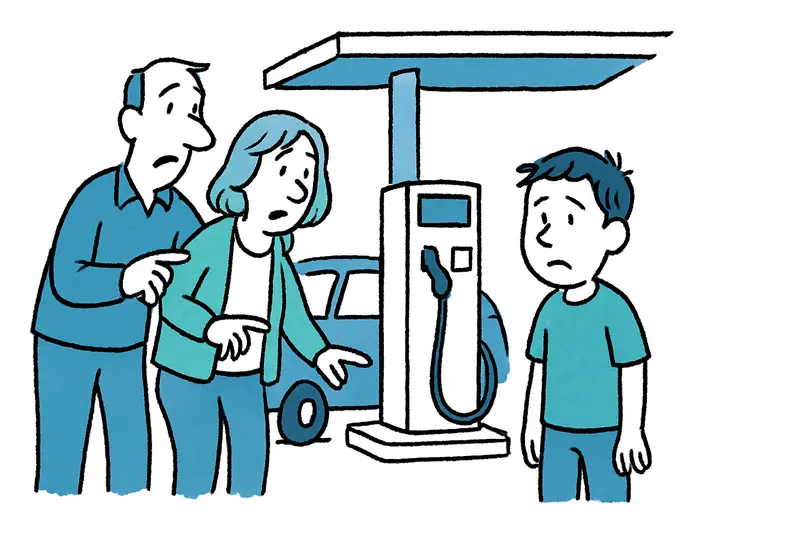
A Sunday evening like a nightmare textbook was experienced by a family in the province of Cáceres: after a fuel stop at Aldea del Cano a ten-year-old boy got out of the car — and the return to the vehicle went unnoticed. Only hours later, after the Guardia Civil had been informed via the surveillance cameras, officers were able to find the boy at a motorway service area and reunite him with his family. The distance between the stop and the halt near Hervás was about 140 kilometres, according to authorities.
Such reports immediately trigger loud reactions: anger, relief, bewilderment. But they also raise very practical questions. Who is in charge when several adults and children are travelling together? How reliable are routines when tiredness, distraction or time pressure come into play?
Brief analysis: common reasons that play a role in such cases are simple human mistakes. Under stress people omit things they would never otherwise forget. A friend travelling along might assume the parents are supervising. Children, especially at primary school age, move quickly around a service area, look at signs or vending machines — and suddenly find themselves alone. The camera images that helped in this case only show that the child got out; they do not answer why nobody noticed the empty space in the car.
What is often missing in public debate is the distinction between blame and prevention. It helps little to simply condemn parental inattention. Far more important are practical measures: checklists for families, technical helpers in the vehicle and targeted notices at petrol stations and motorway services.
I think of a Tuesday morning in Palma when the market at the Plaça Major is just opening. Mothers with pushchairs, commuters with coffee cups, two schoolboys laughing as they run to the bus stop — routine is visible. It is precisely these routines that can be deceptive. A quick glance at the phone, a conversation in the driver's seat and the counting check is no longer one hundred percent reliable.
Concrete suggestions that could help:
1. Clear role assignment before every departure. Who is responsible for which child? Saying this aloud briefly — for example, "I'm counting the children now" — draws attention.
2. Perform a visible check. Open the doors, look at every seat, say "All here?" — it takes ten seconds but prevents unnecessary panic.
3. Use technical reminders. Many modern cars have sensors and warning systems. For older vehicles there are apps or simple gadgets: motion detectors in child seats, reminder pins on the key tied to the last door opened.
4. Involve petrol stations and service areas. Operators could put up boards with short safety tips or a small sticker on the pump reminding people to check their passengers. A simple visual reminder works more often than a warning message online.
5. Targeted authority communication. The Guardia Civil used the emergency number 062 in this case and coordinated the search. A combination of prevention and rapid information channels would be sensible: more visible notices at motorway service areas, fold-out QR codes with behavioural rules, and a routine for quick recording of video footage if necessary.
What is missing in the public discussion is a sober, non-shaming information campaign that offers families practical steps instead of moralising. Parents make mistakes; the question is how the system supports parents so that these errors occur less often or have fewer consequences.
Finally, a small, direct tip you can use on your next trip to Playa de Palma: before the engine starts, call out each child's first name and expect a clear "reply." It is as simple as it is effective.
Conclusion: The incident on the A-66 ended without serious harm. Still, it should not remain just another item in the news stream. Small routines, technical aids and easy-to-understand reminders at service areas could break the combination of distraction and routine. In Mallorca it is often the small habits — the espresso at the Plaça, the simple code word in the supermarket — that make everyday life safer. Why not in the car as well?
Frequently asked questions
What practical steps can families take to prevent a child from being left alone in a car during trips?
What should I do if I realize my child is missing from the car at a service area?
How can service areas help prevent children from being left behind?
What simple safety tip can I use before starting a trip in Mallorca to make sure all children are accounted for?
What role does a pre-departure checklist have for trips from Palma's Plaça Major or similar busy places?
Are modern car features really helpful in preventing children from being left in the car?
What kind of notice could be useful at Mallorca service areas to remind drivers to check passengers?
Why is a non-shaming information campaign important when discussing parenting mistakes on the road?
Similar News

Celestí Alomar has died: What the dispute over the ecotax still tells us
The former tourism minister Celestí Alomar has died in Palma at 76. His legacy — the introductory debate about the ecota...
Port d'Andratx: When Goats Climb Sports Cars — and What We Should Learn From It
In the marina of Port d'Andratx a wild goat was recently spotted on the roof of a parked sports car. The scene is amusin...
Nearly Poisoned Sisters at Ballermann: Where the Hotel Failed — and What Must Happen Now
Two German sisters in a hotel on the Carretera Militar apparently lost consciousness due to carbon monoxide. Guests had ...
German Tourist Killed in Southern Spain: Questions We Must Ask Now
A 47-year-old German woman was found dead on the coast near Isla Cristina. The suspected partner has been arrested. The ...
Water, Words, Responsibility: The Dispute over Horse-Drawn Carriages in Palma
A German tourist in Palma is sprayed with water by a carriage driver. Protests, accusations and a city investigation sho...
More to explore
Discover more interesting content

Boat Tour with BBQ along Es Trenc Beach
Private transfer from Mallorca Airport (PMI) to Pollensa
