
Four Tons of Waste Recovered from the Sea off Sant Elm
Four Tons of Waste Recovered from the Sea off Sant Elm
Off Sant Elm, the municipality, the Save the Med foundation and professional divers removed around four tons of waste from the sea—mainly in the Cala Conills bay. A positive sign for Sa Dragonera and an example of how island residents and specialists can act together.
Four Tons of Waste Recovered from the Sea off Sant Elm
Cleanup in Cala Conills – a small victory for Sa Dragonera
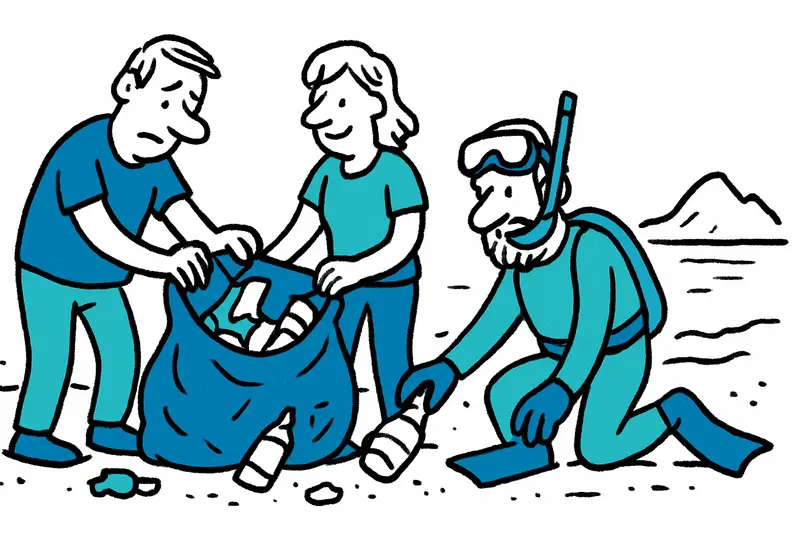
In the early morning, when fishermen are still mending their nets and the smell of coffee drifts from the small kiosk at Sant Elm's harbor, a work team set out on an unusual mission: to clean what the sea had left ashore. Around four tons of bulky waste were recovered in recent days from the seabed off Sant Elm—primarily in the area of the small cove Cala Conills.
The operation was organized by the municipality of Andratx together with the Save the Med foundation; professional diving teams took on the most challenging underwater work, a mode of coordination also reported in Casi 37 toneladas de basura del mar: balance de la flota de limpieza en las Baleares. The helpers found significantly more debris than expected: old fishing gear, plastic parts, metal objects and other bulky items that had accumulated on the seabed over the years.
For residents this is not an abstract issue. People sat on benches along the promenade in front of the village, watched the boat arrive and exchanged stories about earlier times, when the coves seemed cleaner. "You immediately notice how different the water looks when something like that comes up," said a woman from Sant Elm who regularly swims at the cove in summer months. Such everyday observations show why the action matters beyond the raw numbers.
The recovery is part of a larger protection project for the coastal and marine areas around the island of Sa Dragonera. Where rocks, seagrass meadows and underwater habitats lie close together, clean waters are especially important—for fish, for seabirds and for the people who depend on tourism and fishing.
Why is this good for Mallorca? Because it shows: when administration, nonprofit work and specialists work hand in hand, visible results can be achieved. Cleaner water means healthier ecosystems, better conditions for divers and fishers, and a stronger signal to visitors: this island takes care of its coasts.
The operation also provides practical ideas that other municipalities can adopt: targeted dive missions at known problem spots, more permanent collection points in harbor areas and increased information for boaters and bathers. The collaboration of professionals and volunteers is particularly effective—the former bring technology and experience, the latter local knowledge and persistence. Examples of volunteer recoveries appear in Siete metros de lodo: voluntarios recuperan un barco en Puerto Portals.
A look to the near future: regular follow-up operations, better marking of hard-to-access debris traps and simple reporting channels for unexpected finds could help prevent bulky waste from entering the sea or becoming lodged on the seabed in the first place. At the same time, actions like this show that engagement on the island brings directly noticeable improvements—and often returns a bit of community spirit as well.
If you want to join: in Sant Elm people often clean up together spontaneously after such operations, and there are local groups that organize beach cleanups. A chat in the café, a call to the municipality or a look at the social media channels of initiatives like Save the Med (for local coverage, see ¿Quién limpia el mar? Casi ocho toneladas de basura frente a las Baleares – y lo que eso realmente significa) is sometimes enough to spend the next weekend doing a small, useful deed.
At Sant Elm's quay the removed material is now stacked, the sun reflects on the waves, and the seagulls continue to circle. It is only one stretch among many, but one that shows: once you start cleaning up, you quickly notice how much you can regain—cleaner water, clearer coves and the certainty that this island knows and defends its value.
Frequently asked questions
What is the weather usually like in Mallorca in late spring?
Can you swim in Mallorca in late spring?
What should I pack for Mallorca in spring?
Is late spring a good time to visit Mallorca?
What can you do in Palma de Mallorca when the weather is warm but not too hot?
Are Mallorca beaches busy in late spring?
What is Sóller like to visit in spring?
Do you need a jacket in Mallorca at night in spring?
Similar News

Mueller continues expanding in Mallorca: Artà in 2026, Can Picafort in early summer 2027
The drugstore chain Mueller is opening two new stores in Mallorca: a 1,400 m² shop in Artà on 5 November 2026 and a bran...
The Painter Who Lived Mallorca: Franz Taussig and His Century-Old Secret
A hundred years ago a young Viennese arrived in El Terreno, sketched the island and called himself Francis Caron. Today ...

Airport dispute: Bridge, forecasts and the question of responsibility
A video by the Spanish transport minister has ignited the dispute over DORA figures, capacities and local governance pow...

The Painter Who Invented Himself: How a Young Viennese Drew Mallorca
A hundred years ago a 19-year-old draftsman arrived in El Terreno. His diary and sheets, long known under the pseudonym ...

Released with Conditions: The Plus Ultra Suspicion and a Mallorcan Finca as Residence
A Dutch entrepreneur, sought in connection with the Plus Ultra case, was extradited to Spain after his arrest in Germany...
More to explore
Discover more interesting content

Can Cap de Bou

Townhouse Lleo 72
