
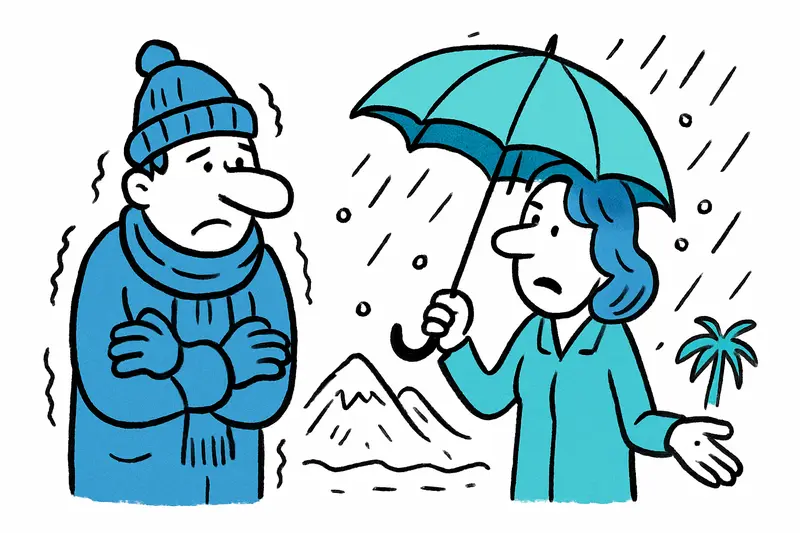
Cold snap in Mallorca: Is the island really prepared?
A cold front brings wind, rain, hail — and in the heights of the Serra de Tramuntana even the danger of snow. Time for an inventory: How well does Mallorca protect itself against sudden cold and which simple measures help now?
Cold snap on Mallorca: nights can drop below zero
AEMET warns: On the night into Saturday and in the early morning hours the felt temperatures, especially in the Serra de Tramuntana, will locally fall below 0 °C. Even in the lowlands it feels significantly colder due to wind and humidity than the thermometer shows. Anyone walking along the Passeig in Palma this morning saw waiters in thick jackets, hats and with red fingers — a small picture of an island that rarely wakes up so biting-cold so early in the year. For more on the approaching front see Cold snap and mud rain: Atlantic front puts Mallorca to the test.
Main question: How well is Mallorca prepared for sudden cold snaps?
That is the important question behind the warnings: not only whether a few olive leaves are blown away by the hail, but whether our infrastructure, the rural communities and the many people who live and work here can cope with such a weather change, as discussed in North Storm and Cold Front: Are Mallorca's Roads and Trails Ready for the Winter Change?. We often think: “Mallorca — sun, sea, mild.” Yet the Tramuntana has always had its own climate, and a cold snap hits exactly the places where it gets most complicated.
What is often underestimated — four aspects
1. Rural vulnerability: In villages far from Palma there are fewer grit and salt vehicles. Slopes between Deià, Sóller and Lluc become slippery when wet; with hail, short stretches can suddenly be white and icy. Many residents rely on experience rather than current infrastructure.
2. Agriculture: Olive groves and terraced crops are robust — but young shoots, sensitive citrus trees and greenhouses suffer from frost. A sudden hail shower can damage harvests, and for small producers that is existential.
3. Traffic and tourism: Rental cars without winter equipment, buses on narrow mountain roads and inexperienced drivers increase the risk. For hikers in the Tramuntana the usual routes are a danger in the afternoon when rain turns to hail or the wind suddenly picks up.
4. Social consequences: Whether elderly people in poorly heated apartments, workers on construction sites or homeless people — cold hits the weakest first. A short information and support plan by the municipalities can prevent a lot of suffering.
Concrete, quickly implementable measures
Many measures do not require a large budget but coordination: municipalities should make salt and sand stores available for narrow mountain roads, designate public parking garages as emergency warming options and inform parents early via schools, as urged in Storm Alert: Is Mallorca Prepared for the Deluge?. Tourist information centers and landlords should post notices: “No winter tires? Drive carefully, avoid Tramuntana routes.”
For farmers simple precautions help: mobile anti-frost fans for sensitive plots, covering young plants and removing loose fruit in time before hail. Boat owners and fishermen at the harbor are advised to secure lines and postpone trips — the sea is rough.
What you as a reader can do now
Pack a hat in addition when you leave the house in the morning. Check the heating in the holiday apartment, secure terrace furniture and loose decorations. If you plan to go to the mountains: check local road updates, allow plenty of time for the drive and wear multiple layers (the famous layering system); also review the latest forecasts such as Thursday will be cooler and wetter — but is Mallorca really prepared?. If possible, avoid trips into the Tramuntana in the late afternoon.
A look ahead — small ideas with big impact
The island could benefit in the long term from a terrain-specific warning system: short SMS alerts for mountain communities, clearly marked winter routes and a platform where farmers can post short-term damage reports. Such digital helpers would shorten response times and improve aid coordination — without much bureaucracy.
In short: the current cold snap is not a climate catastrophe scenario, but it reminds us how vulnerable certain parts of the island are. A little advance planning, coordinated municipal measures and common sense — don't forget your hat — are often enough to avoid trouble.
I'll walk the Cala route later to see whether the olive trees survive the wind. If not, I'll report — and maybe bring an extra cup of hot coffee.
Frequently asked questions
How cold does Mallorca get during a sudden cold snap?
Is it safe to drive in Mallorca when the weather turns icy or wet?
What should I wear in Mallorca when a cold front arrives?
Can you still hike in the Serra de Tramuntana during cold weather?
What parts of Mallorca are most affected by cold snaps?
How prepared is Mallorca for sudden frost and hail?
Can cold weather damage crops in Mallorca?
What should holidaymakers in Mallorca check before a cold morning?
Similar News
When the Wallet Becomes a Danger: Attack in Peguera and Lessons for Mallorca
In Peguera, two women are said to have stolen the wallet from a 75-year-old German couple. When the victim intervened, t...
Plata stays Plata: Young people take over, Llonguets remain
A small bar on Carrer de l'Argenteria will continue: Tolo Serra hands the place over to young Mallorcans at the end of t...
Unnoticed in the Luggage Compartment: How a Boy Traveled More Than 100 Kilometers in a Team Bus
A minor traveled in the undercarriage of a team bus for more than 100 kilometers until his cries for help were heard. A ...

Cap Vermell Grand: Second Michelin Key – a Gift for the East
The Cap Vermell Grand in Capdepera has been awarded its second Michelin key. For the region this elevates the luxury off...
Eurowings lets four aircraft carry names – a friendly idea that also reaches Mallorca
Eurowings is launching a campaign: four Airbus A320s are to carry the first names of people who help others in everyday ...
More to explore
Discover more interesting content

Can Cap de Bou

Townhouse Lleo 72
