
Gaudí's Small Handwriting in Palma's Cathedral: What the Island Has Preserved
Gaudí's Small Handwriting in Palma's Cathedral: What the Island Has Preserved
You don't have to go to Barcelona: Palma's Cathedral contains subtle traces of Antoni Gaudí. A walking tour reveals windows, ceramics, the unusual canopy, and a legacy that culturally enriches Mallorca.
Gaudí's Small Handwriting in Palma's Cathedral: What the Island Has Preserved
Why a walk around the Seu on a quiet morning reveals more than you might think
When the bells toll over the Plaça de la Seu in the early morning and the seagulls cry over the harbour, Palma begins to read out stories. Some are large and loud, others are quiet – tiny signs in stone, metal and ceramics that scarcely catch a visitor's eye. Among these hidden details are traces of the Catalan architect Antoni Gaudí, which show how versatile his work was and how much Mallorca has benefited from it.
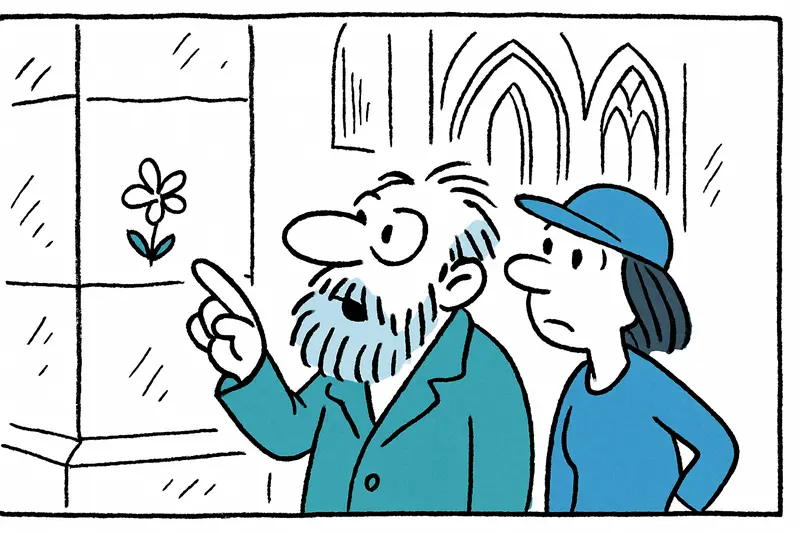
At the beginning of the 20th century, Gaudí received the commission from Bishop Pere Joan Campins to reorganize the cathedral's interior. The project ran roughly from 1904 to 1915 and strongly changed the spatial effect: the choir was moved to a new position, sightlines were altered, and many previously hidden windows were uncovered. Today, anyone standing before the sea-facing portal can discover fine, almost naïve floral engravings on small limestone slabs – barely higher than a child's knee. These little tulip motifs are an example of the unobtrusive yet effective handwriting Gaudí left on the island.
Alongside such small details are more visible interventions: Gaudí rearranged the position of the pulpit and ensured that electric light was brought into the space – at the time a fairly modern measure for a Gothic building, and today the building's light can even be experienced as a light display in Palma's cathedral. Wrought-iron chandeliers, railings and ceramic cladding on the choir wall also stem from his ideas. The best-known element, however, is an unusual canopy above the altar: not a massive stone object but a construction of wood, paper, textiles and metal and glass – a promise that church space can also be poetic and experimental.
The work on the cathedral remained unfinished. After the death of the bishop, whose support was decisive, and after disputes with local builders, Gaudí withdrew. Execution remained in the hands of his collaborators, including well-known companions, and some of his ideas were further developed by local architects and craftsmen. That is precisely what gives it charm: technique, tradition and artistic spirit of experimentation meet here.
Just a few steps away, at the Bishop's Palace, more modernist traces can be seen. The sea balcony with its playful shapes makes it clear that a modern spirit had a hand here. The small museum of the Bishop's Palace also displays windows and liturgical furnishings to see that derive directly or indirectly from Gaudí's design world.
For Mallorca this heritage brings practical and cultural benefits. It draws visitors away from the beaches into the old town, gives local tours material for stories and keeps workshops busy that specialise in restoration and ceramics. Small businesses – craftsmen, guides, cafés along the Carrer de la Llotja – benefit when more people look closely rather than just taking a selfie in front of the façade.
Those who want to seek out the details need neither an architecture degree nor much time: a quiet morning walk is enough, and the famous 'Eight' light phenomenon rewards early risers. Start at the Plaça de la Seu, keep your eyes open for the fine ornamental scratches in the side windows, then go into the rear area of the cathedral to experience the altered spatial proportions; the spaces beneath and around the Seu now even house exhibitions such as Palma's Maritime Museum beneath the cathedral. A detour through the Bishop's Palace is worthwhile to view ceramics and glass up close.
There is also a quiet message: cultural preservation is teamwork. Gaudí's ideas are not only the work of an individual but the result of patrons, local craftsmen and later generations who preserved and complemented them. That explains why the cathedral is so attractive today – as a living place, not a dusty monument.
For the island this means: cultural diversity strengthens freedom from seasonality. When museums, churches and workshops tell stories together, visitors stay longer, learn more – and revenues are distributed more widely across the city. A simple exercise for locals and guests: on your next walk, don't just raise a glass, but also look down. The details are often the most surprising conversation partners.
Inspired? Then try it on a windless morning with a coffee from a small café on the Passeig or a cup at one of the street cafés nearby. Listen to the sound of the bells, look at the arches and imagine how it was more than 100 years ago when a visionary from Catalonia put pen to paper and made the people of Mallorca quietly marvel. A short conclusion: Gaudí's traces here are not a monumental total work of art, but an ensemble of ideas that still suit Mallorca well today.
Frequently asked questions
What Gaudí details can you still see in Palma Cathedral?
Can you visit Palma Cathedral early in the morning to see the light better?
What did Gaudí change inside Palma Cathedral?
Is Palma Cathedral still a living place or just a monument?
What can you see at the Bishop’s Palace in Palma if you are interested in Gaudí?
Why does Gaudí matter for Mallorca today?
What is the best way to explore Gaudí’s traces in Palma Cathedral?
What is the role of local craftsmen in preserving Gaudí’s work in Palma?
Similar News

New trick at Palma Airport: suitcase stolen from the belt — a reality check
On September 28 a 36-year-old allegedly stole a suitcase from the baggage belt of a 51-year-old German passenger at Palm...
Urgent Clearing of Palma's Torrents: Flood Prevention or Symptom of Short-Sighted Planning?
The city of Palma is responding to storm forecasts and has cleared several torrents. We ask: Is the short-term clearing ...
Evaneos and Mexico: A Reality Check for Sustainable Travel
Travel advertising often reads like a promise: local, sustainable, unique. But how deep do these promises really go? A c...

From Megapark to the Altar: Party Singer Now Offers Weddings in Mallorca
A well-known party artist combines partying and marriage: instead of a traditional church there are ceremonies at the Me...

The Maricarmen Case: Why an Eviction Is Forcing Spain's Housing Debate
Images of an 87-year-old woman on a stretcher have sparked a debate in Spain that also runs deep in Mallorca. Who protec...
More to explore
Discover more interesting content

Can Cap de Bou

Townhouse Lleo 72
