

Soon no more Mallorcan rolls? Generational change threatens a traditional bar in Palma
Soon no more Mallorcan rolls? Generational change threatens a traditional bar in Palma
Bar Vista Alegre, a meeting place in Palma for three generations, is looking for a successor. So far only foreign applicants have come forward — the future of the llonguets is at stake.
Soon no more Mallorcan rolls? Generational change threatens a traditional bar in Palma
Bar Vista Alegre is up for sale – but who will take over a kitchen that bakes memories?
Guiding question: Who owns the recipes, the sounds and the small rituals of a city when the last family that preserves them stops?
Since 1960, Bar Vista Alegre has been part of the Maimó family's history. Miguel, who still turns the key today, is the third generation in the small venue. He and his wife decided a year ago to step away from the counter — reasons: age, health problems and the growing administrative burden that increases daily. That is a fact.
Currently the situation is as follows: interested parties have come forward — but apparently only from Asia. Miguel says he has nothing against the buyers, but doubts that they would continue the bar's special tradition, the baking of llonguets, in the way his family did. This creates an uneasy feeling in Palma: will the smell of chop suey soon blow through the alley instead of freshly baked rolls?
Why this imbalance? The answers are complex. Young Mallorcans apparently shy away from the full responsibility of running their own place: long working hours, uncertainties over rent and fees, and a bureaucratic jungle. At the same time demand in Palma is changing: according to CAEB Restauración, classic Mallorcan cuisine now makes up only a very small part of the city's offerings, while new cuisines are gaining market share.
A scene from daily life paints the picture: it's early morning near the Mercat de l'Olivar, cars honk, a cleaning crew sweeps past, and in front of Vista Alegre two old men stand with the newspaper open, hands outstretched for the espresso. The baker's assistant brings the first crate of llonguets; the dough smells of yeast and salt. A garbage truck rumbles by. This little time capsule could soon disappear — and with it a piece of living culture.
Critical analysis: a change of owner does not automatically mean the loss of a speciality. Many restaurateurs learn quickly to add new products to their repertoire. But there are deeper problems: lack of succession planning in family businesses, insufficient incentives for young entrepreneurs and regulations that discourage startups. We also ask who holds responsibility for culinary heritage — solely the owners or the city's society?
What is often missing from public debate is the perspective of training and infrastructure: we talk about owners, but hardly about apprenticeships, affordable commercial spaces or advisory services for takeovers. The role of cooperatives or municipal support instruments is also hardly discussed, even though such tools could help save traditional businesses while enabling new concepts.
Concrete solutions that could work here: first, a simpler process for business takeovers, with centralized points of contact for permits. Second, tax relief or grants when a business demonstrably continues a culinary tradition. Third, a mentorship program that pairs young hosts with experienced innkeepers, including handover plans. Fourth, promotion of model projects in which multiple buyers — for example a local cooperative — acquire shares and thus preserve the concept. And fifth, greater visibility for the craft: competitions, weekly markets or school collaborations that bring llonguets and similar products back into everyday life.
On the street that means: if the city administration, associations and residents work together, the dilemma can become an experimental space. The owner could, for example, include clauses in the sales contract that secure the baking recipe or working methods — or arrange timed contracts for a gradual handover.
Pointed conclusion: it is not just about a bar, but about how a city deals with its eating habits when generations change. Simply watching as a counter passes into other hands is convenient — but you lose the audible, smellable memories of Palma piece by piece. If we want to preserve something of the bar, we must act now: pragmatically, locally rooted and with clear rules for succession.
In the end there remains the bitter but honest observation: traditions die not only because of a lack of buyers but also because of our laziness to actively protect them. Still, in front of Vista Alegre, on a late morning, an old lady sits with her cup of coffee and hopes that the next couple to open the door will not only bring new dishes but will continue the llonguets — as her parents knew them.
Frequently asked questions
What are llonguets and why are they central to Bar Vista Alegre in Palma?
What challenges does Bar Vista Alegre face with generational change in Palma?
What ideas exist to preserve Bar Vista Alegre's culinary tradition during a handover?
Mallorca has a mild climate, but when is the best time to explore markets and bakeries like those around Palma's Mercat de l'Olivar?
How is Palma's dining scene evolving between traditional Mallorcan cuisine and new international influences?
Why do young entrepreneurs in Mallorca face hurdles when starting or taking over local venues?
How can visitors support Mallorca’s culinary heritage without compromising its integrity?
Are there practical programs or ideas communities can push to protect culinary heritage in Mallorca?
Similar News

Heat, Storms, Temperature Drop: Mallorca Between Extreme Summer and Everyday Life
Aemet warns of another 37–40°C, with little nighttime relief. Then rain and a rapid temperature drop to around 30°C. One...

Complaint surge at Balearic airports: Who bears responsibility for broken suitcases?
In Palma and on the neighboring islands, travelers report significantly more luggage damage and losses this year. Figure...
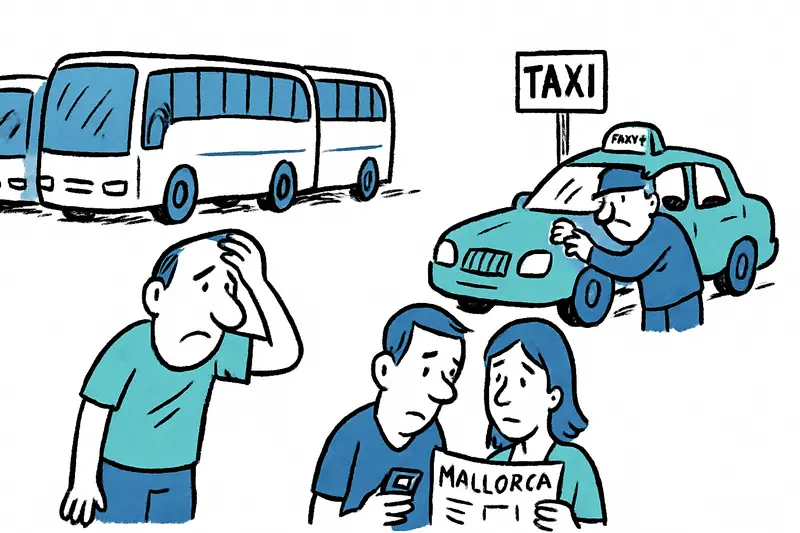
Empty Seats, Full Worries – Why Mallorca Excursions and Taxi Rides Suffer This Summer
Buses stand idle, taxi drivers notice guests' caution: What are the consequences of the new frugality for the island's e...

Mallorca-bound carrier Ryanair provokes Argentine national team: Provocation or PR mistake?
A low-cost carrier's social media post is causing international outrage. The key question: Is a company allowed to poke ...

Royal shopping on the Born: Loewe returns — and Palma rejoices
Sofía, Elena and Victoria Federica were seen on the Passeig del Born as Loewe opened its new boutique. A sunny visit tha...
More to explore
Discover more interesting content

Boat Tour with BBQ along Es Trenc Beach

Private transfer from Mallorca Airport (PMI) to Pollensa
