
Fall at Ballermann: Why a Morning on Playa de Palma Can Turn into an Accident
Early morning on Playa de Palma: A 34-year-old German fell from the second floor into a stairwell and is critically injured in hospital. Why such accidents happen repeatedly — and what hotels, authorities and guests could do better.
Fall at Ballermann: Why a Morning on Playa de Palma Can Turn into an Accident
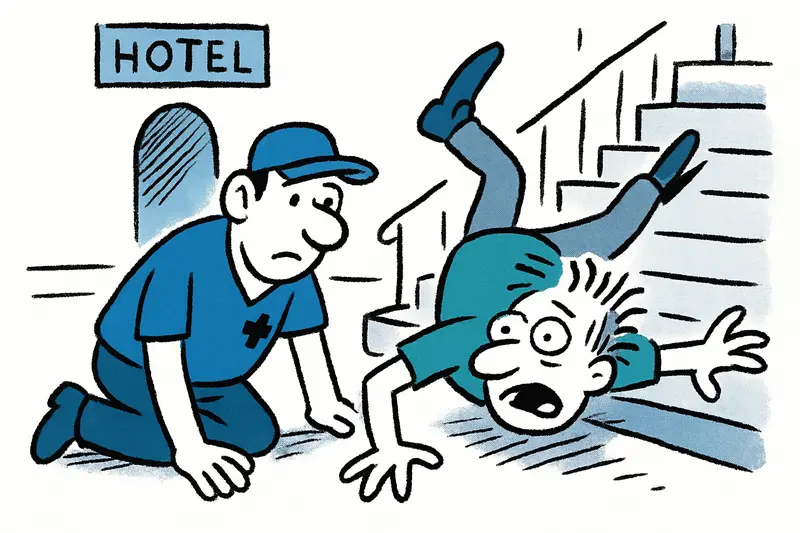
Around 6:30 a.m. on a warm, still-dim Thursday morning, a piercing siren tore Trasime Street at Playa de Palma out of its usual night rest. Guests staggered, trash bins were emptied by cleaning vehicles, seagulls screamed over the flat roofs – and in the middle of this morning scene a man suddenly lay on the stairs of a hotel. A 34-year-old German guest was treated by SAMU 061 rescue crews and taken to Son Espases University Hospital, in what has been reported as an Early-Morning Fall at Playa de Palma: German Tourist in Critical Condition. His condition is described as critical.
The key question: Was it an accident or avoidable negligence?
That one question now hangs over the street like a thick, moist draft: Was it a tragic accident — or the consequence of alcohol, inadequate safety and negligence? Neighbors report the man had obviously staggered. A café owner who was opening tells of hectic activity and routine paramedics. The National Police are investigating, and similar early-morning incidents where disputes escalated have been covered in Brawl at Playa de Palma: Why a verbal exchange could have ended fatally. But what makes the scene uncomfortable for all of us is the question of how easily something like this can happen here at all.
Less highlighted aspects
At first glance one thinks of 'balconing' and risky exits over balconies, similar to the incident reported in Break-in at the Ballermann: Why Flamenc Street no longer feels as safe at night. But often other factors remain invisible: poorly lit stairwells, missing handrails, slippery steps or narrow corridors, too little hotel staff at night, and an infrastructure that relies on closely packed beds and cheap mass processing. Added to this is the local party culture: bars where the last drink is served at bargain prices, and street scenes that only quiet down at dawn.
Another hardly noticed point: communication between hotels and security services. There is not always a clear rule on how guests in an impaired state are accompanied or brought to safe rooms. Some establishments rely on self-responsibility — a concept that quickly reaches its limits in reality.
Concrete opportunities and approaches
Such incidents cannot be solved with a blanket appeal. Multiple levers that work together are needed:
1. Architectural safety: Better lighting in stairwells, non-slip steps, additional handrails and secure balcony parapets. Small investments that can save lives.
2. Hotel concepts at night: Night staff who actively look out for conspicuous guests, clear action guidelines for mobile or disoriented persons, and the option to place guests safely in their rooms.
3. Cooperation with the hospitality industry and authorities: Controlled serving times, effective controls for excessive alcohol consumption and information campaigns at check-in desks about risks — not as moralizing, but as pragmatic prevention.
4. Public education: Short notices in several languages at check-in or in hotel rooms, posters at busy corners: 'Better sleep one more night than take a risk.'
5. Sanctions and incentives: Stricter requirements for hotels that show safety deficiencies, combined with subsidies for smaller establishments so upgrades remain affordable.
The everyday after
For emergency crews in Mallorca, such operations are part of the daily routine. For residents who open their bakeries or sweep the street at that time, it is a shock. The image remains: blue light reflections on a white facade, the voice of a paramedic calming, and the sea that continues to roar normally. The mix of party mood, heat and tourist pressure repeatedly creates dangerous situations, as discussed in Ballermann Between Ecstasy and Reality: More Than Beer and Schlager Music?.
It would be naive to believe that a single incident changes everything. But every accident can be an impetus: for better architecture, more presence, smarter rules and a culture that takes safety seriously without banning fun.
Anyone who saw anything is asked to contact the National Police. And for everyone who knows this stretch of coast: eyes open, especially in the early morning hours. Sometimes one more handrail is enough to get through the night unharmed.
Frequently asked questions
Why can Playa de Palma feel more dangerous in the early morning?
What should you do if you see someone injured in Mallorca?
How can hotels in Mallorca reduce accidents at night?
Is it safe to walk around Playa de Palma after a night out?
What safety problems are common in hotel stairwells in Mallorca?
When is Playa de Palma usually busiest with partygoers?
What can guests do to stay safer in Mallorca party areas?
Why are early-morning accidents in Mallorca often linked to alcohol?
Similar News
Masked Images, Real Panic: When Social Media Aesthetics Alarm Neighbors
Five German content creators filmed on a recently vacated detention site using deceptively realistic props. The result: ...
Why the Striped Breams in Cala Pí Should Be a Wake-up Call
Once again bathers in Cala Pí were surrounded while swimming by small, nippy fish — some wounds bled. Time for clear rul...
Daily from New York: How Palma's Air Traffic Is Growing — and What Must Change
United will increase the Newark–Palma service to daily flights in 2027 (Boeing, 231 seats). Strong tourist numbers clash...
When Love Ends in Shards: Destruction in Son Vida and the Questions That Remain
In Son Vida a relationship dispute escalated: a woman destroyed furniture in a luxury villa, later pressed a panic butto...
Who Bears the Burden? Mallorca Between Tenant Protection and Landlord Fears
Madrid's new housing decrees strengthen tenant rights — but on Mallorca concern is growing: will the law drive small lan...
More to explore
Discover more interesting content

Can Cap de Bou

Townhouse Lleo 72
