
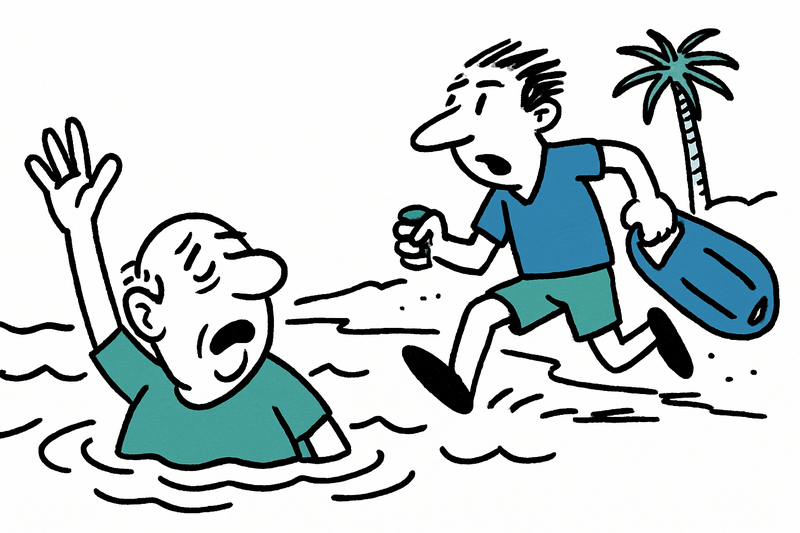
Mourning in Port de Sóller: 87-year-old dies while swimming
An 87-year-old German resident died while swimming in Port de Sóller. The incident raises questions about safety on Mallorca's beaches and the protection of older people.
Tragedy on Passeig des Través: A life ends in the Mediterranean
At bright midday, while the sun fell on the sparkling bay of Port de Sóller and the small fishing boats gently rocked in the morning breeze, the usually relaxed promenade changed. Opposite the Hotel Espléndido a crowd gathered as paramedics and police pulled an 87-year-old German resident from the water. Despite prolonged resuscitation efforts, the man died on the spot, as reported by Tourist Dies at Port de Sóller.
Could this accident have been prevented?
This is the central question that now stands alongside the grief. According to initial reports, the swimmer apparently lost consciousness and swallowed water. Emergency services reacted quickly: police, rescue teams and emergency doctors were on site and the beach section was cordoned off. For lay responders, Red Cross CPR guidance explains the steps to take. But seconds count — and in older people cardiac arrhythmias, circulatory collapses or an unexpected bout of weakness can occur without warning. In a small bay like Port de Sóller, where many residents and visitors are used to earthly sounds like the creak of the tram and the cries of seagulls, the sea may seem harmless. That is exactly what makes the danger so insidious.
What is often overlooked in the public debate
Aside from the obvious sadness, it is important to shed light on aspects that are rarely spoken aloud. First: the presence of lifeguards is seasonal. Outside the main season many beaches are only partially monitored. Second: older residents often swim alone — out of habit, routine, because they love the sea. Previous incidents in Port de Sóller underline the risk, such as when 82-year-old tourist dies in Port de Sóller — why an accident at the harbor must not remain an isolated case. Language barriers are less of an issue in a German-speaking community, but knowing when a doctor should be consulted often remains unclear. Third: public defibrillators and their visibility are inconsistent. Many villages have devices, but are they accessible around the clock and easy to find for tourists and locals alike? Practical advice on public access defibrillators can be found in the NHS information on defibrillators.
Concrete steps that could help now
The municipality, hotels and the neighbourhood could react quickly and pragmatically. Clear signs on promenades — multilingual, visible and practical — would help, as would marked meeting points for companions. Public AEDs (defibrillators) should be mounted prominently and made easily accessible; a QR code on information boards could show the location and link to the instructions in several languages. Hotels on the promenade could give guests short information about local water conditions and emergency numbers at check-in. In the long term, regular free first aid workshops for residents, held on afternoons by the sea, would be a sensible contribution to safety.
The role of the community
Port de Sóller is not an anonymous tourist spot but a tightly woven community. Neighbours meet at the bakery, hear the distant ringing of the church and exchange news on the promenade. In such structures neighbourhood checks can be organised: who goes swimming regularly? Who should be accompanied? Small networks in which volunteers take turns can save lives and also provide social support.
What remains
The loss of the man leaves a gap in the local community. For relatives, friends and all witnesses this is a heavy shock. It is important that authorities and institutions now respond sensitively: clear information to the population, support for the bereaved and an honest assessment of whether additional protective measures are needed at beaches like Passeig des Través. The sea belongs to us — it calms, it nourishes, it connects. But it demands respect, especially when the waves are still and the sun turns the surface into glass.
Now it is time to learn from grief and implement the small, concrete steps that make such accidents less likely.
Frequently asked questions
Is it safe to swim in Port de Sóller?
Are lifeguards always on duty at beaches in Mallorca?
What should I do if someone collapses while swimming in Mallorca?
Where can I find a defibrillator in Port de Sóller?
Is swimming alone a bad idea for older people in Mallorca?
What are the emergency numbers for a beach incident in Mallorca?
What should hotels in Port de Sóller tell guests about sea safety?
Why can a calm bay in Mallorca still be dangerous?
Similar News

Release after bloody attack in Palma: Why the court's decision raises questions
An 18-year-old who allegedly inflicted a serious neck injury on a man at Plaza Gomila using a wristwatch wrapped around ...
Kidnappings in Inca: Three young men forced into car trunks and abused in the forest – a reality check
In Inca, three 18-year-old men were forced into car trunks by masked assailants at the Plaça des Bestiar, taken to a for...
Spreading Massification: The Brake That Still Has Much Work to Do
Marga Prohens announces limits on volume tourism. The measures sound harsh — but are they enough to save everyday life, ...
Through the Keyhole onto the Party Yacht: How Daniela Katzenberger Is Planning Her 40th on Mallorca
Daniela Katzenberger turns 40 and wants to celebrate it on the island — likely with a boat, cake and her mother. A relax...
By Boat Instead of the Road: Palma's Water Bus — a Reality Check
The 'Bus Nàutic' launches in two stages — but questions remain over interim operations, fares and environmental requirem...
More to explore
Discover more interesting content

Can Cap de Bou

Townhouse Lleo 72
