
Tourist Dies at Port de Sóller: When Everyday Holiday Life Reaches Its Limits
An 87-year-old German man died while swimming at Port de Sóller. Why such incidents are more than just unfortunate bad luck and what should be improved at beaches now.
Tourist Dies at Port de Sóller: When Everyday Holiday Life Reaches Its Limits
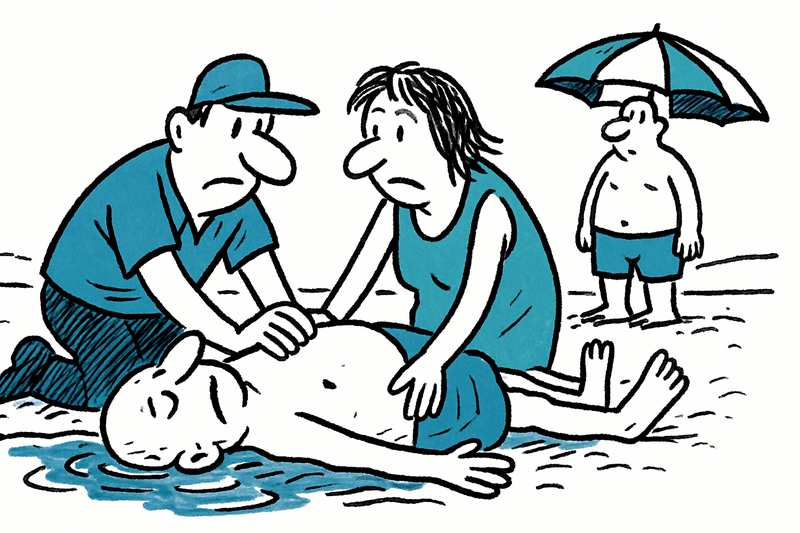
It was one of those hot afternoons in the bay of Port de Sóller: the tram rattled in the background, seagulls cried over the harbour, and the ferries gently rocked at the quay. Then, among sunbathers and towels, an 87-year-old German tourist suddenly collapsed while swimming, according to Mourning in Port de Sóller: 87-year-old dies while swimming. Beachgoers pulled him to shore, police officers and bystanders began resuscitation efforts – but the man was pronounced dead on the beach.
A summer day that ended differently
The shock was deep. People wrapped blankets around him, voices fell silent, and for a moment the sound of the sea seemed quieter. According to initial statements from the authorities, much points to a heart condition; media reports say the deceased had a pacemaker. Although the final cause of death will only be determined after further investigations, one immediate question arises that goes beyond this single case: Was this just tragic bad luck, or a sign of gaps in the protection of particularly vulnerable holidaymakers?
Heart problems as the most likely trigger — but not the whole story
Heart failure, arrhythmias or a sudden heart attack are not uncommon in older people. Combined with heat, physical exertion while swimming and perhaps unfamiliar strain on holiday, the risk increases. But medical preconditions do not explain everything: How well is first aid organised on the beach? Are defibrillators easily available and can they be reached quickly (European Resuscitation Council guidance on defibrillators)? Were lifeguards present in the bay in question, and does the staff know the specific health needs of older guests?
Key question: Do we rely on individual caution or better public infrastructure?
That is the central debate. On one side is individual responsibility: seniors should check medical risks before travelling, consult doctors (CDC travel advice for older adults) and perhaps adapt activities to their level of fitness. On the other side is the responsibility of municipalities and the tourism sector: beaches are public spaces — they should be as safe as possible, especially in places with high visitor numbers like Port de Sóller. This is not the first time; see Port de Sóller: Family meal ends in death — what is missing on our beaches?.
Concrete measures that would help now
Some pragmatic suggestions that won’t get lost in a mountain of bureaucracy: more publicly visible defibrillators on promenades and at beach access points, clear maps showing where emergency devices are located, regular training in basic life support for lifeguards and hotel staff, clearly visible signs with simple advice (e.g. “If you have a pre-existing condition, consult your doctor — do not swim alone”), and a pilot project in popular bays to test faster emergency routes. Such measures cost money, but are a relatively small investment compared to potential harm to people.
Practical tips for guests and hosts
For travellers: do not swim alone, be mindful of physical limits, carry important medical information (medications, allergies, pacemaker) in writing and inform relatives. Hosts can help by sensitively asking about pre-existing conditions at check-in (voluntarily), handing out information sheets on beach and heat safety rules, and knowing where the nearest defibrillator is located. A small gesture — such as leaving a list of emergency contacts — can make a big difference in an emergency.
Why this matters
Port de Sóller remains a place where people like to enjoy their siesta by the sea. But the incident is a reminder that holidays are not a social island: they reflect public health and infrastructure. It would be too easy to dismiss what happened as an unfortunate individual fate. Instead, the tragic case offers a chance to expose safety gaps and initiate pragmatic solutions — so that the next sound of the sea is again just the wind. Another recent local report, 82-year-old tourist dies in Port de Sóller — why an accident at the harbor must not remain an isolated case, highlights similar concerns.
The authorities are continuing to investigate the incident. Until then, the memory of that afternoon in Port de Sóller remains a quiet, cautionary companion for locals and visitors alike.
Frequently asked questions
Is it safe for older people to swim in Mallorca during hot weather?
What should I do if someone collapses on a beach in Mallorca?
Are there defibrillators on beaches in Mallorca?
What are the main risks for elderly tourists swimming in Mallorca?
Is Port de Sóller a safe place for swimming?
Should people with heart problems swim in Mallorca?
What safety tips should older travellers follow at Mallorca beaches?
Why do beach incidents in Mallorca raise questions about local safety infrastructure?
Similar News
Severe motorcycle crash at Portals Nous: Why an open-face helmet and the slope can be dangerous
In the night to Friday a 48-year-old rider crashed on the Ma-1 near Portals Nous (km 9). He was taken to Son Espases wit...
Boating in Mallorca: Which License Applies? A Reality Check
Since early October: rental boats only with proof of competence. What this means for residents and holidaymakers, which ...
Frontal collision in the Tramuntana: Who protects residents and spectators from risky driving maneuvers?
Near Fornalutx two motorcycles collided head-on. Shortly before the hill climb race, fans had gathered along the route. ...

FC Germania Mallorca aims for the top after just three matches
Newcomer FC Germania Mallorca hosts Deportivo Marratxi on Sunday at the Camp de Futbol La Nova Cabana. New reinforcement...

Etihad comes earlier: More flights between Abu Dhabi and Palma from May
The Gulf carrier shortens its summer break: from 16 May 2027 direct flights with the A321LR and premium cabins are expec...
More to explore
Discover more interesting content

Can Cap de Bou

Townhouse Lleo 72
