
Port de Sóller: Family meal ends in death — what is missing on our beaches?
An 82-year-old dies after choking during lunch on the promenade of Port de Sóller. Why sometimes quick help and trained rescuers are not enough — and what the island can learn from this?
When a lunch break turned into a nightmare
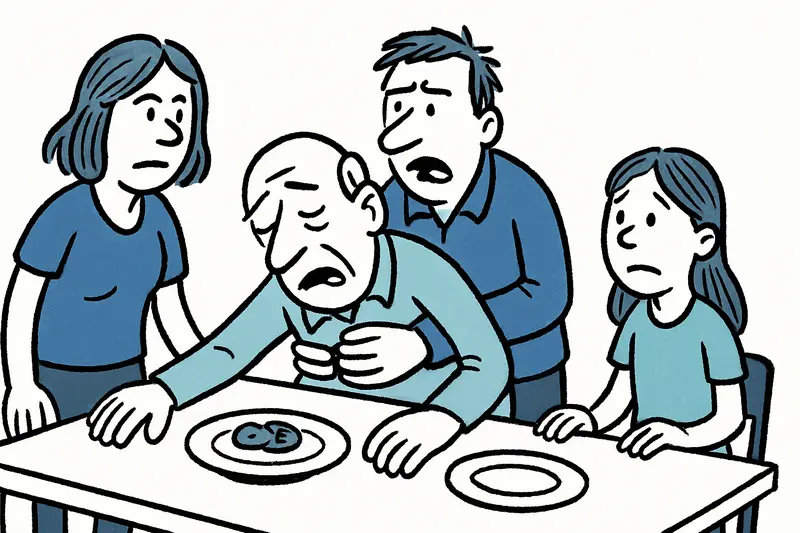
It was a typical summer scene on the waterfront promenade of Port de Sóller: wind rustling the olive trees, the gentle sound of the waves and guests seeking shade on the terraces in the midday heat. Around 1:55 p.m. this quiet scene turned to panic (Tragedia en Port de Sóller: un hombre de 82 años se asfixia durante una comida familiar en la playa).
Immediate measures and prolonged resuscitation attempts
Bystanders intervened immediately: lifeguards from the coast guard Marsave, who were on duty just a few meters away, rushed over. Relatives attempted the Heimlich maneuver, but the foreign object could not be dislodged. Shortly afterwards the medical service SAMU 061 arrived with units from Sóller and Palma — including specialized vehicles for command and logistics. Local police and the Guardia Civil secured the scene.
When the man lost consciousness, professional teams began basic and advanced life support, used a defibrillator and administered oxygen. Only the use of a special suction device made it possible to remove the very large piece of meat from the airways. Despite all efforts, the man died about three hours after the accident; his death was confirmed around 5:00 p.m. (Turista de 82 años se asfixia mientras comía en Port de Sóller).
The key question: Could more preparation or different precautions have saved a life?
The facts alone are tragic; more important is the question whether this drama could have been avoided. Many words have been spoken on the promenade since: praise for the quick response of the rescuers, but also calls for more equipment in beachside establishments, mandatory first aid training for staff and visible automated external defibrillators (AEDs) in tourist centres.
Aspects that are rarely discussed
1) Time until definitive airway clearance: Even with quick first responders on site, the time is critical when the airway is completely blocked. A suction device was necessary — such devices are rarely found in ordinary restaurants. 2) Communication in multilingual tourist centres: Emergency calls, instructions for first responders and signage must often be clear in multiple languages because onlookers and helpers come from different countries. 3) Psychological aftereffects: Witnesses, staff and the family carry the shock with them for a long time. There is often no concept for support and follow-up care.
Practical and realistic proposals for Mallorca
- Mandatory offerings and financial incentives: Municipalities and the island government could consider mandatory basic first aid courses for employees in the hospitality and beach sectors or offer financial subsidies for voluntary participation. A short refresher course repeated every year would bring enormous benefits.
- AED network and suction devices in central locations: Public defibrillators are becoming more common, suction devices less so. Such devices could save lives, especially at busy beach sections and large terraces. Municipalities could launch a support programme to assist small businesses.
- Visible emergency information points: Clear, multilingual instructions on what to do in an emergency, where lifeguards are stationed and how to act as a first responder. This reduces loss of time and prevents chaos.
- Regular drills: Small, realistic emergency exercises with restaurants, lifeguards and police create routine and improve cooperation — and cost less than many think.
What people in Port de Sóller are thinking about now
In the evening people still sat on the benches along the promenade, some staring out to sea, others whispering. A waiter in a nearby café said he had never seen anything like it — the sounds of the rescue, the beeping of the devices, the whispering of prayers. For the family it is an irreplaceable loss; authorities describe it as a tragic accident with no suspicion of foul play.
Conclusion: The quick and professional response of the rescuers may have prevented worse outcomes — but this case also highlights the limits: missing equipment in hospitality businesses, the need for regular training and better local coordination. Small, concrete steps are needed so that such an afternoon does not become a nightmare for others. Local aid organisations offer courses — a refresher course can save lives just as much as a decisive action in the crucial moment.
Frequently asked questions
What should you do if someone starts choking at a restaurant in Mallorca?
Do beach restaurants in Mallorca need more first aid equipment?
Is Port de Sóller a busy place for lunch in summer?
Are AEDs easy to find in tourist areas of Mallorca?
What kind of emergency training should restaurant staff in Mallorca have?
Why is airway blockage so dangerous during a meal?
What emergency support is available in Port de Sóller?
What should tourists know before eating at beach restaurants in Mallorca?
Similar News
Neighbor Dogs Kill Family Dog Binta – Who Is Responsible?
In Santa Eugènia, five German Shepherds mauled the family's dachshund Binta. The owner demands responsibility instead of...
End of the Sánchez Era? A Reality Check from Mallorca
After the failure of two housing decrees, Spain's government stands at a crossroads. Protests are visible in Mallorca, b...
Mallorca researcher urges simple beach habit: take litter, provide data
Ananda Pascual from IMEDEA asks visitors to collect and record small pieces of litter during beach walks. On Mallorca, s...
New lift on the Passeig Marítim brings El Terreno closer to the seafront promenade
In Palma the city is building a lift between Calle Patrimoni and the Passeig Marítim at Parc de la Quarentena. The proje...
Drama at Cala Agulla: 45 Minutes of Resuscitation — What the Rescue Tells Us
On Wednesday afternoon lifeguards pulled an unconscious tourist out of Cala Agulla. Resuscitation lasted 45 minutes befo...
More to explore
Discover more interesting content

Can Cap de Bou

Townhouse Lleo 72
