
82-year-old tourist dies in Port de Sóller — why an accident at the harbor must not remain an isolated case
An 82-year-old German man choked while eating on the promenade in Port de Sóller. Help arrived quickly, but it was not enough. Our article asks: Are equipment, training and information for guests sufficient? Concrete proposals for more safety.
Tragic incident in Port de Sóller: A conversation about safety at the harbor
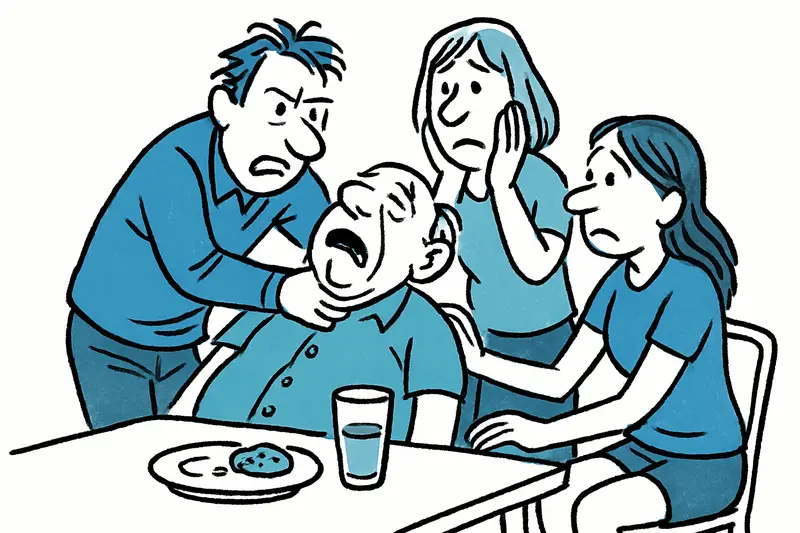
On Sunday afternoon at around 2:20 PM, an 82-year-old tourist fell unconscious in a beach restaurant on the promenade of Port de Sóller (see full report on the Port de Sóller choking incident) — a short time later he succumbed to his injuries. He was sitting with his wife, granddaughter and son-in-law for lunch when he apparently choked on something and could no longer breathe. Eyewitnesses describe frantic attempts by relatives, followed by intervention from lifeguards and an emergency doctor team. Nevertheless, the man's life could not be saved.
Rapid help — and yet no happy ending
The scene at the harbor felt like a suddenly interrupted postcard: sailboats in the wind, the cries of seagulls, the smell of fried food from the beach bar — and in the middle of it people struggling for a loved one. Rescue workers acted professionally. Several guests praised the quick response. And yet the question remains: why is quick intervention not always enough?
The key question: Are we sufficiently prepared for such emergencies?
The public often focuses on individual cases, but forgets to examine the systems. These include: visible and accessible automated external defibrillators (AEDs), mandatory first aid training for staff in gastronomy and hospitality, and clear instructions for guests — multilingual — on what to do in an emergency. The distance between beach restaurants and the nearest medical equipment is also crucial.
What is often overlooked
Choking is not always a simple airway obstruction: in older people pre-existing conditions, medications or a cardiac arrest that looks like choking can play a role. Not all laypeople can distinguish cardiac arrest from a clear airway obstruction. This is exactly where training and visible instructions come in. In addition, the language barrier should not be underestimated: tourists often understand emergency instructions poorly in a foreign place.
Concrete improvements that are possible now
A few practical measures could increase the chances that an emergency does not end in death:
1. More AEDs on promenades and in beach venues: Public defibrillators must be visible, illuminated and signposted — ideally with simple operating instructions and pictograms.
2. Mandatory first responders in restaurants and bars: Courses in the Heimlich maneuver and resuscitation for service teams should be mandatory and regularly refreshed.
3. Emergency notices in multiple languages: Short instructions on what to do in case of breathing problems and the number 112 in prominent type — at beach bars, landing stages and tourist information centers.
4. Local campaigns: Island-wide initiatives where holidaymakers can learn the basics in a few minutes. Many think first aid takes days — in reality there are short, effective introductions.
5. Transparent response analysis: Authorities could publish response times, AED locations and training statistics. That builds trust and reveals gaps.
Between grief and action
The deceased's family was cared for on site, interpreters helped with communication, and psychological support was offered. That is important — but consolation alone does not fix structural deficiencies. The loss of a person leaves neighbors, café owners and beach walkers thoughtful. Some people clear away more than just tables today: they clear up in their minds what they themselves could do if the worst happens.
What everyone can do immediately
In an emergency: stay calm, call 112 immediately, ask others for help. Those who can should know the Heimlich maneuver and basic chest-compression techniques. Modern AEDs are designed for laypeople and guide users with voice prompts. A short course with a local aid organization is often enough to feel more confident.
Conclusion: A tragic wake-up call
The case in Port de Sóller is a sad example of how quickly a cheerful lunch at the harbor can turn into a tragedy. It is also a call to authorities, businesses and visitors: more visibility, more training, more transparency. On Mallorca, where promenades and coves are at the heart of everyday life, safety should be as present as the smell of the sea and fried food. Our sympathy goes to the family of the deceased — and our appeal to the community is clear: learn, equip, act.
Practical note: Call the emergency number 112. Short first-aid courses are offered regularly and can save lives.
Frequently asked questions
What should I do if someone chokes in a restaurant in Mallorca?
Are beach restaurants in Mallorca usually equipped for medical emergencies?
Do I need to know Spanish to get help in an emergency in Mallorca?
Where can I find an AED in Port de Sóller?
Is Port de Sóller a safe place for older tourists to eat by the sea?
What emergency number should I call in Mallorca?
Should restaurant staff in Mallorca receive first aid training?
What should tourists pack or know before visiting Mallorca in case of a health emergency?
Similar News
Taking Off Differently: Pilot, Pere Garau Resident and Rock Musician
Andreas Thiele flies an Airbus A320 for Lufthansa, has an apartment in Pere Garau — and will release an alternative-rock...
Palma takes to the streets: Thousands demand 'Housing as a Right'
Around 3,000 people marched through Palma on Saturday to demand affordable housing. The protest followed the rejection o...
Beatings in Palmanova: Two British tourists injure taxi drivers — what needs to happen now
In Palmanova, two taxi drivers were attacked at night by apparently drunk tourists. One suffered severe facial injuries ...
Village Festivals of Art: ArtinSal, TastArt and Canal'Art Bring Culture to Mallorca's Streets
In October Ses Salines, Porreres and Santanyí turn their squares into exhibition spaces: three art nights, plenty of cra...
Christmas Market Conflict in Palma: Who Owns the Christmas Season?
The relocation of a privately organized, German-influenced Christmas market to Parc de la Mar is causing anger among loc...
More to explore
Discover more interesting content

Can Cap de Bou

Townhouse Lleo 72
