
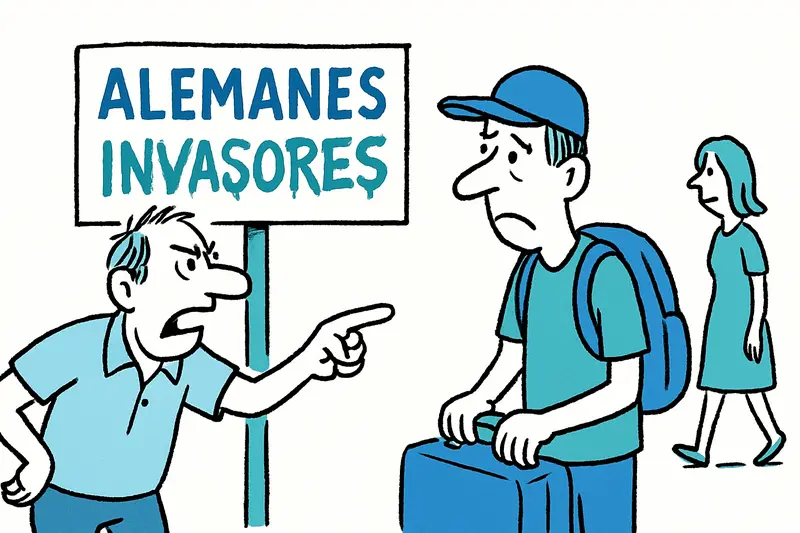
'Germans are invaders' in Cala Rajada: Why the graffiti is more than paint on a sign
A prohibition sign at Cala Gat was overpainted with 'alemanes invasores'. The graffiti reflects deeper tensions on Mallorca. A critical stocktake with an everyday scene and concrete proposals.
'Germans are invaders' in Cala Rajada: Why the graffiti is more than paint on a sign
Key question: What forces drive the recurring anti-German graffiti on Mallorca — and how can verbal hatred be turned back into reasonable neighborhood dialogue?
Early in the morning at Cala Gat: seagulls circle, a fisherman pulls his net ashore, the smell of freshly fried fish wafts from a bar on the promenade. Between them stands a small blue-and-white sign that bans jumping into the sea. Someone has written with a black marker the words 'alemanes invasores' and crossed out the message. It is not a monument, rather a thorn: a sign that makes anger visible.
The graffiti is not an isolated prank. In recent weeks similar xenophobic slogans have appeared in several places on the island, including the southeast around Scratched Cars in Santanyí: Scratches Instead of Holiday Peace and also at New xenophobic graffiti at Playa de Palma – How is the island reacting?. That the messages are directed against people of German origin is part of a larger mix: rising tourist numbers, pressure on housing, visible changes to villages and beaches — all of this creates friction. But friction alone does not explain the crossing into xenophobia.
A sober consideration reveals several layers: first, economic tension. Land prices, short-term rentals and investments are changing neighborhoods; those who have lived here for decades sometimes feel pushed to the margins. Second, a communication crisis: when problems are only played out over social media or shouted comments, simplifications and scapegoats easily arise. Third, political decoupling: local debates about spatial allocation, construction and tourism management often take place at administrative or judicial levels, but there are hardly any tangible changes for people on the ground.
What is often missing in public discourse is two- to three-dimensional thinking: empathy for the everyday fears of locals, without at the same time relativizing every criticism of resentments; clear, transparent data on housing use and trends in short-term rentals; and opportunities for real encounters between residents and newcomers — not just events with tapas and guitars, but concrete forums, neighborhood projects and mediation centers.
Everyday scene: Walking through Cala Rajada you see market-filled alleys, German license plates on cars, retirees on benches and scaffolding on old fisherman's houses. At such interfaces both small friendships and latent aggressive undercurrents arise — the graffiti at Cala Gat is one of many visible wounds, as discussed in Between Welcome and Wariness: Germans in Mallorca — What's Really Happening.
Concrete approaches are practical and do not have to come only from the municipal administration. First: a faster, coordinated cleaning and documentation system for hate slogans — visibly removed graffiti reduces the impression that such messages are normal. Second: a municipal mediation office, staffed bilingually, that bundles complaints, informs about rental and building permits and offers neighborhood mediation. Third: transparent data collections on vacancies, holiday rentals and population statistics, publicly and locally explained to counter speculation. Fourth: funding programs for non-profit housing projects and targeted support for mixed neighborhoods so villages do not become pure investment backdrops. Fifth: educational and cultural measures that involve young people — theater projects, school workshops and street art projects that shape shared spaces instead of occupying them.
Legally one must be clear: graffiti with xenophobic content is not harmless protest, it hurts and can have criminal relevance. The police and municipal administration have the task of investigating consistently and holding perpetrators accountable in case of crimes. At the same time repression alone is not enough; otherwise only quiet consent or silence remains.
What should happen now is a mix of quick practicality and long-term politics: immediate visible removal of the slogans and an information campaign that shows why blanket accusations do not help; medium- to long-term talks about spatial distribution, more transparency in holiday rentals and concrete integration offers at the neighborhood level.
Conclusion: The exaggerated 'alemanes invasores' sign is a wake-up call. The island lives from its diversity, and the frictions are part of a necessary change. The task in the coming months is to break open the corners where anger arises and instead of graffiti create opportunities where people talk to each other, not about each other. If Cala Rajada succeeds, Mallorca has a chance to break the force of polarization — otherwise such sentences will only get louder.
Frequently asked questions
Why do anti-German graffiti keep appearing in Mallorca?
What does anti-German graffiti in Cala Rajada say about the situation on Mallorca?
Is anti-German graffiti in Mallorca treated as a criminal matter?
What can Mallorca do to reduce anti-German graffiti and hostility?
Why are housing and short-term rentals linked to anti-German sentiment in Mallorca?
What role does tourism play in tensions with Germans in Mallorca?
What should visitors do if they see xenophobic graffiti in Mallorca?
Are there signs of similar anti-German incidents in other parts of Mallorca?
Similar News

Rental Car Theft in El Arenal: What This Incident Reveals About Our Gaps
A teenager steals a running rental car in El Arenal, flees on foot, climbs over walls and is caught by the Guardia Civil...
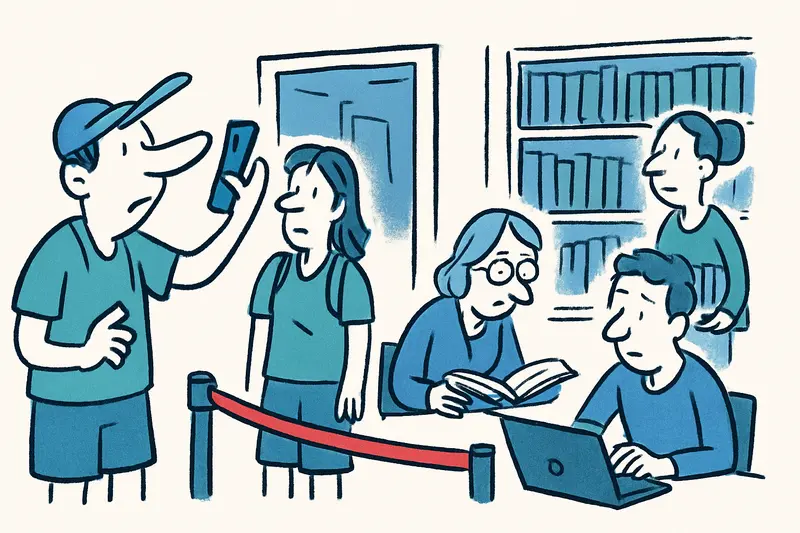
Red Rope in Palma's Library: What Helps Against Selfie Tourism — and What's Missing
Palma's city library cordoned off an area with a red rope to keep selfie tourism away from reading and working activitie...

Fort San Carlos: Museum, Harbor Dispute — and a Conflict That Demands Answers
The military museum at Fort San Carlos sits right on Palma's harbor, with unexpectedly quiet rooms filled with cannons a...
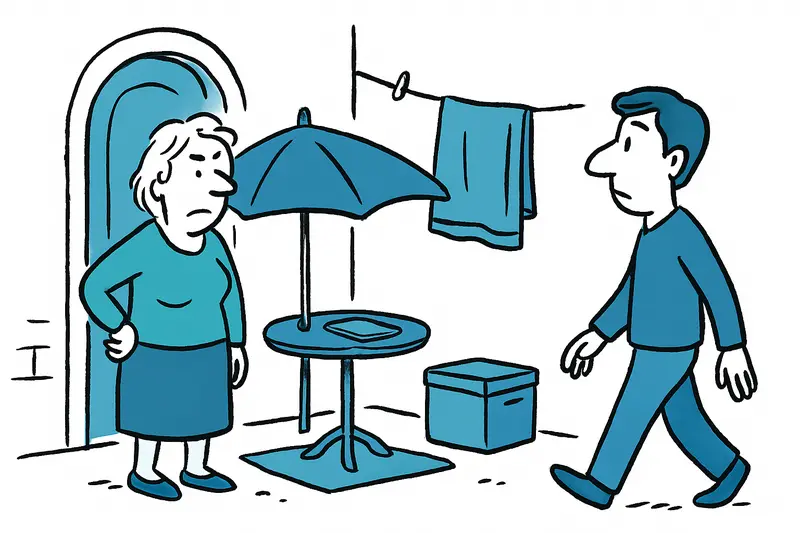
Old Town Under Pressure: When a Doorway Becomes a Sleeping and Shower Place
For months a woman has been living with a parasol, a clothes rack and personal belongings next to the social welfare off...

When Shopping Weighs Heavier: Mallorca Demands a Tax Pause on Food and Fuel
Rising prices are putting pressure on households and agriculture. The Balearic Islands are calling for temporary tax rel...
More to explore
Discover more interesting content

Can Cap de Bou

Townhouse Lleo 72
