
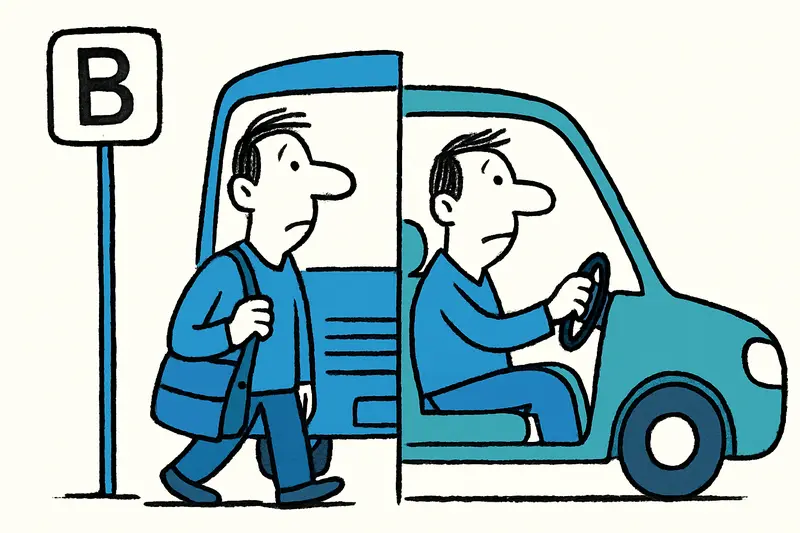
Half by Bus, Half by Car: What the Survey in Calvià Really Says
Half by Bus, Half by Car: What the Survey in Calvià Really Says
A survey of employees from 24 hotels in Calvià shows: about half travel to work by bus. Why the other half still takes the wheel is both a problem and an opportunity.
Half by Bus, Half by Car: What the Survey in Calvià Really Says
Central question: Is a high bus share among hotel employees enough to noticeably change traffic in Calvià—or will gaps in service slow down success?
The numbers are simple: in a survey of staff from 24 hotels in the municipality of Calvià, about 50 percent said they take the bus to work every day. At the same time, the other half still drives. The result cannot be explained by a simple preference for cars, but by practical obstacles: speed, frequency and missing connections for shift times are recurring reasons.
On the street it looks like this: on a weekday morning on the Magaluf promenade a bus is waiting, engine brakes whisper, tourists roll suitcases, hotel porters in reflective vests wait for the shift change. In the stopping area dozens of cars are parked nonetheless, many with staff ID numbers on the windscreen. This coexistence of buses and private cars shapes the morning routine in Palmanova, Peguera and Cala Vinyes, context also reported in Calvià takes stock: More hotels, full beds — and quieter streets.
The survey provides useful facts, but it does not tell the whole story. Treating the results alone as proof of a functioning transport transition overlooks three key points: shift schedules in tourism are often irregular, night and early shifts fall outside many standard timetables; the 'last mile' from the bus terminal to remote staff housing remains unresolved; and not all bus lines run directly to hotel clusters, often requiring transfers that cost time—and thus reduce flexibility.
Public debate is missing two things: first, a clearer discussion about working hours and aligning them with public transport offers; second, concrete agreements between hotels and transport operators, a topic also examined in The Island Says No to Overcrowding: What the Survey Really Means.
Short-term practical measures are obvious: adapt timetables to shift times, offer additional connections for breakfast and evening shifts, and use simple shuttle buses between collection stops and large hotel complexes. Employers could subsidize monthly passes or promote flexible start times. Technically, real-time information via an app helps: when employees can see reliable departure data, more people will choose the bus.
In the medium term, structural steps are needed: better coordination between the municipality, TIB and hoteliers; targeted stop adjustments near main entrances; park-and-ride points on the outskirts of Calvià; and an assessment of whether seasonal special lines during peak times are economically viable, with related regional proposals discussed in New Rail Link to Calvià: Opportunity or Traffic Illusion?.
What helps in everyday life is often unspectacular. A bus driver who knows the hotel names and simplifies ticket handling, a hotel manager who has the team arrive at the same time, a digital information board at the workplace entrance—such small things change habits faster than big announcements.
The survey is a starting signal, not a final report. It shows willingness but also clear needs. If politics and the industry now focus not just on percentages but on shift schedules, stops and financial incentives, then the “one in two” can become significantly more in the medium term.
Conclusion: Calvià has a chance to sustainably reduce commuter traffic in tourism. The conditions are practical and local: adapted bus times, shuttle solutions and concrete agreements between hotels and transport operators. Without these steps, the share of bus users remains a half-full balance—visible, but not enough to truly relieve the roads.
Frequently asked questions
What is the weather usually like in Mallorca in early summer?
Is it warm enough to swim in the sea in Mallorca in early summer?
What should I pack for Mallorca in early summer?
Is early summer a good time to visit Mallorca?
What is the weather usually like in Palma de Mallorca in early summer?
Is Cala d’Or good for a beach holiday in early summer?
What is early summer like in Alcúdia, Mallorca?
Can you still do sightseeing in Mallorca in early summer, or is it too hot?
Similar News

Rental Car Theft in El Arenal: What This Incident Reveals About Our Gaps
A teenager steals a running rental car in El Arenal, flees on foot, climbs over walls and is caught by the Guardia Civil...

Red Rope in Palma's Library: What Helps Against Selfie Tourism — and What's Missing
Palma's city library cordoned off an area with a red rope to keep selfie tourism away from reading and working activitie...

Fort San Carlos: Museum, Harbor Dispute — and a Conflict That Demands Answers
The military museum at Fort San Carlos sits right on Palma's harbor, with unexpectedly quiet rooms filled with cannons a...
Old Town Under Pressure: When a Doorway Becomes a Sleeping and Shower Place
For months a woman has been living with a parasol, a clothes rack and personal belongings next to the social welfare off...

When Shopping Weighs Heavier: Mallorca Demands a Tax Pause on Food and Fuel
Rising prices are putting pressure on households and agriculture. The Balearic Islands are calling for temporary tax rel...
More to explore
Discover more interesting content

Can Cap de Bou

Townhouse Lleo 72
