
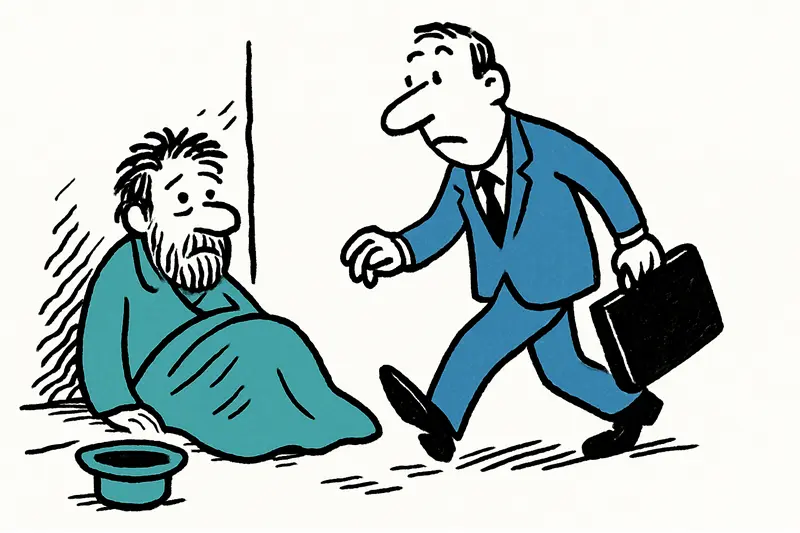
When work no longer protects against sleeping outdoors: Palma at a social crossroads
The number of people sleeping outdoors in Palma despite having jobs or receiving benefits is rising. Mobile teams report an increasing number of calls for help. Why is income today no longer enough to secure a roof over one's head — and what solutions are there?
How did it come to this? The central question
When you walk through Palma's old town early in the morning, the clatter of the garbage trucks mixes with the cooing of pigeons over the Plaça. At the same time, more and more residents see people curling up on shop steps or spending the night in doorways, a trend documented by a Mallorca Magic report on Palma's rise in people without homes. The question social workers like Hugo ask sits like a knot in the city's throat: Why is regular work no longer enough to keep a home?
The situation: More people on the street — even during the day
This year the night outreach teams counted around 1,940 contacts. Hugo, who has been out at night for years, reports up to 40–50 calls per evening. His team, about a dozen people, prioritizes according to risk: first the vulnerable, then the others. But the number of requests is growing — and with it the variety of those affected. It is no longer only people with visible addictions or severe mental crises. Increasingly, helpers encounter retirees, seasonal workers, migrants and people with jobs who still cannot afford housing, as covered in a Mallorca Magic article on indigence in Mallorca affecting workers.
Housing is becoming a luxury — prospects are scarce
Room prices in Palma are perceived to be between €400 and €900. For a low-wage worker there is hardly anything left. The city's emergency shelters have waiting lists, and places at the regional social service IMAS are scarce. New facilities — for example 18 places in January 2024 or the home in Binissalem with 26 beds — provide relief but do not stop the wave. Planned expansions fail to materialize, and other negotiations over the acquisition of smaller facilities drag on. Until solutions take effect, teams distribute blankets, sleeping bags and bread and try to offer long-term support.
A look behind the numbers: More than just a housing problem
What is often missing from headlines is the overlap of the labor market, the health system and the housing market, a connection analyzed by FEANTSA's research on homelessness in Europe. Low wages, temporary contracts in hotels and catering, rising additional costs and high deposits push people to the margins. At the same time, there is a lack of low-threshold advisory services that can intervene acutely — and of flexible transitional models that can catch people from precarious employment; these trends are reflected in official statistics such as those published by the Instituto Nacional de Estadística (INE).
Another hardly visible factor is vacancy caused by second homes and short-term holiday rentals. They reduce supply, drive up prices and make long-term housing harder to find. Added to this are bureaucratic hurdles to accessing social benefits and long waiting times for supported housing places. All of this together explains why even having a job is no longer a guarantee.
What helps so far — and why it is not enough
Mobile teams provide excellent crisis assistance: they save nights, make first contact and refer people to emergency shelters. Volunteers distribute blankets and sponsorships emerge. But this help is usually punctual. Hugo sums it up: “Helping on the street is important, but it is not enough. We need solutions that put people back into stable safety permanently.”
Critical areas that are often overlooked
1) Employment contracts and income security: Those employed only for a few months can hardly rent a flat requiring a deposit and proof of income. 2) Housing allocation: Lack of incentives for landlords to rent permanently to socially disadvantaged people. 3) Integration of health and social services: Homelessness is often a multifactorial problem that requires medical, psychological and social responses. 4) Prevention: Early emergency housing assistance could prevent people from sliding further — but it is missing in many places.
Concrete opportunities and proposals — pragmatic, local, quick
The city cannot solve everything alone. But some levers can be pulled quickly:
- Short-term expansion of transitional places: Pop-up shelters in vacant municipal buildings, modular and quickly deployable to cushion acute pressure peaks.
- Rent subsidies linked to social counseling: Direct aid combined with support for administrative procedures and legal advice to bridge deposits and the first months.
- Cooperation with employers: Sector-specific solutions for hotel and restaurant staff: affordable staff housing or tax incentives for employers to create housing options.
- Vacancy management: Temporary use of unoccupied holiday apartments for socially bound, time-limited housing. This would create supply without permanently distorting the core market.
- Expansion of mobile teams: More staff, better equipment, guaranteed night care with psychosocial services so that acute help has a more sustainable effect.
Looking ahead: Mallorca must act
Palma is full of contrasts: the scent of coffee at the Plaça in the morning, the lights of the promenade in the evening — and in some corners people with no safe night. The challenge is not only administrative; it is moral and economic: a city that depends on well-functioning services and workers cannot afford to let people sleep under the open sky.
Political will, pragmatic interim solutions and a debate about how tourism, labor market policy and housing development should work together in future are needed. If Mallorca acts now — with binding, local measures and clear priorities — the island can not only save nights but also give people back a perspective. It is possible. But time is running out. And the nights will not wait.
Frequently asked questions
Why are more people sleeping outdoors in Palma even if they have a job?
What is causing housing to become so expensive in Mallorca, especially in Palma?
What help is available for people sleeping rough in Palma?
Are there shelters in Mallorca for people without a home?
How does the Mallorca tourism economy affect housing for local workers?
What can the city of Palma do to reduce homelessness?
Is sleeping outdoors in Palma only a problem for people with addictions or mental illness?
What practical support helps people avoid sleeping outside in Mallorca?
Similar News
Release after bloody attack in Palma: Why the court's decision raises questions
An 18-year-old who allegedly inflicted a serious neck injury on a man at Plaza Gomila using a wristwatch wrapped around ...
Kidnappings in Inca: Three young men forced into car trunks and abused in the forest – a reality check
In Inca, three 18-year-old men were forced into car trunks by masked assailants at the Plaça des Bestiar, taken to a for...
Spreading Massification: The Brake That Still Has Much Work to Do
Marga Prohens announces limits on volume tourism. The measures sound harsh — but are they enough to save everyday life, ...
Through the Keyhole onto the Party Yacht: How Daniela Katzenberger Is Planning Her 40th on Mallorca
Daniela Katzenberger turns 40 and wants to celebrate it on the island — likely with a boat, cake and her mother. A relax...
By Boat Instead of the Road: Palma's Water Bus — a Reality Check
The 'Bus Nàutic' launches in two stages — but questions remain over interim operations, fares and environmental requirem...
More to explore
Discover more interesting content

Can Cap de Bou

Townhouse Lleo 72
