
Don't Let Your ID Be Copied: What Mallorca Travelers Should Know at Check‑in
At check‑in, the reception holds up a passport, takes a photo — and suddenly thoughts turn to data leaks. What hoteliers are allowed to do, what they aren't, and how you can protect yourself in Mallorca.
Why copying an ID at check‑in can become a risk
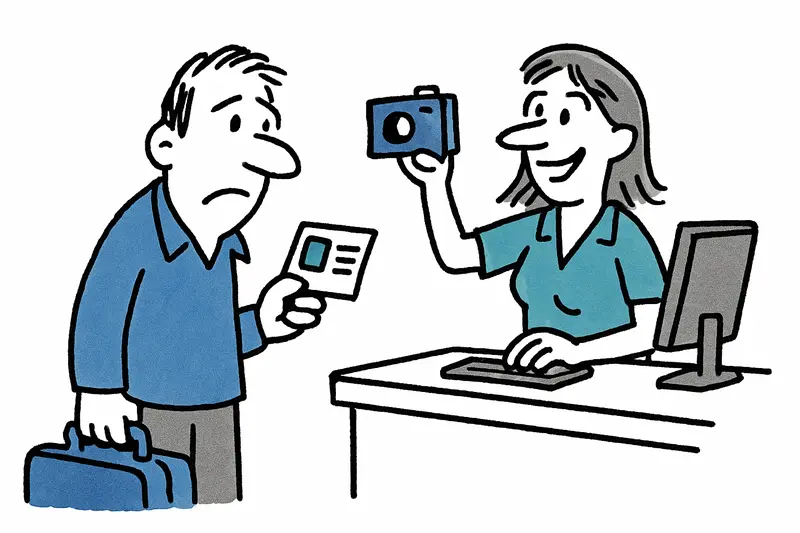
On an early evening at Playa de Palma, the air conditioning hums, beach bars are serving their last orders, and at the reception a colleague quickly types something into the system — meanwhile she lifts your passport, photographs it and saves the file. Harmless? For many guests, in that moment it suddenly doesn't feel harmless anymore, especially when thinking of hacked systems or stories about data being resold or reports advising travellers not to let hotels copy their documents, as explained in advice on hotel staff copying identity documents.
The central question is: Do hotels really need a complete copy of the ID, or are there less invasive ways to reconcile law and security?
The legal framework: short, clear and not always simple
In principle, Europe follows the principle of data minimization: only as much personal data may be collected as is absolutely necessary. A complete copy often contains more information — ID number, issue dates or the machine-readable zone — than required for a normal check‑in.
In practical terms this means: Without a clear legal basis, such as a statutory registration requirement or specific security needs, creating and storing full scans is legally vulnerable. In individual cases, countries or authorities may have different requirements, so asking questions instead of staying silent is helpful: Those who name the legal basis usually demonstrate professionalism.
What is often overlooked in hotel logistics
Little attention is paid to how many hands and systems touch the data: seasonal staff with changing access rights, booking platforms, external IT service providers or archive copies in the cloud — all of this multiplies the risk. Another point: many properties store copies longer than necessary because no one has set up automatic deletion.
On Mallorca this is especially noticeable in establishments with high turnover: small fincas in Campos operate differently than large chains on the Playa, but both share the same weakness — human behavior and unclear processes, as a recent identity theft case in Mallorca highlights.
Concrete steps hotels should take
For a secure check‑in, often less technology and more data protection thinking are enough. Hotels should collect only minimized data, encrypt systems, clearly regulate access rights and automate deletion periods. Transparent notices at reception, a short information sheet or a visible data protection hotline build trust.
Technically sensible measures include tokenization instead of storing full numbers, audit logs, encrypted backups and limiting external service providers to necessary tasks. Staff training — especially before the season — is a small effort with great effect.
Tips for guests: How to protect yourself at check‑in in Mallorca
At your next check‑in you can follow these steps: Politely ask why a copy is necessary and request the legal basis. Insist on only showing the ID or, if necessary, presenting only the relevant pages. You can take your own photos with a smartphone and obscure sensitive fields such as ID numbers before sending anything.
If a hotel must collect data, ask how long it will be stored and where — locally on the reception PC or in the cloud? Request deletion in writing after the end of your stay. Note the names of staff at check‑in and keep receipts: simple steps that help in case of a dispute, for example the case of a traveler briefly detained after returning from Mallorca.
Small changes with big impact
For Mallorca this means: more transparency at reception, clear processes in the properties and a little courage from guests to ask. No reason to panic — the island is still a place where you can hear the wind through the palms and the clattering of tables on the Passeig in the evening — but a reminder that good hotel practice today also means data security.
Side tip: For longer stays, crossing out sensitive numbers in red on a copy of the ID combined with a short reception confirmation for you and the hotel can provide more peace of mind than constant emails.
Frequently asked questions
Can a hotel in Mallorca make a copy of my passport at check-in?
Is it safe to let a hotel scan my ID in Mallorca?
What should I ask if a Mallorca hotel wants a copy of my ID?
How can I protect my personal data when checking in at a Mallorca hotel?
Are small fincas in Mallorca better for ID privacy than large hotels?
When is a hotel allowed to keep my ID copy after a stay in Mallorca?
What should I do if a Mallorca hotel insists on making an ID copy?
Is it normal to be asked for ID at Mallorca hotels and rentals?
Similar News
When Paradise Becomes Unaffordable
Hotel rooms, paella and the weekly grocery shop: Mallorca is becoming more expensive for many. Who pays the bill — guest...
End at Ballermann: What Is Lost with the Dino Mini Golf at Playa de Palma
On October 25 the dinosaur mini-golf course at Playa de Palma will close after more than 30 years. Why the city is recla...
Expensive Address Calvià: What Does First Place Mean for Mallorca?
The National Institute of Statistics (INE) ranks Calvià as Spain’s most expensive municipality for property purchases. W...
Emergency over Spain: Ryanair Dublin–Tenerife flight diverted to Santiago after medical emergency
A Ryanair flight from Dublin to Tenerife was diverted to Santiago de Compostela due to a passenger's acute health proble...
Ten Years in a Tent: A Couple in Son Verí and the Gaps in the Housing Market
A British couple has lived for around ten years in a makeshift shelter near Son Verí. Their story is not an isolated cas...
More to explore
Discover more interesting content

Can Cap de Bou

Townhouse Lleo 72
