
Hunt for License Plates: Why More Cars in Mallorca Are Being Re-registered Now
Hunt for License Plates: Why More Cars in Mallorca Are Being Re-registered Now
Stricter controls, new rules for second homes and high fines have sharply increased the number of re-registrations in Mallorca. What the figures hide and which solutions are needed.
Hunt for License Plates: Why More Cars in Mallorca Are Being Re-registered Now
Key question: Are controls alone enough to solve the island's traffic problem?
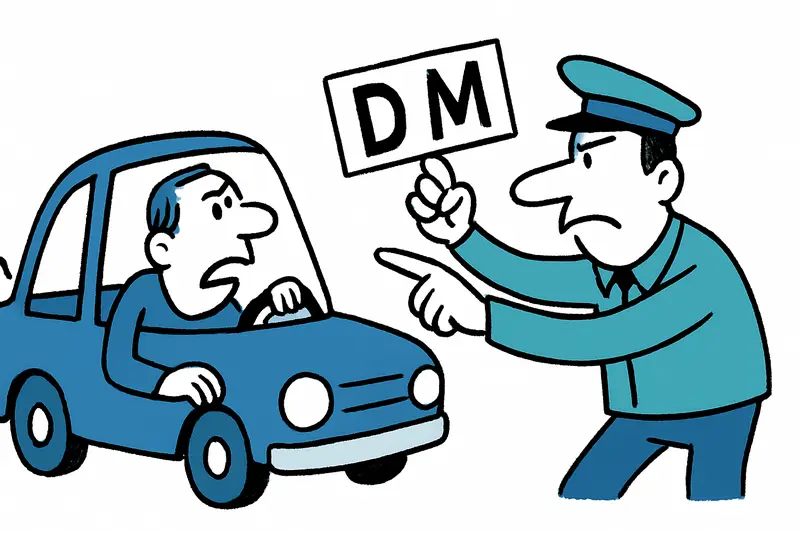
There are numbers you understand at a glance and others that raise questions. In 2022 there were 2,740 registration applications for vehicles with foreign plates; this year around 6,273 applications are expected — an increase of about 129 percent. That is not insignificant, it is a turning point. It is the result of tougher controls, larger sanctions and political signals, such as Palma tightens ZBE control: Drivers with foreign license plates now need an extra permit, that set clear expectations for owners of foreign vehicles.
You can feel it on the roads: on mornings at the Passeig Marítim a moped honks in traffic, tourists stroll with coffees along the quay wall, cars queue up to Av. Gabriel Roca. Checks at hotspots like Playa de Palma have shown that authorities are acting, as highlighted in Palma locks out holidaymakers: Low-emission zone with side effects: during a targeted operation 28 cars were stopped and eight drivers reported; officers also discovered defects such as expired inspections. Such scenes send a message — and they change behaviour.
Two forces lie behind the rise in re-registrations. The first is the clear message from the streets and the police: those who drive here permanently must follow the rules. The second is political regulation. The island government passed a restriction in early June that will in future allow only one vehicle per property for second homes from abroad. The decision still needs confirmation by the regional parliament but could already take effect next season. That explains why many owners are no longer waiting (Huge gap in the registry: Nearly 8,000 unregistered holiday apartments in Mallorca).
But controls and restrictions alone are not automatically sufficient. What is often missing in the public debate is a look at practical obstacles: appointments for re-registration are scarce, administrative processes stall and there is a real bottleneck at technical inspection centres. Private service providers report long waiting times. And: anyone who wants to re-register their car often has to visit several offices — tax office, vehicle registration office, inspection centre — and loses days. That frustrates people and delays the implementation of policy.
Another detail not to be underestimated: the sanctions can hit the wallet hard. Fines are tied to the amount of the registration tax due; in severe cases the vehicle can even be impounded. Such penalties serve as a deterrent. But their credibility is undermined when the administrative machinery does not work quickly or clearly enough at the same time.
A look at the neighbouring island shows options for action. There, similar measures led to measurable declines: in one season around 32,000 fewer vehicles were on the road, a drop of about 15 percent. The experiences there suggest that combinations of clear rules, visible enforcement and simple administration are effective. Mallorca still lacks a uniform, user-friendly process.
So what is missing in the public discourse? First: pragmatic solutions to relieve overloaded administrations. Second: transparent deadlines and regulated transition periods for those affected. Third: a realistic plan for how to reduce local traffic pressure without penalising commuters and residents. The discussion should move away from a purely "all-or-nothing" tone and towards a functioning everyday life for everyone.
Concrete proposals that could be implemented immediately include: mobile service teams that offer appointments and document checks in municipalities; additional capacity at technical inspection organisations, for example temporary testing stations at off-peak times; a digital coordination portal that bundles appointments for the tax office, registration office and inspection centre; and a clearly communicated transition period so people are not punished for bureaucratic delays. All of this requires effort, but significantly less than prolonged conflicts on the road. This debate also overlaps with recent changes to vacation rental permits, such as 650 new vacation rental license spots on Mallorca: Small number, big questions.
And then the neighbourhood perspective: a resident in Portixol describes the morning routine like this: delivery vans parking early, children on their way to school, and the worry whether a parking space will still be free. A rule that actually reduces parking pressure brings direct relief to people who live here. Politics must not plan only for numbers; it must consider the sound of the city — the clink of an iced coffee glass, the distant whirr of a bicycle horn, the groan of a honking convoy.
Conclusion: The rise in re-registrations is a sign that policy is having an effect. But policy alone is not enough. We need administrable rules, visible enforcement and practical support offers for those affected. Otherwise the good intention will get stuck in long queues at offices and inspection stations, while the same old chaos continues to honk on the streets. Those who take the problem seriously must now simultaneously review, relieve and explain — not only sanction.
In short: Sensible limits on the number of vehicles are understandable. For them to be socially acceptable and actually enforceable requires better processes, more staff and a smart transition arrangement.
Frequently asked questions
Why are more cars with foreign plates being re-registered in Mallorca?
What impact have enforcement checks at Mallorca hotspots had on re-registration?
How could the proposed one-vehicle-per-property rule for second homes affect residents?
What practical obstacles slow down car re-registration in Mallorca?
What measures could help streamline Mallorca's car re-registration process?
How should Mallorca balance enforcement with everyday life for residents and commuters?
When do Mallorca's vehicle controls tighten and what should visitors know?
What are practical steps to re-register a car in Mallorca right now?
Similar News
Ryanair Flight Diverted to Barcelona: An In-Flight Emergency and the Questions That Follow
A Ryanair jet from Pisa to Málaga landed in Barcelona after a passenger became acutely ill. Why these cases need more at...
Alarm in Port de Pollença: What now for the polluted bay?
Hundreds of people protested on the beach of Port de Pollença. The environmental organization Arrels Marines demands a p...

Micaela Schäfer: Between Playa de Palma and a Berlin Law Firm — New Calm, an Old Tomcat and Solid Finances
The party artist from the Ballermann scene appears surprisingly down-to-earth: a new relationship with a Berlin lawyer, ...
At Playa de Palma: Fire in Residential Building – six people rescued on the roof, what is missing in prevention?
In the evening a fire broke out on the first floor of a five‑storey building on Calle Trasimé. Six residents fled to the...
New License Requirement for Mini-Boats in Mallorca: Protection Measure or Tourism Brake?
From October 1 renters of small recreational boats in the Balearics must present a boating license. Critical questions r...
More to explore
Discover more interesting content

Boat Tour with BBQ along Es Trenc Beach

Private transfer from Mallorca Airport (PMI) to Pollensa
