
Hurricane-force gusts up to 162 km/h: What 'Nils' means for Mallorca — a reality check
Hurricane-force gusts up to 162 km/h: What 'Nils' means for Mallorca — a reality check
Strong wind situations and an orange warning: How dangerous is the storm 'Nils' really for people, traffic and infrastructure on Mallorca — and what is missing from the public debate?
Hurricane-force gusts up to 162 km/h: What 'Nils' means for Mallorca — a reality check
Key question: Are our island and its residents sufficiently prepared if hurricane-force gusts over 160 km/h return?
For weeks Mallorca has felt like a wind laboratory. Last night the island's highest point, Puig Major, recorded a hurricane gust of 162 km/h; Lloseta reported 92 km/h. The national weather service Aemet weather warnings has issued an orange warning for the coastal sections until 8 p.m.; waves up to four meters are possible, and the island's interior and northeast are also under storm warning with gusts up to 130 km/h. Storm Alert: Orange Warning for North and Northeast — What Mallorca Residents Should Know Now provides local details and recommended precautions. At the same time it remains unusually mild: in some places temperatures of up to 24 °C were measured.
It sounds spectacular — and it is. But spectacle alone does not describe the problem. When the wind grabs like this, several weaknesses come together: open parking spaces with incorrectly parked cars, loose advertising boards, dilapidated roofs, clogged gutters and poorly secured boats in small harbors. The result is blocked roads, damaged facades and potentially injured people.
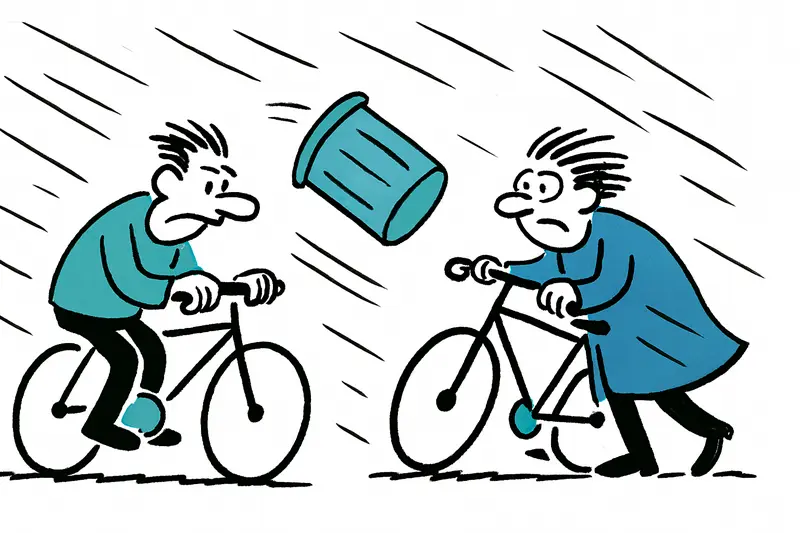
How does this look in concrete terms? On the Passeig Marítim foam blows over the quay wall, a trash bin lies on the bike path, two cyclists push their bikes because the gusts are too strong. In Santa Ponça high waves roll against the promenade; in Port Andratx fenders squeak on poorly anchored yachts. Such scenes are not dramatically staged — they are everyday life in a stormy week.
Critical analysis: Public warnings provide current measurements and recommendations, but the perspective on small-scale infrastructure is often missing. First storm warning, then sun: How well is Mallorca prepared for this changeable weather? discussed similar gaps between official alerts and local preparedness. When were trees along access roads last inspected? Are gravel beds and uphill driveways sufficiently secured? How stable are older solar panels on fincas? Authorities name weather warnings, but visible protective measures in municipalities, ports and on roads remain sporadic.
What is missing from the discourse: an honest assessment of resilience. There is much talk about storm strength and short-term beach closures — but little about long-term weak spots: dilapidated harbor breakwaters, lack of anchoring options for small vessels, outdated urban drainage systems, and pruning cycles for street trees. Tourist information is also patchy: many visitors do not know that promenades can be closed under an orange warning.
Concrete proposals: Municipalities should quickly draw up priority lists — harbor areas with loose moorings first, main access roads with endangered trees next. Harbors need clear anchoring and berthing recommendations; yacht owners should immediately reinforce fenders and double up lines. Homeowners: check roof tiles, solar modules and outdoor furniture, and secure large plants. Businesses with outdoor inventory (coastal restaurants, market stalls) must have tarpaulins and heavy securing items ready.
Technical measures can do more: inspect the sewer system in critical zones; reducing the amount of leaves and sand in drains helps prevent flooding. Public outreach: embed Aemet updates prominently on town hall websites and provide clear notices in several languages at tourist hotspots. Mobile warning apps and municipal WhatsApp groups have proven useful — but they must be maintained.
Practical checklist for the next hours: 1) Avoid coastal promenades and parking lots directly by the sea. 2) Secure garden furniture, ladders and bulky waste. 3) For boats: double mooring lines, check fenders, and if possible move to more sheltered basins. 4) Do not park under large trees and watch out for falling roof tiles. 5) Follow Aemet warnings and the announcements from your municipality.
Looking ahead: The low 'Nils' is moving away, but 'Oriana' is already approaching. Strong gusts and new rain are forecast again for Friday and Saturday — especially in the northeast and on Menorca. Saturday will be somewhat cooler; Sunday could see calmer weather. That means: implement short-term measures now, not only on Friday evening.
Conclusion: Strong gusts and mild temperatures make the situation treacherous. The technology — weather stations and measurements — works. What is missing is the seamless translation of this data into local action steps and better coordination between ports, municipalities and homeowners. A pragmatic plan implemented today will protect boats, roofs and people tomorrow.
If you live on Mallorca or plan to spend the weekend here: listen to the wind, not just the thermometer. And if you are still heading to the DIY store to secure things — good idea. Take gloves with you; the weather not only bites, it also likes to fling things across the street.
Frequently asked questions
What does a storm warning mean for Mallorca beaches and promenades?
Is it safe to go out in Mallorca when wind gusts are over 160 km/h?
Why can Mallorca feel warm even during a dangerous storm?
What should I secure at home in Mallorca before strong winds?
What should boat owners in Mallorca do before a storm?
Is it safe to drive in Mallorca during strong wind warnings?
What is happening in Puig Major during Mallorca wind storms?
Why are places like Santa Ponça and Port Andratx affected by rough weather in Mallorca?
Similar News
Why the End of "Los Últimos Mohicanos" Is More Than the Closing of a Bar
With squealing tires and one last glass, an icon on the Palma–Manacor expressway closes. Why the demise of this German b...

Protest camp on Plaza España: Who asks for solutions to the right to housing?
Around 30 activists set up a tent camp on Palma's Plaza España to push for stronger tenant rights. Our analysis asks: Ar...

In the Name of a Gang: Alleged Extortion in El Molinar and What It Reveals About the Protection of Sex Workers
A man is accused of posing as a member of the Hells Angels and extorting two women at accommodation in El Molinar. The s...
When Chile Meets the Mediterranean: A New Flavor at Can Bordoy
At Can Bordoy in Palma's old town, Chilean chef Jhonatan Maldonado combines Patagonian seafood with Mediterranean island...
End of an Era on the Ma-15: Why the Biker Hangout at Son Gual Is More Than Just a Restaurant
"Los Últimos Mohicanos" closes unexpectedly. A meeting place for motorcyclists on the Palma–Algaida border is disappeari...
More to explore
Discover more interesting content

Can Cap de Bou

Townhouse Lleo 72
