
Iris Katzenberger's New Look: Why Her Arm Procedure Is More Than a Celebrity Update
Iris Katzenberger had excess skin removed from her upper arms. A very personal step — accompanied by cameras and social media. What the operation reveals about body image, lipedema and public responsibility.
Iris Katzenberger's New Look: Why Her Arm Procedure Is More Than a Celebrity Update
A public decision with private reasons – and a debate that should be louder in Mallorca
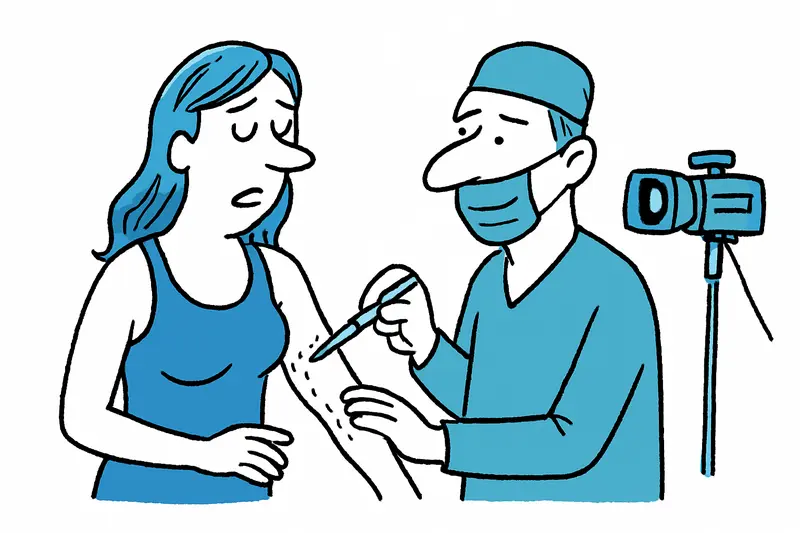
The news is brief: 58-year-old Iris Katzenberger had excess skin removed from her upper arms. The procedure lasted several hours, she offered a medical explanation herself in stories and a clinic video on YouTube, and it was accompanied by cameras, as reported in El nuevo look de Iris Katzenberger: por qué su intervención en los brazos es más que una actualización de celebridad. For many this is simply a celebrity update. For others, a number of uncomfortable questions open up: How are physical complaints, medical diagnoses like lipedema and the desire for a different appearance negotiated in public?
Key question: Can the combination of personal suffering, medical necessity and public staging lead to more education — or does it turn into a media spectacle?
Initial assessment: The facts are simple and at the same time complex. It is a fact that the operation aimed to remove sagging skin that did not improve despite training. It is also a fact that lipedema was mentioned as a reason — a chronic fat distribution disorder that often affects women and is frequently accompanied by pain; for basic clinical information see the NHS information on lipoedema. What we cannot learn from a social media post alone is the full medical consideration: Which conservative therapies were exhausted beforehand? Which risks were explained publicly? How long is the planned aftercare?
Critical analysis: When a procedure is accompanied by cameras, the power relations change. The clinic and the patient produce content, viewers consume a result. This can quickly fall into the trap of presenting the operation as an uncomplicated "quick fix", without talking about complications, waiting times, costs or long-term consequences; professional advice such as the British Association of Aesthetic Plastic Surgeons guidance on cosmetic procedures stresses informed consent and realistic expectations. Especially in Mallorca, where sun and beach images quickly become status symbols, there is a risk that health issues are reduced to beauty dramas.
What is missing in the public discourse: solid information about lipedema and the medical criteria for surgical measures. Many affected people experience years of false starts between general practitioners, physiotherapists and surgeons before a clear diagnosis is made, and a general overview can be found in the Wikipedia article on lipedema. There is also often a lack of transparency about the decision of when a procedure is aesthetic and when it is medically indicated — and who bears the costs. Social channels rarely leave room for sober education.
An everyday scene from Palma: On the Passeig del Born women sit in thick winter coats with hot coffees on the table, and conversations about outfits and selfies take place nearby. Customers at the Mercat de l'Olivar whisper that in recent years many people have become more open about procedures — less taboo, more Instagram. This normalization has advantages: shame is being broken. But it also carries the risk that medically complex decisions are taken in passing.
Concrete solutions: First: better, easily accessible information. Clinics and patient groups should provide clear checklists: diagnosis, conservative therapy options, surgical risks, realistic outcomes, aftercare, and patient-facing resources such as those offered by the American Society of Plastic Surgeons patient resources on surgical risks and consent. Second: camera presence needs rules. Consensual documentation must not be the only information format — complementary independent medical statements would improve the balance. Third: lipedema must be treated in the discussion as what it is — a medical condition that in many cases requires combined therapy of compression, physiotherapy and, if necessary, surgical measures. Fourth: medical information about financing options, for example when an operation is medically indicated, should be standardized and publicly accessible.
For Mallorca specifically this means: health centers, self-help groups and physicians could offer island-specific cooperations, host information evenings and provide digital brochures in German and Spanish. People who commute between Germany and Mallorca need easily reachable contact points — not just for PR appointments, but for real aftercare plans.
Concise conclusion: No one has to morally lecture public figures when they make decisions about their bodies. Iris Katzenberger's step is personal and understandable. Yet media coverage obliges all involved to be more transparent. When a private procedure becomes a public event, it carries an opportunity: namely to turn aesthetics into an informed health debate. Mallorca could be more than a backdrop — it can become a place where education, support and medical care come together, rather than ending up only in before-and-after photos.
Frequently asked questions
What is lipedema, and how is it different from normal weight gain?
When is arm skin removal medically necessary, and when is it mostly cosmetic?
What should I know before considering cosmetic surgery in Mallorca?
How important is aftercare after arm surgery?
Why do some people in Mallorca feel more open about cosmetic procedures now?
What should a clinic explain before any procedure is filmed or shared publicly?
Where can people in Mallorca look for support if they think they may have lipedema?
Can a plastic surgery decision also be a health decision?
Similar News

Loose dog on the MA-19: Rescue — and an uncomfortable question
A large dog ran across the carriageway of the MA-19 near exit 12 on Sunday morning. The Local Police captured the animal...
Cala Rajada: Why the "Sharky's" Keeps Closing — a Reality Check
The "Sharky's" at Cala Agulla is vacant again. High takeover price, expensive rent and a damaged reputation: What is rea...

Palma at the Limit: Four Cruise Ships, Full Parking Garages — Where to Put the City?
Over the long weekend Palma burst at the seams in several places: four cruise ships in the port, kilometer-long queues a...

MotorWorld Inn near Palma: Food, Ambience and Why It's Worth a Visit
A restaurant that blends car passion and food: we tried MotorWorld Inn near Palma. Atmosphere, dishes and a few tips for...
Handover by the Water: Why 'Sharky’s' in Cala Rajada Is Up for Sale Again
A sports bar at Cala Agulla, opened in 2024, closed shortly after, briefly revived in 2026 — now the venue is up for tak...
More to explore
Discover more interesting content

Can Cap de Bou

Townhouse Lleo 72
