
Ironman in Alcúdia and Binter Night Run in Palma: Who pays the price for the road closures?
Ironman in Alcúdia and Binter Night Run in Palma: Who pays the price for the road closures?
Today the Ironman 70.3 in Alcúdia and the Binter Night Run in Palma are causing widespread road closures. A reality check: how good are the planning and information for residents and traffic?
Ironman in Alcúdia and Binter Night Run in Palma: Who pays the price for the road closures?
Key question: How well prepared are the island and its municipalities for the traffic burden caused by major events?
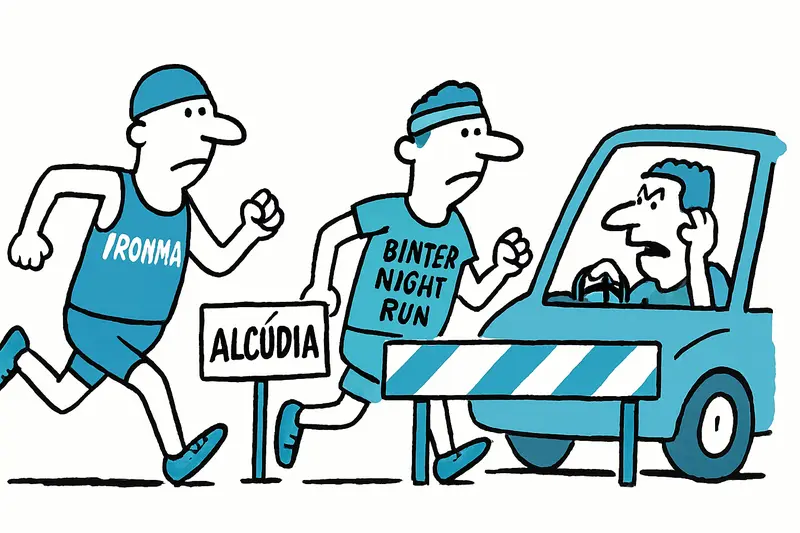
Today parts of Mallorca turn into race tracks. In Alcúdia athletes are facing the Ironman 70.3 — nearly two kilometres of swimming, 90 kilometres of cycling and 21 kilometres of running. Details are listed on the Ironman 70.3 official website. The Port of Port d'Alcúdia is therefore closed to car traffic, the bike course runs through Mallorca by UTMB: When the Tramuntana Sets the Pace — Who Pays the Price? and passes Pollença, Lluc, Caimari, Muro and Sa Pobla. In Palma, about 4,200 runners are expected in the evening; closures and disruptions around Castillo de Bellver, the Paseo Marítimo and the old town are planned, similar to past coverage of the Fira del Variat and Night Run: When Festive Spirit Meets Everyday Life — What Palma Should Improve Now.
Critical analysis: Large sporting events bring attention and money — but they also shift public spaces. When fishermen in Port d'Alcúdia dry their nets in the morning and scooter riders on the Paseo Marítimo get their coffee, residents and businesses are the first to notice the closures. Residents, delivery services and emergency vehicles need reliable alternatives. In practice, information offerings, signage and the actual detour routes often diverge: cars find blocked access ways, taxis are redirected, and delivery times change. On the mountain sections cyclists are sent into the race while farmers and buses may need to use the same narrow roads.
What is often missing from the public debate: the perspective of those who neither run nor watch. Residents with doctor appointments, shift workers, people with limited mobility and local businesses experience the impacts directly. Also rarely discussed is the coordination between organizers, municipalities and emergency services and whether traffic apps and public transport are adjusted in time, as was the case in reporting on Palma on Sunday: Triathlon and Cycling Tour Bring Atmosphere — and Road Closures. The economic benefit for hotels and gastronomy is often mentioned — but the daily routes of the island's population receive too little attention in planning.
An everyday scene from Alcúdia: It is early, market vendors set up their stalls on the Plaça, a delivery van looks for the bakery while barriers are already being put in place. A local elder pushes his bicycle past, shakes his head at the lack of signage and asks whether he can still get to his greengrocer. In Palma in the evening: lights sparkle along the Paseo, music trucks rehearse, while residents try to reach the normally free promenade and instead must follow detours.
Concrete solutions: better, earlier communication across multiple channels; clearly visible, multilingual signage at all relevant junctions; temporary shuttle or park-and-ride options on main access roads; coordinated time windows for deliveries and emergency services; digital real-time updates for traffic and public transport that also integrate emergency services and taxis; designated contacts in town halls for residents' questions during the event; and a mandatory traffic impact assessment by independent experts before approving major routes, echoing proposals in TUI Palma Marathon: Road closures, frustration — and how Palma could deal smarter with the traffic chaos.
In the short term many bottlenecks can be eased with pragmatic measures: additional bus lines between parking areas and venues, temporary pedestrian bridges at heavily used points, clearly marked emergency lanes and a hotline for affected residents. In the medium term a binding coordination between organizers, the island administration and municipalities is needed so that major events do not become avoidable burdens.
Concise conclusion: Sporting events belong on the island — they bring audiences, energy and revenue. But the price must not be paid solely by residents and commuters. If organizers and authorities take communication, diversion plans and emergency access seriously, races and everyday life can coexist. Without this work, the closures remain for many an annoyance rather than an event.
Frequently asked questions
How do major sporting events affect traffic in Mallorca?
What roads are affected by the Ironman in Alcúdia?
Will the Binter Night Run cause road closures in Palma?
How should residents in Mallorca prepare for event-related road closures?
Are there reliable detours during big events in Mallorca?
What should delivery drivers know during events in Alcúdia and Palma?
How can public transport help during road closures in Mallorca?
Why do local businesses in Mallorca care about race day closures?
Similar News

More water than last year: Mallorca's reservoirs breathe easier
September rain refilled the Tramuntana's reserves: overall fill around 35 percent, Cúber at 40.42 percent, Gorg Blau at ...
Three Luxury Hotels in Banyalbufar: Lots of Money, Many Questions
A Danish investor plans three exclusive accommodations in Banyalbufar — including the historic Son Valentí. The announce...
2.1 tonnes of cocaine on sailing yacht off Spain's coast – a reality check for the coastguard
A 14-metre yacht was seized with 2.1 tonnes of cocaine. Who monitors the ports, how does the international hunt succeed ...
Heat Bonus in Mallorca: 100 Euros Extra for Outdoor Staff at MarSenses
MarSenses pays employees who worked outdoors in August an extra €100 as recognition. Lighter uniforms, reduced hours for...
Renovating in Mallorca: What You Really Can Do Without Neighbour Consent
Many think they can do whatever they want in their apartment. That's partly true — but only as long as structural elemen...
More to explore
Discover more interesting content

Can Cap de Bou

Townhouse Lleo 72
