
Dangerous Ice Layer: Jan Hofer Falls in Berlin – Who Is Liable for Icy Sidewalks?
Dangerous Ice Layer: Jan Hofer Falls in Berlin – Who Is Liable for Icy Sidewalks?
The fall of Mallorca resident Jan Hofer in Berlin sparks debate: An Apple Watch alerted rescuers — but who protects pedestrians from slippery sidewalks when salting is restricted?
Dangerous Ice Layer: Jan Hofer Falls in Berlin – Who Is Liable for Icy Sidewalks?
Apple Watch reportedly saves the day. The ruling against private salting raises questions about the duty to secure public walkways.
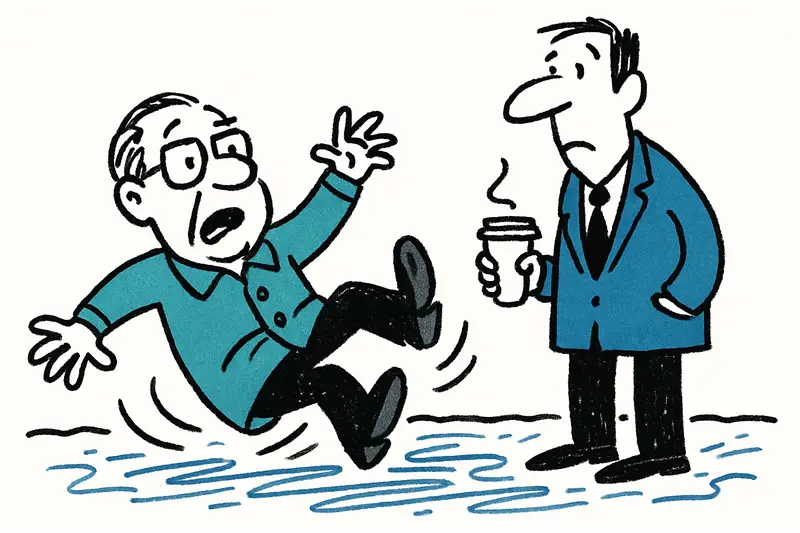
The scene is easy to imagine: on Paseo Mallorca an older man stands with a coffee, his breath painting small clouds in the cool air, the street is wet but not frozen. In contrast: in Berlin, perfectly smooth sidewalks, subzero temperatures, a fall, a loss of consciousness. The person affected: Jan Hofer, 76, who has been living in Mallorca for some time. His Apple Watch sounded an alarm and called for help — as dramatic as it was practical (Early-Morning Fall at Playa de Palma: German Tourist in Critical Condition).
Key question: Who bears responsibility for safe sidewalks when environmental and nature conservation interests collide with the duty to secure traffic areas?
Analysis: The incident reveals two levels. First: technology can save lives. An automatic emergency call function can activate medical help within minutes — a clear benefit, especially for older people. Second: technology is no substitute for preventive measures in public spaces. A court ruling that apparently makes it harder for private individuals to simply spread salt on sidewalks changes local conditions: sidewalks can become more dangerous if municipal clearing and salting services are insufficient.
Public debate often lacks a concrete consideration of everyday life: Who walks to work in the morning, who brings groceries home, who leaves the house with a dog? In Palma I know neighbors who stroll early mornings along Passeig Mallorca, the bakery on the corner opens, the tram whistles — nobody thinks about rock salt. In Berlin people face very different challenges, and anyone who commutes between the two worlds only occasionally quickly underestimates the danger (Fall at Ballermann: Why a Morning on Playa de Palma Can Turn into an Accident).
What now needs to be discussed: first, the role of municipalities. Are clearing and salting services organized so that side streets and footpaths can be reached quickly? Many municipalities work by priorities — main arteries first, side paths later. For pedestrians this prioritization can be fatal. Second, the legal situation: if a court makes it more difficult for private households to salt, there need to be clear, practical alternatives. Municipal supply points with environmentally friendly de-icers, short-term exemptions, or defined responsibilities in rental and housing complexes would be conceivable.
What is missing in the discourse: concrete assignments of responsibility for residential neighborhoods and multi-family houses. If property owners or management companies were obliged to secure the sidewalks in front of their buildings within a defined time window, many situations would be eased. There is also a lack of clear communication about which agents are environmentally compatible and how trees and roots can be protected without endangering pedestrians.
Everyday example from Mallorca: on a Saturday morning people sit in a small café in Santa Catalina, it is cool, conversations about travel plans mingle with the sound of a tram. If an acquaintance from Berlin called and reported he had fallen on an icy sidewalk, the reaction would be different: concern, yes, but also the thought that Mallorca rarely presents such problems. The spatial separation leads to overconfidence — dangerous for everyone who commutes between both worlds (Fatal Accident on the Paseo Marítimo: Trial Raises Questions About Safety and Control).
Concrete solutions:
- Municipal supply points for environmentally friendly de-icers at central bus stops and waste corners, accessible to neighborhoods.
- Short, clearly regulated exemptions that allow residents to act in case of acute black ice without fearing legal disadvantages.
- Mandatory winter maintenance plans for residential complexes and owners' associations with clear responsibilities and fines if access routes are not secured.
- Promotion of preventive aids for at-risk individuals: alarm watches with automatic emergency call functions, non-slip shoe covers, or mobile salt buckets in care homes.
- Transparent information campaigns: if a court decision changes private salting practice, authorities must quickly and clearly explain what is now allowed and what alternatives exist.
Some of these proposals require political work; others can be implemented by citizens immediately. It's not about ignoring nature conservation. Trees deserve protection. But trees don't grow on top of pedestrians' heads. A sensible balance is possible — and necessary.
Punchy conclusion: Rescue by a smartwatch is a stroke of luck, not a solution. To prevent people from being injured on icy paths, clear responsibilities, practical alternatives to blanket bans, and an awareness that winter mobility and safety must be organized locally are needed. In Mallorca you can often feel, looking out of a café window, how different the world can be. Planners and politicians must take those differences into account before the next accident happens.
Frequently asked questions
Do icy sidewalks in Mallorca happen often in winter?
What should I pack for winter in Mallorca if I am used to colder weather?
Is it safe to walk in Palma in winter after rain?
What can older people do to stay safe on winter streets in Mallorca?
Why do some cities restrict private salting of sidewalks?
Who is responsible for clearing snow and ice on sidewalks in Germany?
Can a smartwatch really help after a fall on an icy street?
What should municipalities in Mallorca learn from winter accident debates in Germany?
Similar News
New trick at Palma Airport: suitcase stolen from the belt — a reality check
On September 28 a 36-year-old allegedly stole a suitcase from the baggage belt of a 51-year-old German passenger at Palm...
Urgent Clearing of Palma's Torrents: Flood Prevention or Symptom of Short-Sighted Planning?
The city of Palma is responding to storm forecasts and has cleared several torrents. We ask: Is the short-term clearing ...

Evaneos and Mexico: A Reality Check for Sustainable Travel
Travel advertising often reads like a promise: local, sustainable, unique. But how deep do these promises really go? A c...

From Megapark to the Altar: Party Singer Now Offers Weddings in Mallorca
A well-known party artist combines partying and marriage: instead of a traditional church there are ceremonies at the Me...

The Maricarmen Case: Why an Eviction Is Forcing Spain's Housing Debate
Images of an 87-year-old woman on a stretcher have sparked a debate in Spain that also runs deep in Mallorca. Who protec...
More to explore
Discover more interesting content

Can Cap de Bou

Townhouse Lleo 72
