
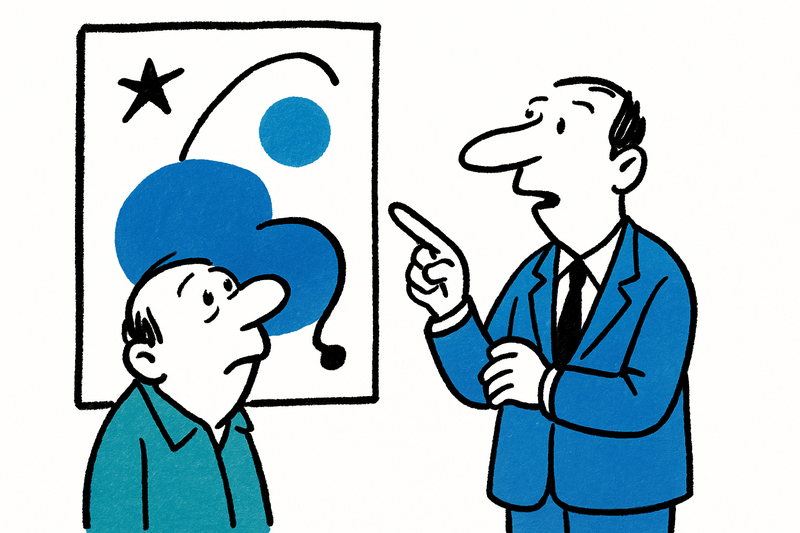
Joan Miró takes Palma by storm: A summer of color, form and island magic
With 'Paysage Miró' Palma has woven a cultural network of four venues this summer. An invitation to rediscover the Catalan master in bronze, paint and found objects — and at the same time a statement on the path to European Capital of Culture 2031.
Palma breathes art: Miró in the city
On hot afternoons, when Palma's church bells ring through the old town in an irregular rhythm and a salty breath from the sea threads the narrow streets, the city has radiated something other than tourist bustle and café scenes this summer: art. Joan Miró is at home across the city, as if an invisible web connected La Llotja, the Fundació Miró Mallorca, Es Baluard and the Casal Solleric. The exhibition "Paysage Miró" turns Palma into the setting for a large tribute for a few months.
Four venues, four perspectives
The collaboration of the four institutions is remarkable not only for its scale but also for the different perspectives they offer. This network has also been highlighted in Nit de l'Art: Palma's long art night returns. Each stop opens a different door into Miró's world: the monumental, almost archaic presence of his bronze objects, intimate found objects, a trace-hunt in painting and the link between color and sculptural thinking. Those who take the tour feel the shift from room to room like a dialogue — constructive, surprising, sometimes mischievous.
La Llotja: bronze stories by the sea
La Llotja, with its bright limestone and high arches, is a place that creates silence. In this setting Miró's bronze sculptures appear like mythical visitors: "Oiseau lunaire" and "Oiseau solaire" seem monumental here, yet never cumbersome. Between harbor air and the distant cry of seagulls, one reads sky and rootedness in the forms, masculine and feminine, movement and calm. A visit in the early morning is worthwhile — the city is still quiet, and the sculptures gain presence.
Fundació Miró Mallorca: small things, big ideas
The Fundació opens the workshop door. Here not only finished works are shown, but also the small triggers that occupied Miró: a chicken bone, stones with shells, found objects that act like keys to new pictures. Such details make the artist come across as human, almost like a conversation at a creative's kitchen table. You leave the rooms with an urgent desire to collect things yourself and see them anew.
Es Baluard: painting that breaks boundaries
At Es Baluard Miró is experienced as an experimenter. The sequence of his paintings tells of journeys, upheavals and the willingness to break with conventions. Particularly exciting is how his landscapes evolve from early, still familiar views into open, almost dancing surfaces. On the museum terrace, the Mallorcan light atmosphere mixes with the colors on the canvas — a combination that resonates long after.
Casal Solleric: color meets found object
Casal Solleric is dedicated to the moment when color and object come together. Assemblages made from found materials, black spots as female symbols and the closeness to folk art show a Miró who works with eye and hands. On a small scale it becomes clear how much the island and its objects echo in his work.
Why this matters
Beyond aesthetic pleasure, this exhibition means even more for Palma: it is a publicly visible promise to think of culture not only as an event but as an everyday enrichment. The city, which aims to position itself as European Capital of Culture in 2031, as discussed in Palma as Capital of Culture 2031: Opportunity with a Catch, showcases a piece of foresight with "Paysage Miró". Visitors do not only experience art, they experience a city that rearranges its spaces and links stories.
Practical: The individual venues show Miró at different times — La Llotja remains open until February 2026, Casal Solleric and Es Baluard already end in November this year. For the culture hound that means: plan, come early and discover the neighborhood on foot. (See Miró in Palma: More than 300,000 people have visited the island exhibition.)
And for anyone who wants to take away a trace of inspiration afterwards: it is the small things that remain. A stone on the beach, a worn knife, a black dab on a white canvas — Miró teaches us that attention and found objects can transform the world. For Palma, that is a lovely, almost poetic gain.
Frequently asked questions
What is the Miró exhibition in Palma about?
Is the Miró exhibition in Mallorca worth seeing if you only have one day in Palma?
What is the best time to visit La Llotja for the Miró exhibition in Palma?
What can you see at the Fundació Miró Mallorca?
How does Es Baluard present Joan Miró in Palma?
What is special about the Miró presentation at Casal Solleric in Palma?
How long is the Miró exhibition open in Palma?
Why is Joan Miró so closely linked to Mallorca?
Similar News
Why Mallorca Has Become So Terribly Expensive — A Reality Check
Rents are exploding, staple food prices are rising, wages are lagging behind. A look at the causes, what is missing from...
When Paradise Becomes Unaffordable
Hotel rooms, paella and the weekly grocery shop: Mallorca is becoming more expensive for many. Who pays the bill — guest...
End at Ballermann: What Is Lost with the Dino Mini Golf at Playa de Palma
On October 25 the dinosaur mini-golf course at Playa de Palma will close after more than 30 years. Why the city is recla...
Expensive Address Calvià: What Does First Place Mean for Mallorca?
The National Institute of Statistics (INE) ranks Calvià as Spain’s most expensive municipality for property purchases. W...

Emergency over Spain: Ryanair Dublin–Tenerife flight diverted to Santiago after medical emergency
A Ryanair flight from Dublin to Tenerife was diverted to Santiago de Compostela due to a passenger's acute health proble...
More to explore
Discover more interesting content

Can Cap de Bou

Townhouse Lleo 72
