
Kilograms of Cocaine in the Glove Compartment: Arrests in Son Ferriol Raise Questions
Kilograms of Cocaine in the Glove Compartment: Arrests in Son Ferriol Raise Questions
Two men (42, 50) were arrested in Son Ferriol after 2,240.96 grams (about 2.24 kg) of cocaine and just over €2,000 were found in their car. A reality check.
Kilograms of Cocaine in the Glove Compartment: Arrests in Son Ferriol Raise Questions
How did so much contraband end up in a car in a quiet Palma neighborhood?
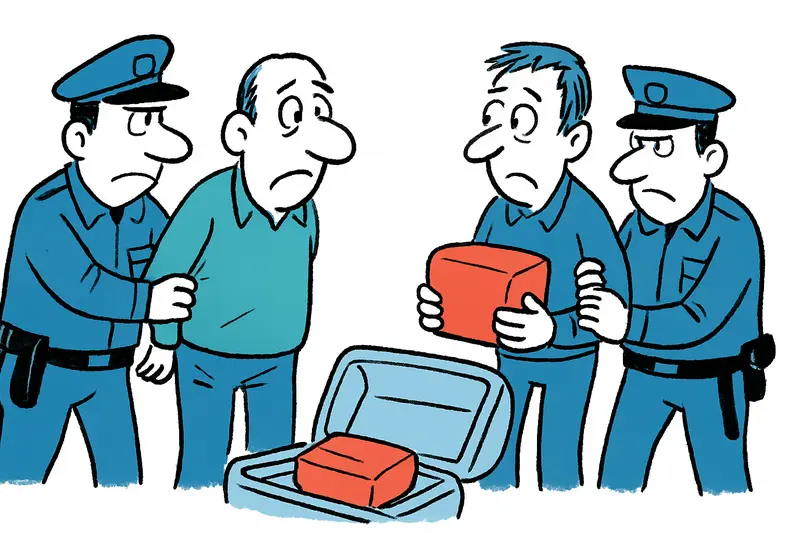
On Monday evening at around 10:10 p.m., a patrol from the Preventive Group (GAP) stopped a car on Avenida del Cid in Son Ferriol. What began as a random check ended with two arrests: two Spanish nationals, aged 42 and 50, were taken into custody after the local police found two red-wrapped packages in their vehicle totaling 2,240.96 grams of a white, powdery substance. Officers also seized cash of a little more than €2,000.
During identity checks, the occupants appeared visibly nervous. The police also found that the vehicle had an expired periodic technical inspection (ITV) and lacked valid liability insurance. That led to an extended security inspection — and further discoveries: in a shoulder bag belonging to the 42-year-old there was a lump of cocaine and hashish, and in his trouser pocket €2,060 in small bills. He was fined under the public safety law; both men are now being treated as suspected perpetrators of an offense against public health.
Key question: How is it possible that in a rather quiet residential neighborhood like Son Ferriol people can be carrying several kilograms of a hard drug without it having been noticed before? This question cannot be answered with "just a lucky coincidence."
Critical analysis: the case reveals two layers of the problem. First: controls work — random checks lead to discoveries. Second: controls alone are a bandage, not a system. Large drug quantities point to organized structures or at least to vehicles used within the scene's logistics network. Similar large seizures — such as 675 Kilos of Cocaine: What the Find Means for Palma, Inca and Binissalem — suggest organized structures that extend beyond isolated stops.
What is missing in public discourse: we talk a lot about raids and arrests, rarely about the gaps between street controls, financial monitoring and traffic inspections. Cash in small bills, as found here, is a typical indicator — but do the responsible authorities systematically pursue money flows? Major operations that uncovered cash and raised questions about institutional coordination, such as Drugs, Millions and Suspected Abuse of Office: What the Major Operation in Mallorca Reveals, show how seizures and investigations can intersect.
Everyday scene from Palma: Son Ferriol is not an evening crime hotspot; Avenida del Cid is lined with streetlights, a kiosk that still smells of coffee just before closing, and occasionally a delivery van rattling over cobblestones. Neighbors are surprised when police sirens cut through the street around 10 p.m. — the image of two men in a car next to playing cats quickly fades behind the blue lights.
Concrete solutions: 1) Better electronic interfaces: if police, traffic authorities and insurers could exchange data in real time, cars with expired ITV or missing insurance would be detected faster. 2) Strengthen financial controls: suspicious cash movements in small bills should be linked from police hints to tax and banking supervision. 3) Preventive neighborhood programs: residents report suspicious activity more readily if they know tips are anonymous and taken seriously. 4) Expand targeted checks along logistics axes: ports, airports and major roads need coordinated controls, not only spot checks; inspections at ports have produced results before, as in Drug discovery on a ferry from Barcelona: Three arrests in Palma and the questions that remain. 5) Training and continuing education: officers conducting traffic checks should be standardizedly trained to recognize signs of suspicion — from behavior to technical vehicle indicators. Other sizable finds, like Half a Tonne of Cocaine at Playa d'en Bossa: Who Benefits — and What Must Change?, underline the environmental and coordination challenges authorities face.
A concise conclusion: the find in Son Ferriol is not a local curiosity but a sign of bigger systemic questions. We see that controls have an effect. We also see how much room remains for organization and concealment. People who want to live in Palma shouldn't have to rely on statistics of random finds; they need authorities that act preventively and connectedly — with clear rules, fast data flows and the will to address multiple points at once.
In the end the image is simple and uncomfortable: two arrests, a glove compartment full of drugs, neighbors who are drinking their coffee again the next morning. The task for the city and the security forces is to reduce that contrast — not only through checkpoints, but through a system that can detect such cases earlier.
Frequently asked questions
What’s the best time of year to visit Mallorca for warm weather and sunny beaches?
What should I pack for a week on Mallorca’s coast in spring?
Is it safe to swim in Mallorca in the off-season?
What kind of weather should I expect in Mallorca in summer versus winter?
What outdoor activities are popular in Mallorca for nature lovers?
What’s the best way to get around Mallorca to visit multiple towns?
What local foods should I try in Mallorca?
How should I stay safe while enjoying Mallorca’s beaches and countryside?
Similar News

Prominence Alone Is Not Enough: The Case of Germania Mallorca and the Reality Behind the Dream
After six games the coach is gone. What does that say about ambitions, leadership and everyday life at FC Germania Mallo...

Blackboard on Mondays, Microphone on Weekends: How a Teacher Conquered the Ballermann Stage
She carries teaching materials and playback kits with her: once an elementary school teacher in Germany, today a fixture...

No More Coal Dust: Es Murterar Becomes an Energy Runway for the Future
End of an era: The last coal units at the Es Murterar power plant are being shut down. For Mallorca this means cleaner a...

Winter over the island: Who keeps flying, who pauses — and what does that mean for Mallorca?
Palma airport reports almost eight million seats for the coming winter season. Between expansion by some carriers and co...
TIB adjusts winter timetable: More connections in German-influenced towns
From November 1 the TIB will run the winter schedule — not simply continuing as before, but with targeted improvements: ...
More to explore
Discover more interesting content

Can Cap de Bou

Townhouse Lleo 72
