
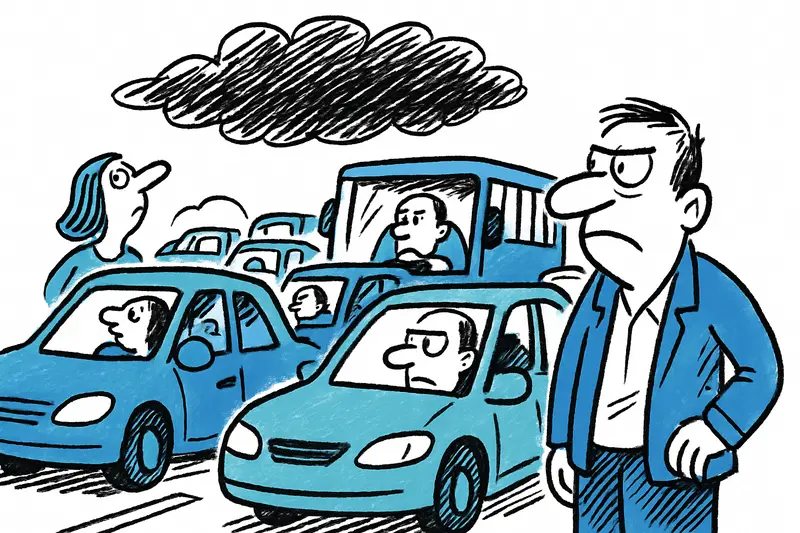
Kilometer-long traffic jams towards Soller: Why clouds paralyze the village
Clouds over the Tramuntana caused kilometer-long tailbacks before Soller on August 25. A look at causes, daily consequences for residents and concrete ideas to reduce the chaos.
When a band of clouds changes plans on the island
On the afternoon of August 25, shortly after 4:00 pm, the access road to local report on Sóller traffic jams once again turned into a stationary sea of vehicles. On the stretch between the northern exit of the Soller tunnel, as detailed in Sóller Tunnel: Daily Record and the Problem Behind It, and the town entrance, cars, vans and tour buses queued in zigzags – so tightly packed that few wanted to turn off their engines. A cool Tramuntana wind and scattered clouds apparently sufficed to make many beachgoers change their plans: instead of a sun lounger it became an exploratory trip to the mountain village.
The key question: How stable is the Tramuntana's road network?
The phenomenon repeats itself – and we should ask how resilient the narrow traffic network around the mountain villages of the Serra de Tramuntana UNESCO listing really is. In the short term it shows: even small fluctuations in weather and visitor behaviour lead to long tailbacks. In the long term, however, it’s about more than lost hours in traffic: about supply chains, emergency access routes, residents’ quality of life and the everyday functionality of the island’s infrastructure.
Between anger and calm: Voices from the traffic jam
Those who drive here often know the pattern: you allow a little extra time and suddenly you’re stuck for two hours. A delivery driver in Bunyola summed it up dryly: “I drank more coffee today than I delivered parcels.” At the roundabout in Palmanyola there were information signs, and road maintenance crews temporarily closed the tunnel entrance so everything wouldn’t collapse. For residents the consequences are real: late shifts, missed appointments, children arriving home late from school. And for tourists a short outing quickly becomes a test of patience.
What is often overlooked
Some aspects remain underreported in public perception. First: delivery and supply traffic – bakeries, supermarkets, craft businesses – suffer when access roads are blocked. Second: Dirección General de Tráfico road safety guidance emphasises that emergency routes must remain clear at all times; a traffic jam can cost critical minutes in an emergency. Third: the environmental impact of idling engines in mountain valleys is greater than traffic-board figures reveal. Fourth: concentrating arrivals on a few time windows makes the system more vulnerable than a more even distribution.
Concrete opportunities and solutions
It is not enough to repeatedly advise avoiding peak times. What is needed are pragmatic, locally implementable steps:
Park-and-ride pilot projects in places like Bunyola or at the northern tunnel exit could intercept tour buses and rental cars. A shuttle between parking areas and the town centre – coordinated with the historic Sóller tram (Tranvía de Sóller) Wikipedia page – would keep many private cars away from the town entrance.
Planned delivery windows for local retailers: if deliveries are concentrated into defined time slots (early morning, late evening), the number of heavy delivery vehicles during the afternoon peak arrival time falls.
Coordination with bus companies and rental agencies: tour buses should have fixed stopping points outside the bottlenecks. Rental agencies could provide check-in information about favourable arrival times.
Real-time information and intelligent signage: dynamic signs on access roads, apps with live congestion info and recommended alternative routes would better direct spontaneous travellers.
Promotion of rail and tram: the historic railway and the tram to the harbour are not just charming extras – they are real alternatives if made more attractive in combination with park-and-ride offers; see Mallorca public transport information (TIB) for current service options.
What you can do as a visitor
If you are looking for peace in Soller: plan to arrive early in the morning or drive later in the evening. The ride on the old tram is not only nostalgic but is often quicker than sitting in traffic. And if you do get stuck: take a deep breath, grab a cool drink from the glove compartment and have a plan B – perhaps dinner in one of the alleys once traffic eases.
Conclusion: Soller remains a worthwhile destination. But the recurring traffic jams are a wake-up call – not only for frustrated drivers, but above all for those who plan infrastructure. A few targeted measures could make a big difference here: less stagnation, more quality of life.
Frequently asked questions
Why does traffic to Sóller in Mallorca get so bad when the weather changes?
What is the best time to drive to Sóller in Mallorca without getting stuck in traffic?
Is it worth taking the old tram to Sóller instead of driving in Mallorca?
How long can the traffic jam to Sóller in Mallorca last?
Why does the road to Sóller in Mallorca affect residents as well as tourists?
What can visitors do if they are driving to Sóller in Mallorca and get caught in traffic?
What is being suggested to reduce traffic jams in Sóller, Mallorca?
Is the Sóller road network in Mallorca vulnerable even on normal days?
Similar News

Release after bloody attack in Palma: Why the court's decision raises questions
An 18-year-old who allegedly inflicted a serious neck injury on a man at Plaza Gomila using a wristwatch wrapped around ...
Kidnappings in Inca: Three young men forced into car trunks and abused in the forest – a reality check
In Inca, three 18-year-old men were forced into car trunks by masked assailants at the Plaça des Bestiar, taken to a for...
Spreading Massification: The Brake That Still Has Much Work to Do
Marga Prohens announces limits on volume tourism. The measures sound harsh — but are they enough to save everyday life, ...

Through the Keyhole onto the Party Yacht: How Daniela Katzenberger Is Planning Her 40th on Mallorca
Daniela Katzenberger turns 40 and wants to celebrate it on the island — likely with a boat, cake and her mother. A relax...
By Boat Instead of the Road: Palma's Water Bus — a Reality Check
The 'Bus Nàutic' launches in two stages — but questions remain over interim operations, fares and environmental requirem...
More to explore
Discover more interesting content

Can Cap de Bou

Townhouse Lleo 72
